
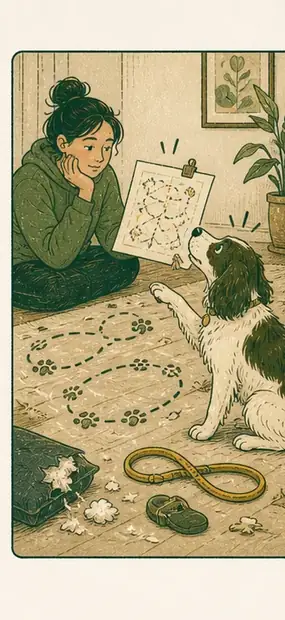
- The strongest sign is not energy alone. It is energy that keeps leaking into the house.
- A longer walk may help, but a richer walk often helps faster.
- Sudden behavior changes, pain signs, limping, or breathing trouble should be checked by a veterinarian.
Turn this answer into a walk you can actually track.
GetWalkBuddy is a dog walking app for owners who want a simple route tracker, timer, distance view, and daily walk log without turning the walk into a spreadsheet.
What are the signs my dog needs more exercise?
Your dog may need more exercise if they are restless after walks, destructive indoors, constantly seeking attention, barking for no clear reason, pacing, playing too roughly, or struggling to settle. The pattern matters most: if the behavior is worse on low-activity days, the routine is probably under-delivering.
A dog with unused energy rarely sends a polite memo.
They chew. They bark. They steal something that was not meant to be stolen and parade it through the living room like evidence.
The question is not only whether the dog moved today. It is whether the movement gave the body and brain enough useful work.
Does my dog need a longer walk or a better walk?
A dog who seems under-exercised may need a longer walk, but many dogs need a better walk first. Better walks include sniffing, changes in pace, route novelty, light training, and a calm finish so the dog comes home processed instead of merely transported.
Minutes are the easiest thing to count and the easiest thing to misunderstand.
Twenty dead minutes around the same block can leave a dog hungry for information. Fifteen slower minutes with sniffing and a little training can do more real work.
The owner counts distance. The dog counts input.
When are exercise signs actually a health signal?
Ask a veterinarian if your dog's restlessness or behavior change is sudden, paired with limping, coughing, breathing trouble, pain, confusion, appetite changes, collapse, or a major shift in sleep. Exercise can help bored dogs, but it should not be used to push through medical warning signs.
Not every restless dog needs a bigger route.
Some need a checkup, softer exercise, pain support, or a different plan entirely.
If the behavior arrived fast or looks unlike your dog, solve the safety question before solving the walking question.
Questions owners ask when the leash is already in their hand
-
Can a dog be under-exercised even if I walk them daily?
Yes. A daily walk can still be too short, too rushed, too repetitive, or too mentally empty for that dog's breed, age, health, and energy.
-
Will more exercise stop destructive chewing?
It can help when chewing comes from boredom or unused energy, but destructive chewing can also come from anxiety, teething, pain, or lack of appropriate chew outlets.
-
How do I know if a walk helped?
Look at the next few hours. A helpful walk usually makes the dog easier to settle, not more frantic, more demanding, or more wired.
Stop guessing what the behavior means.
GetWalkBuddy helps you track movement, sniffing, and walk quality so the next restless evening is easier to read.