
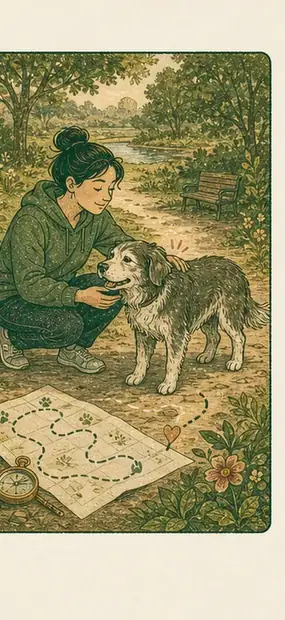
- Slowing down is information, not a diagnosis.
- Patterns matter: terrain, heat, duration, pace, and recovery can explain a lot.
- Sudden slowing, pain, breathing trouble, collapse, or confusion needs veterinary attention.
Turn this senior-dog answer into a gentler walking routine.
A senior dog walking app should make gentle movement visible: shorter walks, slower routes, willingness changes, recovery signals, and the patterns you may want to discuss with your veterinarian.
Why is my dog slowing down on walks?
Your dog may be slowing down because of heat, fatigue, age, pain, arthritis, weight, fear, heart or breathing issues, or simply a walk that is too long for today's condition. The pattern and any accompanying symptoms matter more than one slow outing.
Do not write it off automatically as old age.
Also do not turn one slow walk into a disaster movie.
Collect the pattern: when, where, how far in, what weather, what surface, and how your dog looked afterward.
What should I track when my dog slows down?
Track walk length, pace, weather, terrain, sniffing, when the slowing starts, whether your dog limps or pants heavily, and how they recover later. These details can help you adjust the routine and give your veterinarian better information.
Memory rounds off the edges.
A log keeps them sharp: third block, uphill, warm day, lagging after eight minutes, stiff that evening.
That is the kind of detail that turns worry into useful action.
When should I call a vet about a dog slowing down?
Call a veterinarian if slowing down is sudden, recurring, worsening, or paired with limping, pain, collapse, coughing, breathing difficulty, pale gums, confusion, appetite changes, or major behavior changes. Older dogs especially deserve early checks.
A slower season of life is one thing.
A warning sign wearing an age costume is another.
The safest move is to keep walking smarter while letting the vet rule out what should not be ignored.
Questions owners ask when the leash is already in their hand
-
Is it normal for older dogs to slow down on walks?
Many older dogs slow down, but sudden or significant changes should not be dismissed as normal aging without a veterinary check.
-
Should I let my dog turn around on a walk?
Often yes, especially if your dog seems tired, sore, overheated, anxious, or reluctant. Watch the pattern and ask a vet if it repeats.
-
Can heat make a dog slow down?
Yes. Heat can reduce stamina and may be dangerous, especially for older, overweight, or flat-faced dogs.
Turn a hunch into a pattern.
GetWalkBuddy helps you track pace, walk length, and recovery signals so slowing down becomes useful information for you and your vet.