
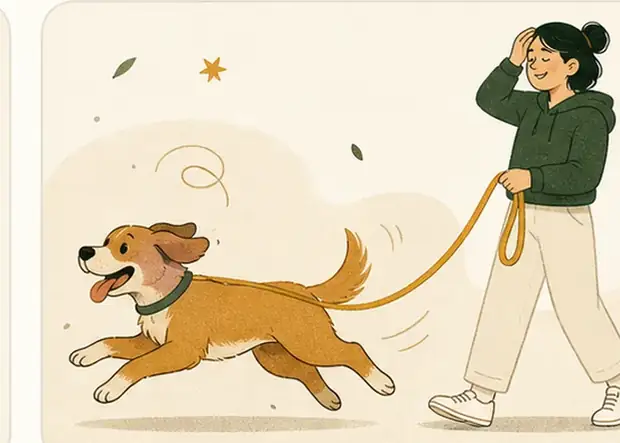
- A walk can accidentally hype a dog up if it is all speed, tension, greetings, or frustration.
- Sniffing and calm endings help many dogs come down instead of coming home wired.
- The fix is often walk design: start, middle, finish, and recovery.
Turn this answer into a walk you can actually track.
GetWalkBuddy is a dog walking app for owners who want a simple route tracker, timer, distance view, and daily walk log without turning the walk into a spreadsheet.
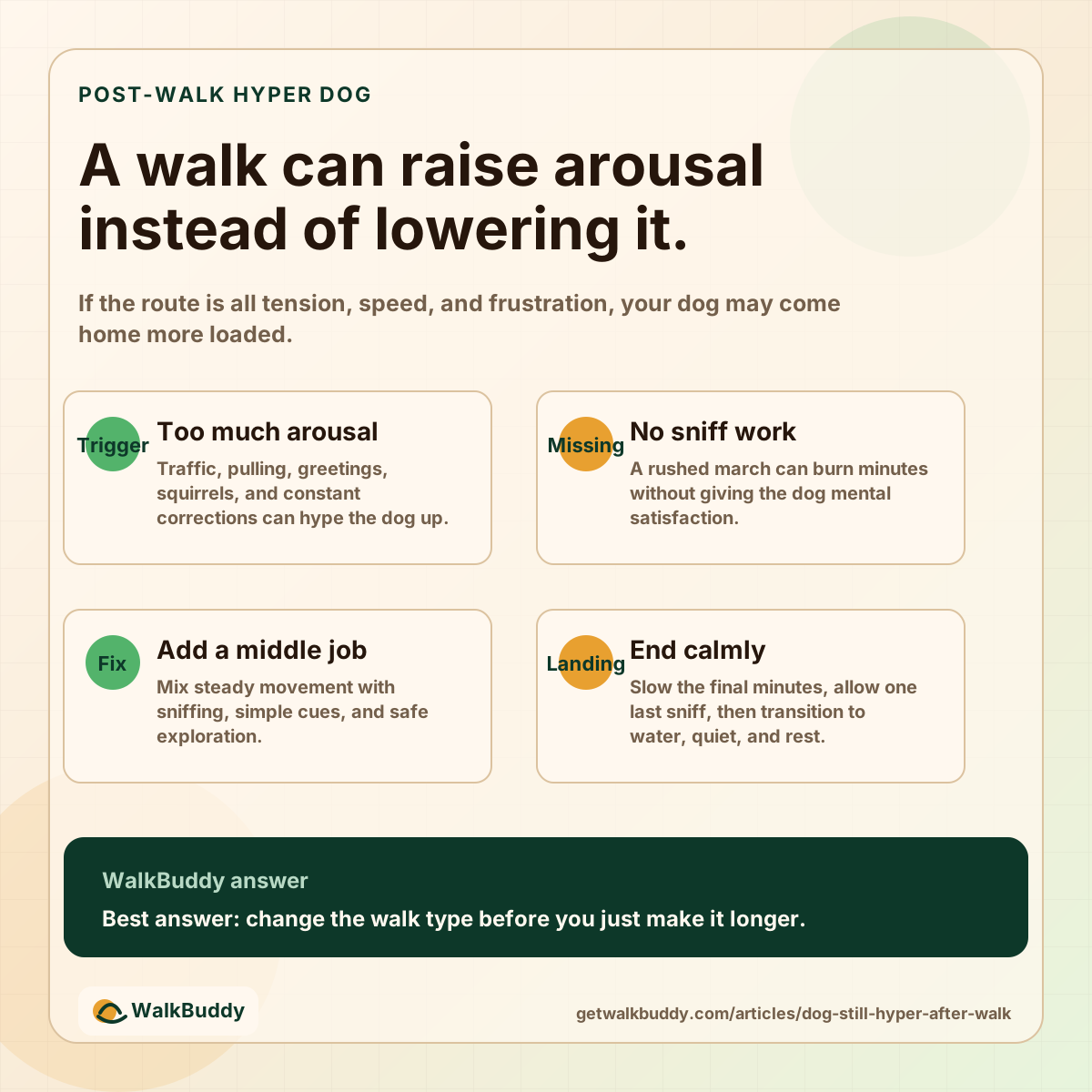
Why is my dog more hyper after a walk than before?
Your dog may be more hyper after a walk because the outing raised arousal without helping them decompress. Pulling, traffic, other dogs, rushed pace, or constant corrections can turn a walk into stimulation without satisfaction, especially for young or high-energy dogs.
A walk is not automatically calming. For some dogs, it is a highlight reel of smells, squirrels, brake lights, doorways, kids, and dogs they cannot reach.
If the whole walk is tension, the dog does not come home satisfied. The dog comes home loaded.
That does not mean walks are bad. It means the structure needs to change.
Do high-energy and working breeds need a different kind of walk?
Yes, most dogs benefit from sniffing on walks because scent work is mentally engaging and helps them process the environment. A balanced walk can include movement, training, and sniffing instead of forcing the dog to march the whole route like a tiny employee.
Sniffing is not the dog wasting your time. Sniffing is the dog reading the neighborhood.
For many dogs, ten minutes with several good sniff stops can be more satisfying than a rushed twenty minute pull-fest.
Try this: pick two parts of the walk. One part is moving. One part is sniffing. Give both a job.
How should a walk end if I want my dog to calm down at home?
A settling walk should end with a calmer final few minutes, not a sprint to the door. Slow the pace, avoid intense greetings near home, allow one final sniff stop, then transition inside with water, quiet, and a predictable post-walk routine.
The last five minutes matter more than people think.
If the end of every walk is a tug-of-war up the stairs, a hallway dog encounter, and you rushing to a meeting, your dog may carry that arousal inside.
Build a landing strip: slower pace, final sniff, water, quiet. Same pattern. Every time.
Questions owners ask when the leash is already in their hand
-
How do I tire out a high-energy dog?
Use a mix of walking, sniffing, short training, play, and recovery. High-energy dogs often need mental work as much as mileage. Increase gradually, watch recovery, and avoid turning every outing into a frantic endurance test.
-
Are zoomies after a walk normal?
Occasional zoomies can be normal, especially in young dogs. Frequent frantic energy after every walk can mean the walk is too exciting, too short, or not satisfying enough. Track patterns before changing everything.
-
Should I walk faster to tire my dog out?
Not always. Faster walking can help some dogs, but it can also raise arousal. Many dogs settle better with a mix of steady movement, sniffing, and a calm finish rather than speed alone.
Build the walk your dog can actually settle from.
GetWalkBuddy helps you track what kind of walks lead to calmer nights, not just longer routes.