
- Use the blunt keyword, but do not shame the dog or the owner.
- Walking is usually the default starting point, but the dose matters.
- No running, fetch marathons, heat-heavy routes, or forced climbs until your vet says the body is ready.
Turn this answer into a walk you can actually track.
GetWalkBuddy is a dog walking app for owners who want a simple route tracker, timer, distance view, and daily walk log without turning the walk into a spreadsheet.
What is the first step in a fat dog exercise plan?
The first step in a fat dog exercise plan is a veterinary check and a realistic starting routine. Obesity can hide joint pain, breathing limits, heart strain, or other health issues. Exercise should start where the dog is, not where guilt wants them to be.
This is not about scolding. It is about physics.
A heavier body asks more from joints, lungs, and heat regulation. If you rush the plan, your dog may avoid movement because movement hurts.
Start small enough that your dog still trusts the leash tomorrow.
What exercises should a fat dog start with?
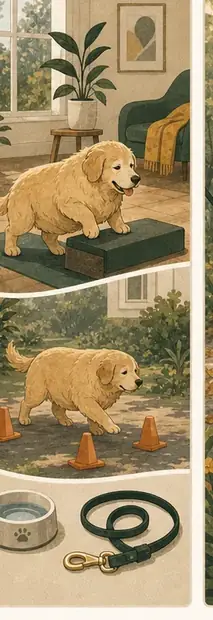
A fat dog should usually start with gentle walking, easy sniff walks, controlled indoor movement, and possibly swimming if available and approved by a veterinarian. Avoid forced running, long fetch sessions, and rough play until fitness improves.
Walking is accessible. Sniffing adds mental work without turning the body into a project.
Swimming can be useful for some dogs, but it is not automatically safe for every breed, body, or setting.
The best first exercise is the one your dog can do calmly and repeat.
How do I know if the exercise plan is too hard?
The exercise plan may be too hard if your dog limps, refuses movement, pants heavily at rest, coughs, slows dramatically, overheats, seems sore after sleeping, or needs more recovery than usual. Shorten the plan and call your veterinarian when signs persist.
Exercise should challenge the routine, not punish the body.
If your dog is wiped out for the rest of the day or worse the next morning, the plan is speaking clearly.
Make the next version easier. That is not failure. That is adaptation.
Questions owners ask when the leash is already in their hand
-
Can a fat dog exercise too much?
Yes. Overweight dogs can be over-exercised, especially in heat, with joint pain, breathing issues, or sudden increases. Build gradually and involve your veterinarian.
-
Is swimming good for fat dogs?
Swimming can be low impact and helpful for some dogs, but it depends on safety, breed, confidence, water access, and medical status. Ask your veterinarian first.
-
Should I run with my overweight dog?
Usually not at the start. Running can add strain before the dog has enough fitness. Begin with gentle walking and progress only with veterinary guidance.
Start gently. Keep going.
GetWalkBuddy helps you set modest targets, build streaks, and turn an exercise plan into a routine your dog can trust.