
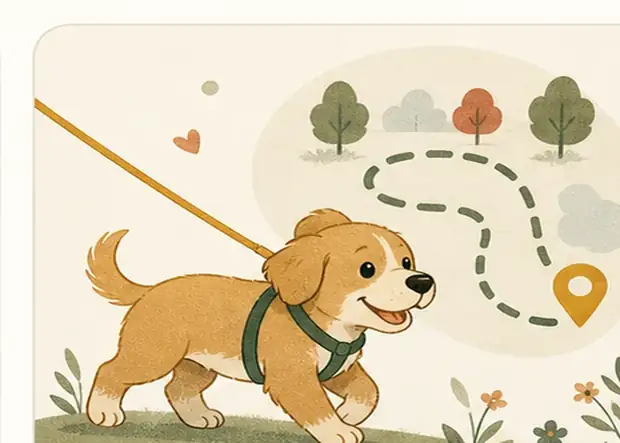
- Puppies need safe exploration, not adult dog mileage.
- Short, calm outings with sniffing can be more useful than long forced walks.
- Ask your vet about vaccination timing, growth concerns, breed risk, and safe surfaces.
Turn this puppy answer into a tiny repeatable walk.
A puppy walking schedule app should help you repeat short, age-aware outings, log tiny wins, and protect rest instead of pushing a puppy into adult-distance walks before they are ready.
Why should puppy walks be shorter than adult dog walks?
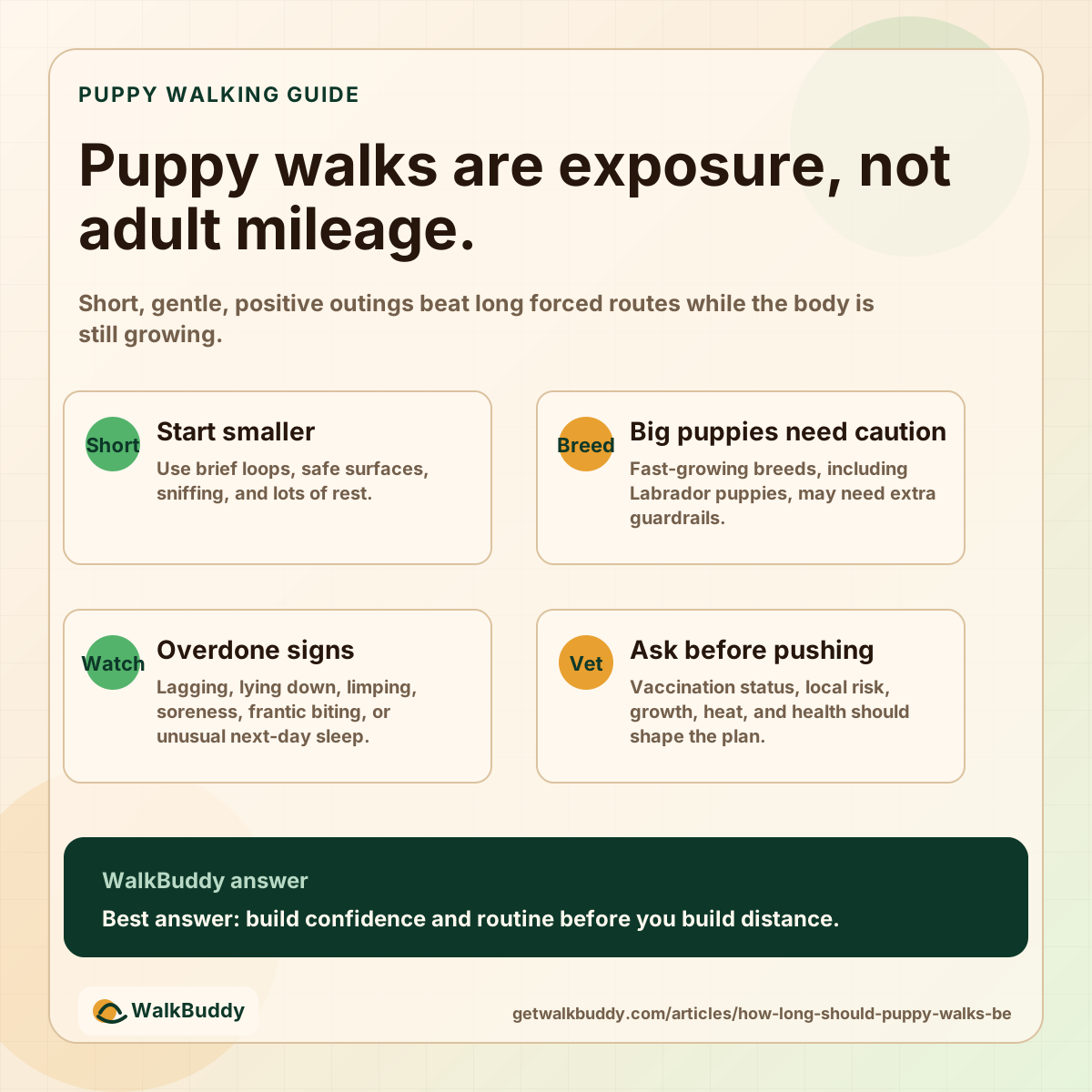
Puppy walks should be shorter because puppies are still growing, learning, and building tolerance. Long forced walks can overwhelm their bodies and brains. Safe puppy exercise is usually frequent, gentle, playful, and flexible rather than one adult-style march.
The trap is that puppy energy looks endless. It is not endless. It is badly regulated.
A puppy may sprint, bite your sleeve, fall asleep, wake up, and choose chaos again. That does not mean the puppy needs a five mile route.
Think exposure, not exhaustion: new smells, tiny loops, soft surfaces, calm returns.
How much exercise does a Labrador Retriever puppy need daily?
A Labrador Retriever puppy usually needs short, frequent, low-impact exercise rather than adult-distance walks. Because Labradors grow quickly and can be enthusiastic through fatigue, daily activity should be built around gentle walks, sniffing, play, rest, and veterinary guidance.
This is where breed matters. A Lab puppy can look like a tiny athlete with no off switch, but the growth plates, joints, and recovery system are still young.
Give the puppy a day with shape: a short outing, a little sniffing, a little play, a lot of sleep. Do not use adult Labrador stamina as the target.
If your puppy is limping, refusing, crashing unusually hard, or getting wild after every outing, the plan is probably asking the wrong question.
How do I know if I over-exercised my puppy?
Possible signs of too much puppy exercise include lagging behind, lying down mid-walk, limping, soreness, crankiness, frantic biting, reluctance to walk later, or sleeping in a way that feels unusual. When in doubt, shorten the next outing and ask your veterinarian.
A puppy who refuses to continue is not being dramatic for content. The puppy is giving you data.
Watch the next day too. If your puppy seems sore, avoid repeating the same distance just because yesterday technically happened.
Progress should look boring. A little more tolerance, a little more confidence, no big crash.
Questions owners ask when the leash is already in their hand
-
Can you walk a puppy too much?
Yes. Puppies can be over-exercised, especially with long forced walks, intense running, repetitive impact, heat, or hard surfaces. The safe amount depends on age, breed, size, health, and veterinary guidance.
-
Should puppies sniff on walks?
Yes, sniffing is valuable for puppies when the environment is safe. Sniffing helps puppies explore, learn, and mentally process the world. A short sniff-focused walk can be more useful than a rushed distance goal.
-
When can my puppy go on normal walks?
Ask your veterinarian, because vaccination timing, local disease risk, breed, and growth concerns matter. Many puppies start with safe, controlled outings before gradually building toward longer walks as they mature.
Give your puppy a routine that grows with them safely.
GetWalkBuddy helps you make short walks feel like progress, not failure.