
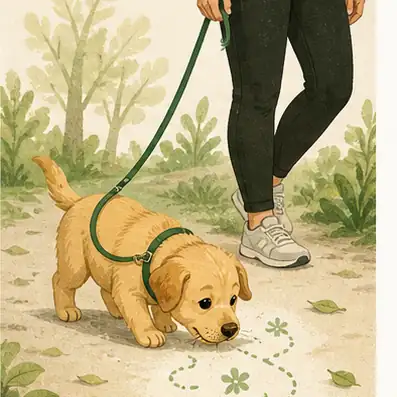
- Puppy walks should be short, gentle, and exploratory.
- The right amount changes as the puppy grows.
- Vaccination status, breed size, heat, and recovery are part of the walking plan.
Turn this puppy answer into a tiny repeatable walk.
A puppy walking schedule app should help you repeat short, age-aware outings, log tiny wins, and protect rest instead of pushing a puppy into adult-distance walks before they are ready.
How much walking does a puppy need?
A puppy needs enough walking to explore safely, practice leash skills, toilet outside, and burn some energy, but not so much that the walk becomes forced endurance. The right amount changes with age, breed, health, weather, and veterinary advice.
A puppy walk is not just exercise.
It is a classroom, a bathroom break, a sniff tour, a confidence session, and sometimes a lesson in not eating suspicious sidewalk objects.
That means quality matters more than distance.
How do I know if a puppy walk is too far?
A puppy walk may be too far if your puppy lies down repeatedly, lags behind, pants heavily, becomes frantic, limps, seems sore later, or sleeps in an unusual knocked-out way. End early and build more slowly if the walk leaves your puppy worse, not calmer.
Puppies do not always read the manual on self-regulation.
Some quit loudly. Some keep going because everything is interesting. Your job is to be the boring adult in the room.
The right walk should leave the puppy pleasantly done, not flattened.
What is a good puppy walking routine?
A good puppy walking routine uses short outings, safe surfaces, sniffing, gentle leash practice, bathroom opportunities, and recovery. Public walks should follow your veterinarian's vaccine guidance, and high-impact activity should wait until the puppy is ready.
Do less, repeat more, and keep the whole thing positive.
The early routine is not about proving stamina. It is about building a dog who likes the leash, trusts the outside world, and comes home with something left in the tank.
That is a better investment than one long walk everyone regrets.
Questions owners ask when the leash is already in their hand
-
How many times a day should I walk a puppy?
Many puppies need several short outings for bathroom breaks, practice, and exploration, but exercise walks should stay gentle and age-appropriate.
-
Should puppy walks include sniffing?
Yes. Safe sniffing helps puppies explore and learn without needing long distances or hard exercise.
-
Is it bad if my puppy sits down on a walk?
Not always. Puppies may sit from fatigue, uncertainty, distraction, heat, or fear. Shorten the walk and watch the pattern.
Track the moving number.
GetWalkBuddy helps you keep puppy walks short, visible, and age-aware as the routine changes month by month.