
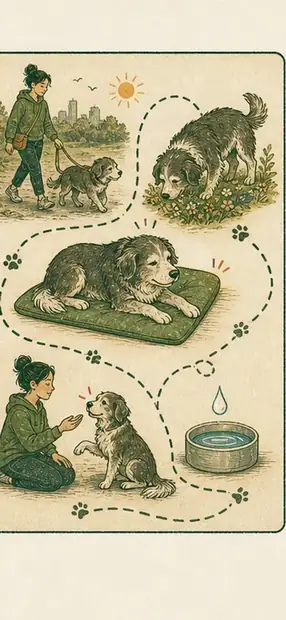
- Senior activity should be small enough to repeat.
- Sniffing and easy training can keep the brain involved when speed drops.
- Watch recovery. A good activity plan should not make tomorrow worse.
Turn this senior-dog answer into a gentler walking routine.
A senior dog walking app should make gentle movement visible: shorter walks, slower routes, willingness changes, recovery signals, and the patterns you may want to discuss with your veterinarian.
How do I keep my senior dog active?
Keep your senior dog active by using gentle daily movement, sniff walks, short play sessions, simple training, safe footing, and rest breaks. Adjust for pain, weather, stamina, and veterinary advice. Small consistent activity is usually safer than rare big bursts.
You do not need to turn the old dog into an athlete.
You need to keep the day from getting too small.
A few repeatable movement moments can protect more dignity than one ambitious weekend walk.
How can I keep a senior dog's brain active?
Keep a senior dog's brain active with sniffing, food puzzles, gentle training, new but easy routes, and calm social exposure. Mental activity should be encouraging, not frustrating, especially if the dog has sensory decline, anxiety, or cognitive changes.
The brain still wants a job.
That job may be slower now: smell this patch, find this treat, practice one old cue, take a different quiet street.
Enrichment does not need to be loud to count.
What should I avoid with senior dog exercise?
Avoid sudden hard exercise, slippery surfaces, heat, forced distance, intense jumping, and pushing through limping or reluctance. Senior dogs may hide discomfort, so watch their gait, breathing, mood, and next-day stiffness.
The older body is less forgiving of owner optimism.
A dog who tries to please you may keep going past the wise point.
Your job is to notice the line before the dog has to shout it.
Questions owners ask when the leash is already in their hand
-
How often should I exercise a senior dog?
Many senior dogs do well with gentle daily activity, often split into shorter sessions, but the plan should fit health and veterinary guidance.
-
Can senior dogs do training games?
Yes. Easy training can provide mental stimulation and confidence, as long as it is gentle and not physically stressful.
-
What if my senior dog only wants short walks?
Short walks can still be valuable. Add sniffing, safe surfaces, and consistency, and ask a vet if the change is sudden or painful.
Make activity gentle enough to last.
GetWalkBuddy helps you track short walks, sniff breaks, and recovery patterns so senior activity becomes steady instead of scary.