
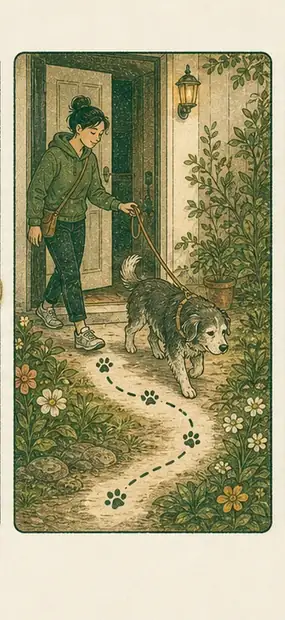
- Size changes the load on a dog's body, but it does not dictate one exercise target.
- Increase distance and pace gradually, then watch recovery the next day.
- Pain, limping, lagging, heat stress, or sudden reluctance are reasons to pause and call a veterinarian.
Turn this answer into a walk you can actually track.
GetWalkBuddy is a dog walking app for owners who want a simple route tracker, timer, distance view, and daily walk log without turning the walk into a spreadsheet.
How much exercise does a large dog need?
A healthy adult large dog often needs regular daily movement, but the right amount ranges widely with breed, age, health, weather, and what the dog does during the walk. Use a manageable baseline and build from the dog's recovery.
A Great Dane, a young Labrador, and a German Shepherd may all be large dogs, yet their bodies, energy, and tolerance for mileage are not interchangeable.
Instead of chasing a universal number, repeat a comfortable routine for a week. Look for a dog who settles afterward and moves normally the next morning.
What makes large-dog exercise safer?
Safer large-dog exercise favors steady walking, sniffing, softer surfaces where practical, cooler times of day, and gradual changes. Repeated high-impact activity or sudden mileage jumps can be harder on a large body.
The boring-looking walk can be the smart one. Consistency beats the weekend hero session that leaves everyone sore.
If weight, joints, or conditioning are concerns, ask your veterinarian what progression is appropriate before turning a modest route into a training plan.
What are signs a large dog needs less exercise today?
Lagging, repeated stops, stiffness, limping, heavy panting, trouble recovering, or a new refusal to walk can mean the plan needs to be shortened or assessed. A sudden change deserves professional attention.
Do not explain away a new limp because the dog is big or getting older. Patterns are useful; sudden changes are important.
GetWalkBuddy can help you remember the route and time, but it cannot diagnose pain, joint disease, or heat illness.
Questions owners ask when the leash is already in their hand
-
Are long walks always best for large dogs?
No. A walk should fit the dog's health, conditioning, weather tolerance, and recovery. Longer is not automatically better.
-
Can large-breed puppies go on long walks?
Ask your veterinarian. Growing large-breed puppies need careful, age-appropriate activity rather than forced endurance.
Build a routine your large dog can repeat.
GetWalkBuddy makes the route, time, and small wins visible—without pretending every big dog needs the same workout.