
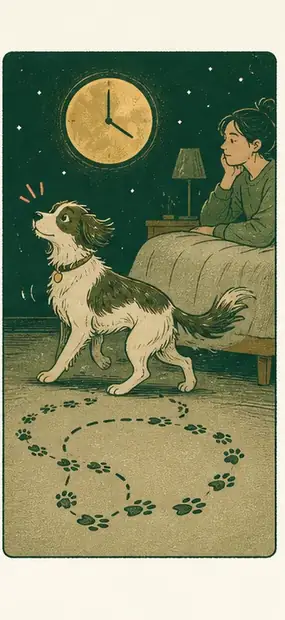
- First check routine: movement, sniffing, food timing, bathroom needs, and wind-down.
- Then check environment: heat, noise, light, surfaces, and household changes.
- Senior or sudden night restlessness should be treated as a possible medical signal.
Turn this answer into a walk you can actually track.
GetWalkBuddy is a dog walking app for owners who want a simple route tracker, timer, distance view, and daily walk log without turning the walk into a spreadsheet.
Why is my dog restless at night?
A dog can be restless at night because the day did not meet their movement or mental needs, or because of discomfort, anxiety, aging, pain, bathroom needs, or environmental disruption. The pattern and suddenness matter.
Do not jump to one answer.
A young dog bouncing at night after a dull day is one story. A senior dog pacing for the first time this week is another story entirely.
Start with what changed, then look at what the day actually gave the dog.
What should I check when my dog will not settle at night?
Check whether your dog had enough movement, sniffing, bathroom access, food and water balance, a calm final routine, comfortable temperature, and a quiet sleeping place. If those are clean, consider pain, anxiety, or medical causes.
This is the boring checklist that saves owners from dramatic guesses.
Did the dog move? Did the dog sniff? Did the final outing end calmly? Is the room too warm? Is the dog asking to eliminate? Is there a new noise?
GetWalkBuddy cannot diagnose discomfort, but it can remove the fog around the activity piece.
Why is my senior dog restless at night?
Senior dogs may become restless at night from pain, cognitive changes, anxiety, sensory decline, or medical problems. ASPCA notes that older dogs can have sleep-wake disturbances, pacing, anxiety, and other behavior changes that need veterinary evaluation.
Older dogs do not owe us convenient symptoms.
Restlessness may be the first visible sign that something hurts, feels confusing, or is not working the way it used to.
If your senior dog suddenly cannot settle, make the vet call.
Questions owners ask when the leash is already in their hand
-
Can lack of exercise make a dog restless at night?
Yes. Too little movement or mental stimulation can leave a dog restless at night, especially if the dog spends much of the day inactive.
-
Why is my dog pacing at night?
Pacing can come from unmet activity needs, anxiety, discomfort, bathroom needs, cognitive changes, or medical issues. New or intense pacing should be discussed with a vet.
-
Should I ignore my restless dog at night?
Do not automatically ignore it. First rule out bathroom needs, discomfort, fear, pain, and medical changes. Then work on routine and calm training.
Separate routine problems from mystery.
GetWalkBuddy helps you see whether your dog's day had enough movement and decompression before the restless night begins.