
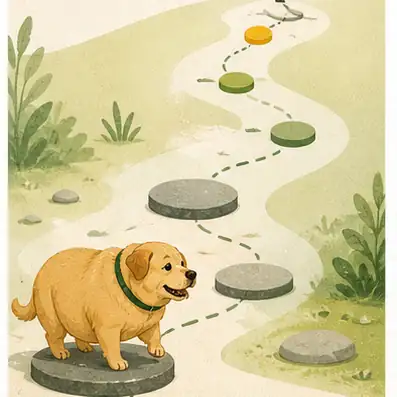
- Get veterinary guidance before increasing exercise for an obese dog.
- Begin with short, flat, low-impact walks and increase slowly.
- The plan succeeds when the dog can repeat it comfortably, not when one walk looks impressive.
Turn this answer into a walk you can actually track.
GetWalkBuddy is a dog walking app for owners who want a simple route tracker, timer, distance view, and daily walk log without turning the walk into a spreadsheet.
What is a safe obese dog exercise plan?
A safe obese dog exercise plan usually starts with a veterinarian-approved weight target, measured food, and short gentle walks on flat ground. Increase duration slowly only if the dog recovers comfortably, and avoid heat, running, jumping, stairs, and long routes until fitness improves.
Think of the first month as rebuilding trust with movement.
The dog learns the walk is doable. You learn what the body can handle. The routine becomes data instead of a guilt project.
That is a better foundation than intensity.
How can I structure the first few weeks?
For the first few weeks, choose very short easy walks, repeat them consistently, and watch recovery before adding time. If your veterinarian approves, increase in small steps rather than changing speed, distance, and terrain at once.
Do not change every variable at the same time.
Keep the route flat. Keep the pace easy. Keep the weather kind. Then add a little more only when the dog finishes and recovers well.
Progress should look almost boring from the outside.
What should I track during an obese dog exercise plan?
Track walk duration, route, pace, weather, panting, lagging, limping, appetite, energy, and next-day stiffness. These details help you adjust safely and give your veterinarian better information if the plan stalls or symptoms appear.
The scale tells one part of the story.
The walk log tells the part that keeps the plan humane: what your dog could repeat, what made them sore, and what actually became easier.
That is where GetWalkBuddy earns its keep.
Questions owners ask when the leash is already in their hand
-
Can an obese dog start with long walks?
Usually no. Many obese dogs should start with short low-impact walks and veterinary guidance, then build gradually.
-
Is swimming good exercise for an obese dog?
Swimming can be useful for some dogs because it is low-impact, but not every dog is safe or comfortable in water. Ask your veterinarian.
-
What if my obese dog refuses to walk?
Do not force it. Pain, heat, fear, fatigue, or medical issues may be involved, so talk with your veterinarian and restart with a gentler plan.
Build the plan your dog can repeat.
GetWalkBuddy turns each walk into a record of distance, time, and recovery clues so an obese dog exercise plan can improve without guesswork.