
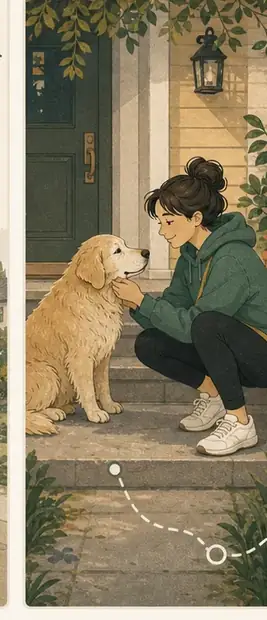
- Refusing a walk is a message. It may be pain, fear, fatigue, heat, or confusion.
- Do not force a senior dog through a sudden change. Shorten, soften, and observe.
- Call a veterinarian if refusal is new, repeated, painful, or paired with appetite, breathing, mobility, or behavior changes.
Turn this senior-dog answer into a gentler walking routine.
A senior dog walking app should make gentle movement visible: shorter walks, slower routes, willingness changes, recovery signals, and the patterns you may want to discuss with your veterinarian.
Why does my old dog not want to walk anymore?
Your old dog may not want to walk because walking has become uncomfortable, confusing, frightening, or exhausting. Common causes include joint pain, muscle loss, illness, heat, slippery surfaces, vision changes, hearing loss, anxiety, or a route that now asks too much.
The mistake is assuming the dog is being difficult. Dogs usually do not retire from their favorite habit for no reason.
A senior dog who refuses may be protecting a sore hip, avoiding a scary sidewalk, struggling in heat, or telling you the old route got too big.
Start by making the walk smaller and easier. Then watch whether willingness returns.
What should I do today if my old dog refuses to walk?
If your old dog refuses to walk today, stop forcing the route, check for obvious pain or injury, offer a short bathroom break, use a softer surface if possible, avoid heat, and call your veterinarian if refusal is sudden, severe, repeated, or unusual.
Today is not the day to win a power struggle with an elderly body.
Try a tiny version of the routine: out, sniff, bathroom, back. If your dog moves better later or on cooler ground, you learned something.
If the refusal comes with limping, yelping, weakness, coughing, appetite changes, confusion, or collapse, that is not a content topic. That is a vet call.
How do I help an old dog enjoy walks again?
Help an old dog enjoy walks again by rebuilding confidence with shorter routes, slower pace, sniff breaks, familiar paths, traction-friendly surfaces, cooler times of day, rewards, and predictable endings. Increase only when the dog recovers comfortably.
Think comeback, not comeback story. No montage required.
A senior dog's win may be four calm minutes to the tree and back. If that becomes easy, you add a little. If it becomes hard, you pull back.
GetWalkBuddy helps by making tiny progress visible. That matters when progress no longer looks dramatic.
Questions owners ask when the leash is already in their hand
-
Should I drag my old dog if they stop walking?
No. Dragging can worsen fear, pain, or injury. Pause, assess, shorten the route, and seek veterinary advice if stopping is new, repeated, painful, or severe.
-
Why does my senior dog stop and stare on walks?
Stopping and staring can come from fatigue, pain, scent interest, confusion, vision or hearing changes, anxiety, or simply needing a break. Repeated changes deserve closer tracking and veterinary guidance.
-
Can anxiety make an old dog refuse walks?
Yes. Older dogs can become more sensitive to noise, surfaces, dogs, traffic, or route changes. Gentle familiar routes, shorter outings, and professional guidance can help.
Notice the change before it becomes a mystery.
GetWalkBuddy helps you track willingness, pace, and routine over time, so an old dog's walk refusal becomes a pattern you can act on.