
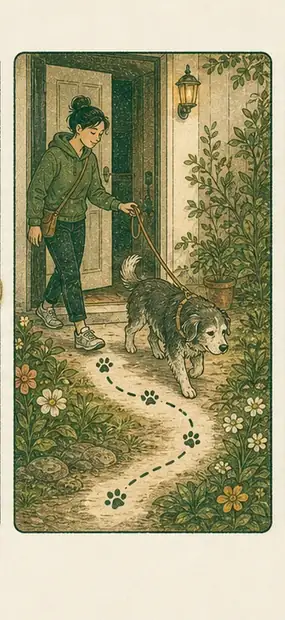
- Older dogs are not broken. They are different.
- Gentle daily movement can support mobility, weight, and confidence.
- Pain, sudden weakness, collapse, or major behavior changes need veterinary attention.
Turn this senior-dog answer into a gentler walking routine.
A senior dog walking app should make gentle movement visible: shorter walks, slower routes, willingness changes, recovery signals, and the patterns you may want to discuss with your veterinarian.
Does an old dog still need exercise?
Yes, many old dogs still need exercise to support mobility, muscle tone, weight control, mental stimulation, and quality of life. The routine should be adjusted for pain, stamina, joint health, weather, and veterinary guidance instead of simply copied from the dog's younger years.
Aging changes the walk, but it does not automatically cancel it.
The old dog may need more sniffing, more breaks, softer ground, and fewer dramatic plans.
The leash can still be a vote for life.
What exercise is good for an old dog?
Good exercise for an old dog is low-impact, predictable, and recoverable: gentle walks, sniff breaks, short play, easy training, and movement spread across the day. Avoid sudden hard efforts, slippery surfaces, heat, and activities that trigger pain.
The win is not a tired dog collapsing into bed.
The win is a dog who moved, sniffed, came home comfortable, and can do it again tomorrow.
Consistency beats heroics here.
What should I watch after an old dog exercises?
After exercise, watch for limping, stiffness, reluctance to rise, appetite changes, heavy panting, unusual sleep, anxiety, confusion, or behavior changes. These patterns can help your veterinarian understand whether the routine is helping or asking too much.
The walk does not end when you unclip the leash.
The real report may arrive that evening or the next morning.
GetWalkBuddy is useful because memory gets sentimental. Patterns are less easily fooled.
Questions owners ask when the leash is already in their hand
-
Can an old dog lose muscle from not walking?
Reduced activity can contribute to loss of strength and mobility over time, though medical issues can also play a role.
-
Should I force my old dog to walk?
No. Encourage gentle movement, but do not force a dog who is painful, distressed, weak, or refusing. Ask a veterinarian.
-
Are sniff walks good for old dogs?
Yes. Sniff walks can give mental stimulation and gentle movement without requiring a fast pace.
Keep the routine alive, gently.
GetWalkBuddy helps you build repeatable older-dog movement, then watch the patterns that tell you whether the dose is right.