
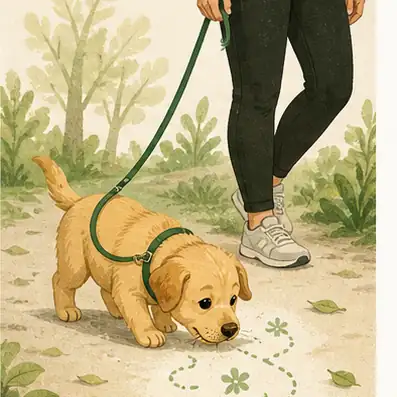
- Use short outings and plenty of sleep instead of one long forced walk.
- Build the schedule around calm practice, not distance records.
- Ask your veterinarian how public walks fit your puppy's vaccine status and local risks.
Turn this puppy answer into a tiny repeatable walk.
A puppy walking schedule app should help you repeat short, age-aware outings, log tiny wins, and protect rest instead of pushing a puppy into adult-distance walks before they are ready.
What does a simple puppy walking schedule look like?
A simple schedule may include a short morning outing, brief toilet and sniff breaks during the day, and a calm evening walk or training loop. The exact count and length should match the puppy's age, routine, and ability to recover.
Think in small chapters. A few minutes of sniffing, a little leash practice, then home for rest can be more useful than stretching one outing until the puppy melts down.
The schedule has to fit real life too. A repeatable five-minute practice walk beats a perfect plan that disappears on Wednesday.
How should the schedule change as a puppy grows?
As a puppy grows, outings can gradually become longer and more purposeful, but growth does not erase the need for rest. Watch for lagging, frantic behavior, repeated sitting, soreness, or unusual next-day fatigue.
Puppies change quickly, which is why a written schedule should stay flexible. Review it every few weeks rather than treating it as a contract.
Heat, slippery ground, fear, illness, and vaccination status can all make a normal day a shorter-walk day.
Where does leash training fit in a puppy walk?
Leash training belongs inside the walk in tiny, rewarding pieces. Practice checking in, turning with you, and moving calmly, then let safe sniffing do some of the teaching too.
The route is not a test you must finish. If the puppy is overwhelmed, shorten the route and finish with an easy win.
That is how the leash becomes a cue for safety and curiosity rather than a signal that the fun is over.
Questions owners ask when the leash is already in their hand
-
How many times a day should I take my puppy outside?
Puppies often need frequent outings for toilet breaks, training, and exploration. The right pattern depends on age, routine, and veterinary guidance.
-
Can a puppy be too tired after a walk?
Yes. Lagging, repeated lying down, heavy panting, soreness, or unusually flat behavior can mean the outing was too much or conditions were too hard.
Let the puppy routine grow gently.
GetWalkBuddy keeps short walks visible, so you can build consistency without turning puppyhood into a mileage contest.