
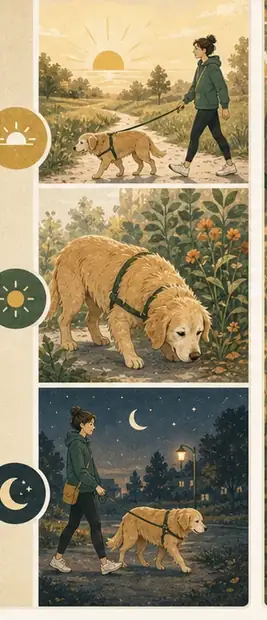
- Senior dogs often benefit from consistency and smaller chunks.
- A schedule should include movement, sniffing, bathroom needs, and recovery.
- The best senior routine changes when the dog's body changes.
Turn this senior-dog answer into a gentler walking routine.
A senior dog walking app should make gentle movement visible: shorter walks, slower routes, willingness changes, recovery signals, and the patterns you may want to discuss with your veterinarian.
What is a simple senior dog walking schedule?
A simple senior dog walking schedule can include a short morning bathroom walk, a gentle midday sniff or movement loop, and a short evening outing. Each walk should be adjusted for pain, heat, appetite, sleep, and recovery.
Do not start with the perfect schedule. Start with a schedule your dog can forgive.
Morning can be a stiffness check. Midday can be a sniff-heavy loop if the weather allows it. Evening can be a calm closeout, not a last-minute workout.
GetWalkBuddy makes multiple small walks feel like progress instead of scattered chores.
Why are shorter walks often better for senior dogs?
Shorter walks are often better for senior dogs because they reduce fatigue, allow more recovery, support bathroom needs, and make it easier to avoid heat, slippery surfaces, and pain flare-ups. Several gentle outings can be easier than one demanding route.
This is not about making your life complicated. It is about lowering the cost of movement.
An older dog may handle three tiny walks better than one walk that looks efficient but leaves them sore.
The schedule should protect tomorrow's walk. That is the senior dog rule hiding under everything.
How should I adjust a senior dog's walking schedule?
Adjust a senior dog's walking schedule by watching appetite, stiffness, sleep, willingness, weather tolerance, and recovery. Shorten after rough days, choose easier surfaces, add sniff time, and ask your veterinarian about changes that are sudden, painful, or progressive.
A senior schedule is not a contract. It is a conversation.
If your dog wakes up stiff, the morning walk can become a slow sniff. If the afternoon is hot, move the meaningful outing earlier or later.
The better you track the pattern, the less you have to guess.
Questions owners ask when the leash is already in their hand
-
How many times a day should I walk my senior dog?
Many senior dogs do well with several short outings, but the number depends on bathroom needs, mobility, pain, weather, and health. Ask your veterinarian when medical limits are involved.
-
Is one long walk or several short walks better for senior dogs?
Several short walks are often easier for senior dogs because they spread movement and recovery across the day. Some dogs still enjoy longer walks if they recover comfortably.
-
Should senior dogs walk before or after meals?
Avoid intense exercise right around large meals, and ask your veterinarian for breed-specific risk guidance. Gentle bathroom walks may be different from exercise walks.
Make small walks count.
GetWalkBuddy helps you log multiple gentle outings and see the whole senior routine, not just the one walk you remembered.