

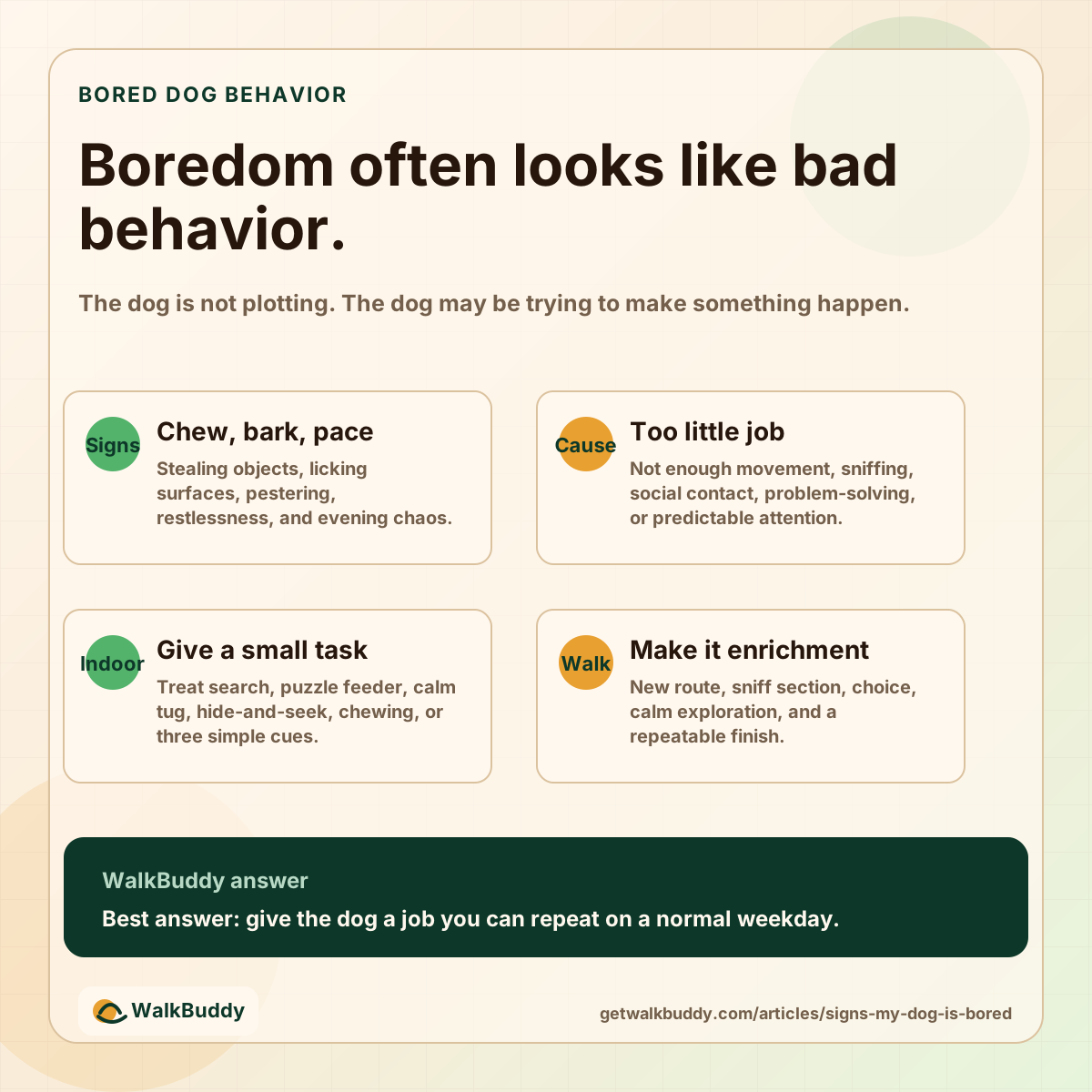
- Boredom often looks like misbehavior because the dog is trying to make something happen.
- Walks can become enrichment when they include scent, choice, new routes, and calm exploration.
- A bored dog needs a repeatable routine, not a random heroic Saturday.
Turn this answer into a walk you can actually track.
GetWalkBuddy is a dog walking app for owners who want a simple route tracker, timer, distance view, and daily walk log without turning the walk into a spreadsheet.
How can I tell if my dog is bored or has a training problem?
A bored dog often acts out when nothing else is available: chewing, barking, pacing, stealing, or pestering. Bad behavior is the label humans use. Boredom is one possible cause, especially when the dog improves after more movement, sniffing, and predictable engagement.
This distinction matters because punishment does not give a bored dog a job.
If your dog chews the same corner every evening, barks after short walks, or steals things only when the house goes quiet, ask what need is being unmet before you reach for a bigger scold.
Sometimes the dog is not challenging your authority. Sometimes the day had nothing in it.
What kinds of toys and indoor exercise help a bored dog?
Toys and indoor exercise can help a bored dog when they create a small job: sniffing, searching, chewing, problem-solving, tugging calmly, or practicing simple cues. Food puzzles, treat searches, hide-and-seek, short training, and safe indoor movement often work better than random chaos.
You do not need a garage full of expensive puzzle toys. You need activities that ask your dog to use the dog brain.
Scatter a few treats in a safe room. Hide one toy. Practice three easy cues. Let a chew do its job. Keep it calm enough that the dog finishes more settled, not more frantic.
The boring-looking indoor routine often beats the dramatic one because you can repeat it tomorrow.
Can a normal daily walk count as real enrichment?
A normal daily walk can count as enrichment when it gives the dog controlled access to scent, movement, choice, route variation, and calm exploration. The same sidewalk loop can be physically useful, mentally boring, or deeply satisfying depending on how the walk is handled.
You do not need to turn every walk into an expedition. You need to stop treating every walk like a commute.
Let your dog sniff one tree without negotiation. Turn left sometimes. Use a quiet street for decompression. Add a short sit-and-watch moment if your dog can handle it.
Enrichment is not fancy. It is the dog getting to use the dog brain.
Questions owners ask when the leash is already in their hand
-
Do dogs get bored at home all day?
Yes, dogs can get bored at home, especially with little movement, scent, play, or interaction. Some dogs handle quiet days better than others. Repeated restlessness or destructive behavior can be a sign the routine needs more stimulation.
-
Is chewing a sign of boredom?
Chewing can be a sign of boredom, but it can also come from teething, anxiety, habit, or lack of appropriate chew outlets. Look at timing, frequency, and whether better exercise and enrichment reduce the behavior.
-
How do I mentally stimulate my dog on walks?
Let your dog sniff, vary the route, practice simple cues, pause calmly in new places, and reward check-ins. Mental stimulation does not need to be complicated. It needs to let your dog think and process the world.
Turn the walk into enrichment, not just an errand.
GetWalkBuddy helps you keep the small routine visible: movement, streaks, badges, and a reason to start again tomorrow.