
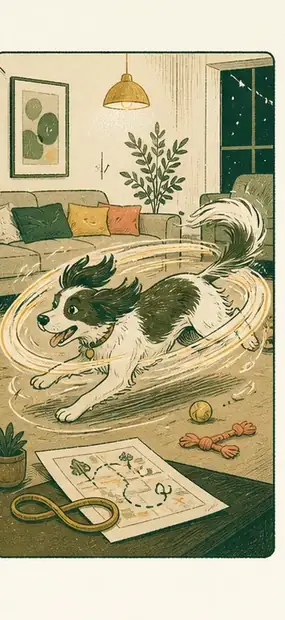
- The night problem usually starts before night.
- Dogs need movement, mental work, and a calm landing, not only a fast walk.
- If the behavior is sudden, extreme, or senior-related, rule out medical causes.
Turn this answer into a walk you can actually track.
GetWalkBuddy is a dog walking app for owners who want a simple route tracker, timer, distance view, and daily walk log without turning the walk into a spreadsheet.
Why does my dog go crazy at night?
Your dog may go crazy at night because they did not get enough satisfying activity earlier: movement, sniffing, play, training, and decompression. Night becomes the moment leftover energy finally has somewhere to go.
It feels random because it happens fast.
But the ingredients were probably added all day: boredom, skipped sniffing, short walks, too much confinement, and no signal that the day is winding down.
By evening, the dog is not making a plan. The dog is releasing pressure.
Is a dog going crazy at night just bored?
Sometimes yes. A bored dog may create their own entertainment through zoomies, barking, chewing, stealing objects, or pestering people. Boredom often improves when walks include sniffing, novelty, and mental work.
A dog with no job will eventually apply for one.
You may not like the job description.
Give the dog a better job before bedtime: sniff, practice, move, settle.
How does decompression change nighttime behavior?
Decompression gives a dog a slower transition from activity to rest. A calm final few minutes, sniffing, quiet handling, or settle practice can help some dogs end the day instead of crashing from stimulation into confinement.
Many walks end like someone yanking a power cord.
One second the world is smells and motion. The next second the leash is off and the house is supposed to be quiet.
Add a landing strip. Slow pace. Final sniff. Water. Quiet. Same pattern tomorrow.
Questions owners ask when the leash is already in their hand
-
Why does my dog get zoomies at night?
Night zoomies can come from leftover energy, excitement, boredom, or a lack of decompression. Occasional zoomies are common; daily chaos may need a routine change.
-
How do I stop my dog from going crazy every night?
Improve the daytime routine, add sniffing and mental work, avoid high-arousal play right before bed, and end the evening with a calm predictable sequence.
-
Can nighttime craziness be medical?
Yes. Sudden agitation, pacing, confusion, pain signs, panting, or senior sleep changes should be evaluated by a veterinarian.
Fix the afternoon before it becomes the night.
GetWalkBuddy helps you track the walk quality, sniffing, and routine signals that make calmer evenings more likely.