
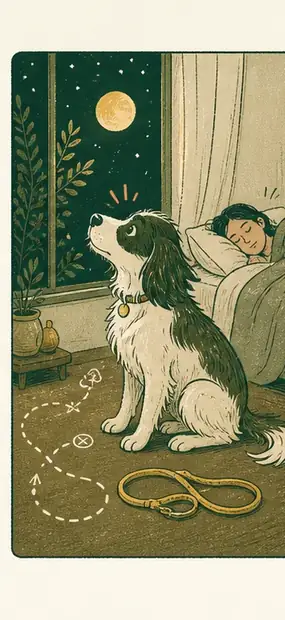
- Night hyperactivity often starts earlier in the day.
- A tired body is not always a satisfied dog; sniffing and decompression matter.
- Sudden or senior nighttime behavior changes deserve veterinary attention.
Turn this answer into a walk you can actually track.
GetWalkBuddy is a dog walking app for owners who want a simple route tracker, timer, distance view, and daily walk log without turning the walk into a spreadsheet.
Why is my dog so hyper at night?
A dog may get hyper at night because they did not get enough movement, sniffing, play, or calm structure during the day. Evening can expose the gap between a walk that happened and a walk that actually helped the dog settle.
The cruel part is that you may have walked the dog and still missed the need.
A fast leash march can move the legs while leaving the brain open for business. By bedtime, that unfinished business becomes barking, zoomies, toy attacks, or sprinting laps through the house.
The fix is not always a longer walk. It is often a better-designed day.
Can too little sniffing make a dog hyper at night?
Yes. Sniffing gives dogs mental work and helps them process the environment. A walk with no sniffing can leave a dog physically moved but mentally under-stimulated, which may show up as restless behavior later.
Dogs do not read the neighborhood with their eyes the way you do. They read it with their nose.
If every walk is hurry, heel, and home, you may be skipping the part that makes the dog feel finished.
Try adding controlled sniff breaks and watch the evening, not just the route.
When is nighttime hyperactivity a vet issue?
Nighttime hyperactivity should be discussed with a veterinarian if it is sudden, escalating, paired with pain, panting, confusion, house soiling, appetite changes, breathing issues, or appears in a senior dog who used to sleep normally.
Not every wild night is a walking problem.
ASPCA notes that older dogs can show sleep-wake changes, pacing, restlessness, and anxiety, and medical issues should be ruled out.
If this is new or weird for your dog, do not turn the internet into a diagnosis machine. Call the vet.
Questions owners ask when the leash is already in their hand
-
Should I walk my dog when they get hyper at night?
A short calm sniff walk can help some dogs, but avoid turning nighttime chaos into a high-arousal game. The bigger fix is usually tomorrow's daytime routine.
-
Are dog zoomies at night normal?
Occasional zoomies can be normal. Frequent nightly chaos may mean the dog needs more appropriate activity, mental stimulation, or a clearer wind-down routine.
-
Why is my senior dog hyper at night?
Senior dogs can become restless at night from pain, cognitive changes, anxiety, sensory decline, or medical issues. Ask your veterinarian if this is new or increasing.
Find the missing piece before bedtime.
GetWalkBuddy helps you see whether your dog got movement, sniffing, and a routine that actually sets up a calmer night.