
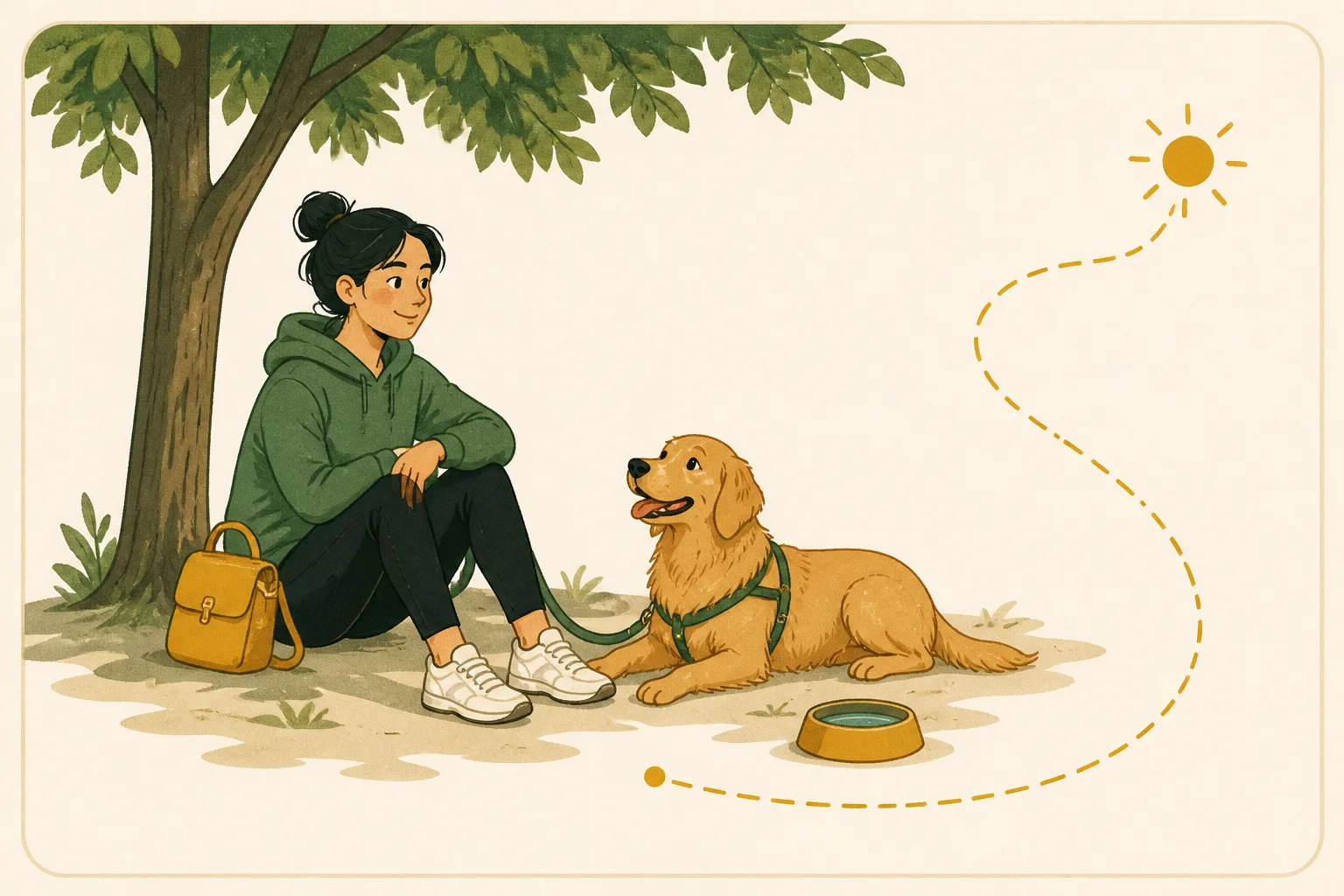
- Check the individual dog, humidity, sun, surface, shade, water, and escape route before leaving.
- Choose a slow short sniff walk or indoor activity instead of trying to preserve normal mileage.
- Heavy panting, confusion, weakness, vomiting, collapse, or abnormal gums require immediate cooling and veterinary help.
Turn this answer into a walk you can actually track.
GetWalkBuddy is a dog walking app for owners who want a simple route tracker, timer, distance view, and daily walk log without turning the walk into a spreadsheet.
Dog hot-weather pre-walk check
This check avoids a fake universal temperature cutoff. Choose the full conditions and the dog's risk profile to get a conservative next step.
This is a planning aid, not veterinary clearance. Source: PDSA heatstroke guidance.
What should you check before a hot-weather dog walk?
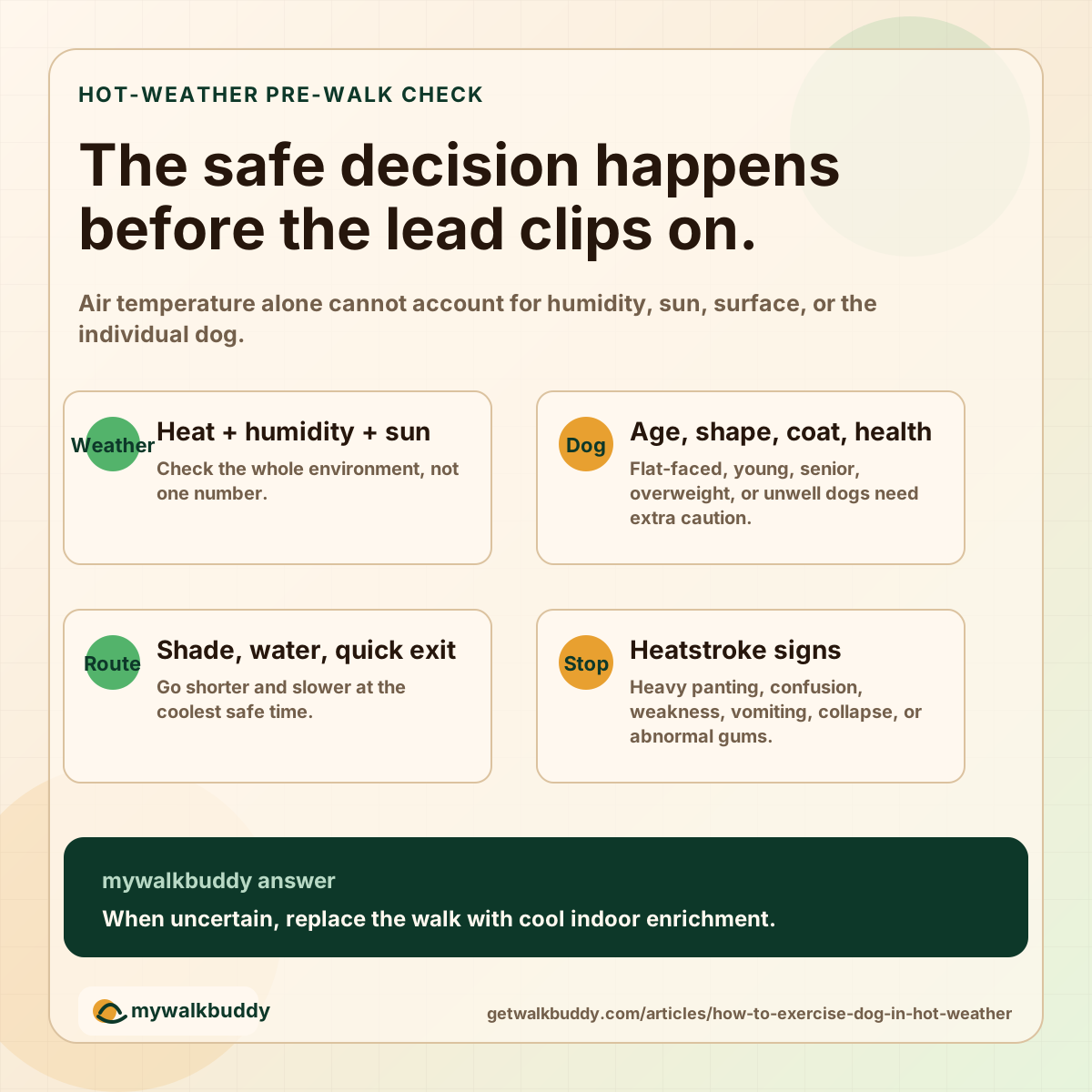
Check air temperature, humidity, direct sun, wind, pavement, shade, water access, route length, and how quickly you can return home. Then assess the dog: flat-faced anatomy, thick coat, young or senior age, giant size, excess weight, poor fitness, illness, and breathing problems can increase heat risk. One air-temperature number cannot clear every dog.
PDSA advises avoiding the hottest part of the day and says a very hot or humid day may justify missing the walk altogether.
Touch-test advice is only one screen; surface temperature, sun exposure, and paw condition can change quickly.
What is a safer exercise plan when it is hot?
Choose the coolest available time, a shaded short route, a gentle pace, frequent sniff and water breaks, and a harness that does not restrict panting. Keep the dog close enough to return quickly. Replace running, fetch, hills, and long exposure with indoor searches, quiet training, or controlled play when outdoor conditions are unsuitable.
Excitement can keep a dog moving past safe limits, so do not wait for the dog to opt out.
Flat-faced, elderly, young, overweight, unwell, and poorly conditioned dogs need extra caution and may need to avoid the outing.
Which heat signs mean stop and act now?
Stop immediately for heavy or noisy panting, excessive drooling, weakness, confusion, vomiting, diarrhea, bright red or pale gums, wobbling, collapse, or seizures. Move the dog to shade or a cool area, begin veterinary-recommended cooling, and call a veterinarian urgently. Heatstroke can progress quickly, so do not wait to see whether rest alone fixes it.
PDSA advises using cool tap water, creating airflow, offering water without forcing it, and contacting a veterinarian as soon as possible.
Do not cover the dog with a wet towel because it can trap heat. Follow current veterinary first-aid guidance.
Questions owners ask when the leash is already in their hand
-
What temperature is too hot to walk a dog?
There is no universal safe cutoff. Humidity, sun, pavement, wind, breed, age, fitness, weight, coat, and health all change risk. When uncertain, choose indoor activity.
-
Is early morning always safe for a dog walk in summer?
No. Early morning is often cooler, but humidity, retained surface heat, local climate, and the individual dog's risk still require a fresh check before every outing.
Turn the answer into a routine you can see.
Use GetWalkBuddy to log the walk, route, duration, and recovery note that make this guidance useful for your individual dog.