
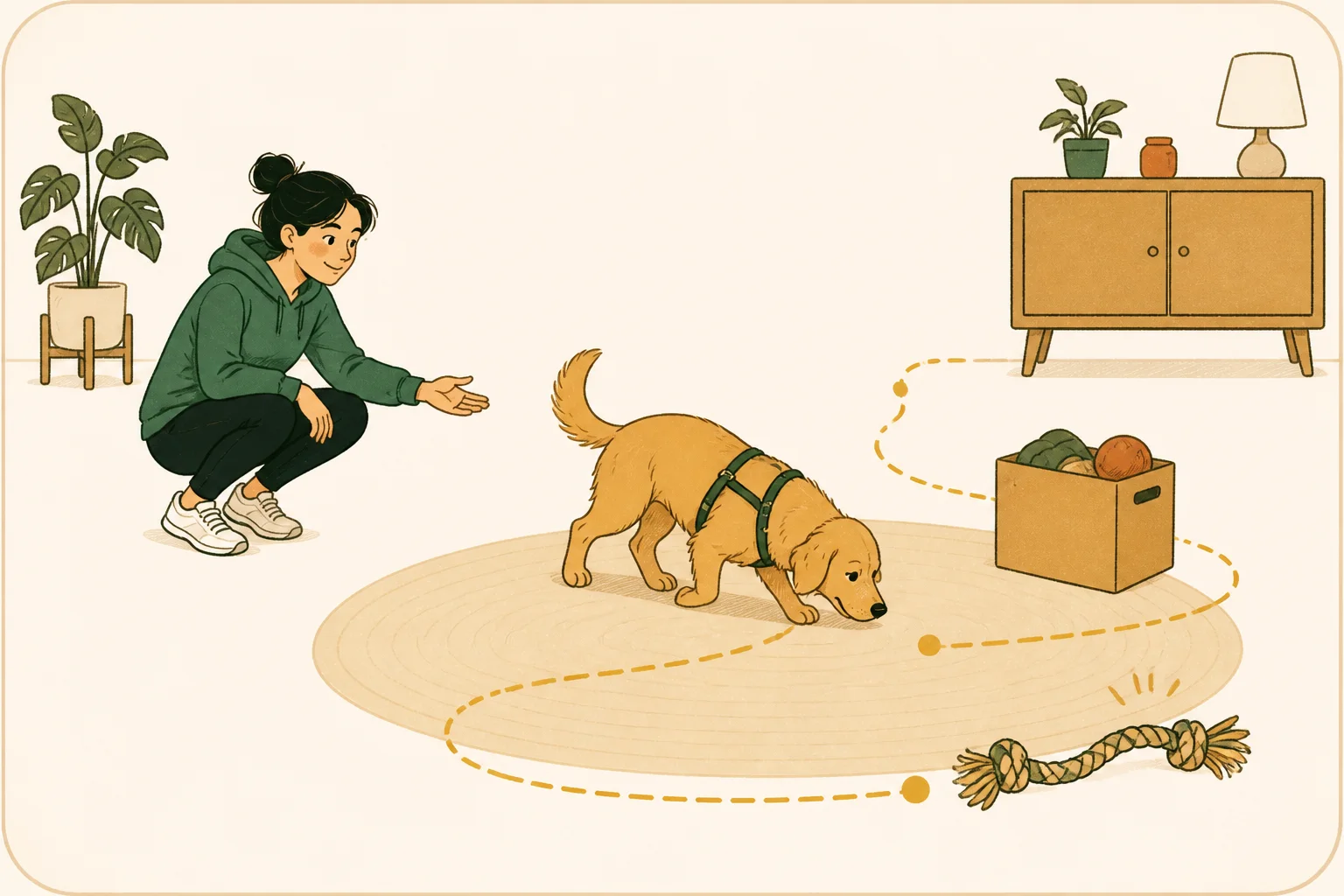
- Choose two short activities that use different skills instead of one frantic substitute workout.
- Match the plan to the reason walking is unavailable: weather, environment, injury, fear, or schedule.
- Use veterinary limits for illness, recovery, pain, mobility, heart, or breathing concerns.
Turn this answer into a walk you can actually track.
GetWalkBuddy is a dog walking app for owners who want a simple route tracker, timer, distance view, and daily walk log without turning the walk into a spreadsheet.
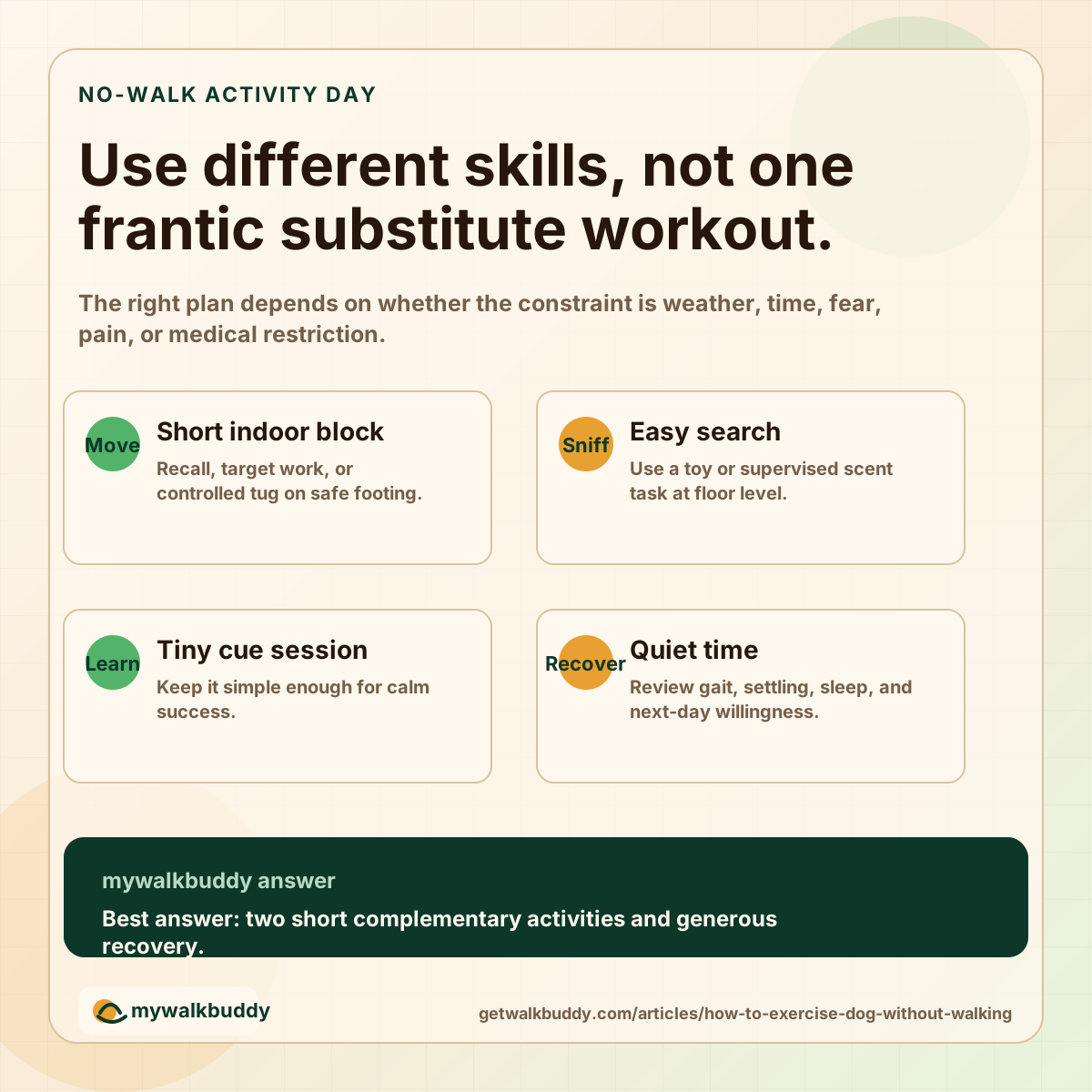
What can you do instead of a dog walk?
Try a room-to-room recall, visible scent search, find-the-toy game, controlled tug, hallway target practice, simple cue circuit, supervised cardboard or digging box, calm hide-and-seek, floor-level balance or position work approved by a veterinarian, or gentle play with rest breaks. Select two activities, protect traction, and keep difficulty low enough for relaxed success.
Use gates and clear furniture edges before movement games, especially in small homes.
Separate dogs when toys, food, or competitive searching could trigger guarding.
Why does the reason for missing the walk matter?
A weather cancellation can use normal indoor play, while injury, surgery, illness, breathing problems, or pain may require strict veterinary restrictions. Fear-based walking difficulty needs gradual behavior support, not a permanently harder indoor workout. Time pressure may call for several five-minute blocks. Identify the constraint first so the substitute does not worsen the original problem.
If the dog suddenly refuses walks, rule out pain, equipment problems, heat, fear, and medical change before treating it as stubbornness.
Outdoor toileting and safe environmental exposure may still need a separate plan.
How do you build a balanced no-walk day?
Use one short movement block, one sniff or search task, one training session, and generous quiet recovery instead of constant entertainment. Keep normal meals and calorie intake in mind when food is used. Review settling, gait, sleep, and next-day willingness. A good substitute day is repeatable and leaves the dog comfortable, not exhausted or frantic.
Rotate familiar activities across the week so setup remains realistic and the dog knows how to succeed.
Ask a veterinarian about prolonged walking restrictions and a qualified reward-based trainer about persistent fear or reactivity.
Questions owners ask when the leash is already in their hand
-
Can indoor exercise replace all dog walks?
It can cover short-term constraints, but outdoor toileting, sniffing, movement, daylight, and environmental experience still matter unless health or safety requires a different professional plan.
-
How do I exercise a dog in a small apartment?
Use short low-speed searches, target work, toy finding, controlled tug, simple cues, and calm room-to-room recalls on non-slip footing rather than high-speed chasing.
Turn the answer into a routine you can see.
Use GetWalkBuddy to log the walk, route, duration, and recovery note that make this guidance useful for your individual dog.