
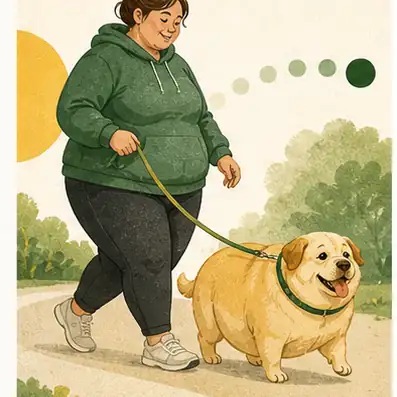
- Weight loss is food plus movement plus consistency, not a heroic weekend walk.
- Ask a veterinarian for a target weight and calorie plan before making big changes.
- Low-impact walking, repeated steadily, is often the practical exercise base for overweight dogs.
Turn this answer into a walk you can actually track.
GetWalkBuddy is a dog walking app for owners who want a simple route tracker, timer, distance view, and daily walk log without turning the walk into a spreadsheet.
How do I help my dog lose weight safely?
Help your dog lose weight safely by getting a veterinary target weight, measuring meals, counting treats, using lower-impact daily walks, and increasing activity slowly. Avoid sudden intense exercise, especially if your dog is obese, older, flat-faced, limping, or has heart, breathing, or joint concerns.
The fastest plan is usually the plan that does not collapse after four days.
That means boring details matter: measured meals, treat math, repeatable walks, cooler hours, flat routes, and one honest weekly check-in.
The goal is not to punish a dog for getting heavy. The goal is to make the next right choice easy enough that you keep making it.
Is walking good for dog weight loss?
Walking can be good for dog weight loss because it adds repeatable activity, supports routine, and can be scaled to the dog's current fitness. It works best alongside calorie control and veterinary guidance, not as a replacement for managing food intake.
Walking is useful because it is adjustable.
You can make it shorter, slower, flatter, earlier, cooler, or split into two sessions. That flexibility matters when a dog is carrying extra weight.
The walk is not magic. The pattern is.
What mistakes slow dog weight loss down?
Common mistakes include guessing food amounts, ignoring treats, increasing exercise too fast, using only weekend activity, skipping weigh-ins, and dismissing pain or fatigue. A dog can be overweight and still be overworked if the routine jumps too quickly.
The little extras are where the plan leaks.
One bite here, a chew there, a short walk skipped because yesterday was long. None of it feels dramatic. Together it becomes the routine.
Track the boring stuff. Boring is where the result hides.
Questions owners ask when the leash is already in their hand
-
How fast should a dog lose weight?
The safe pace depends on the dog's health, size, and veterinary plan. Ask your veterinarian for a target rate and weigh-in schedule rather than chasing a fast drop.
-
Can walking alone make a dog lose weight?
Walking can help, but most dogs also need measured food, treat control, and a veterinarian-approved calorie target.
-
Should an overweight dog run?
Not without veterinary guidance. Many overweight dogs should start with low-impact walking before harder activity.
Make the weight-loss walk visible.
GetWalkBuddy helps you track the walks, pace, and weekly routine that turn good intentions into a weight-loss pattern you can actually see.