
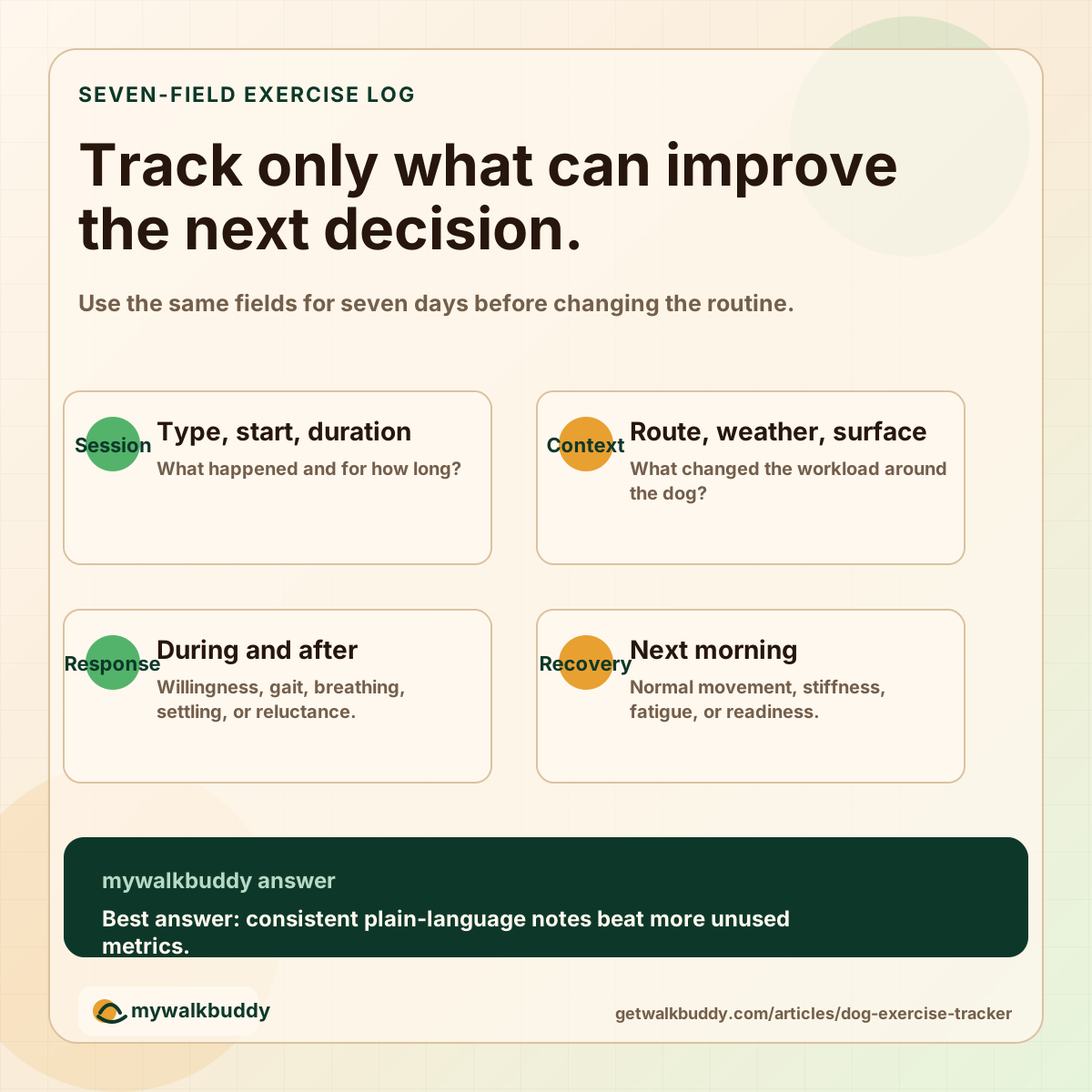
- Log the same seven fields for seven days so entries remain comparable.
- Change only one exercise variable and watch whether comfort, settling, or recovery changes with it.
- Use the pattern for better questions; do not use an app to diagnose or push through discomfort.
Turn this answer into a walk you can actually track.
GetWalkBuddy is a dog walking app for owners who want a simple route tracker, timer, distance view, and daily walk log without turning the walk into a spreadsheet.
Build today's 7-field dog exercise log
Complete one concise entry. Save it on this device or copy it into your veterinarian, trainer, or household notes.
Tracking supports observation; it cannot diagnose pain or set medical limits.
Which seven fields belong in a dog exercise tracker?
Record the activity type, start time, duration, route or distance, weather and surface, behavior or movement during and after the session, and next-day recovery. Use short consistent labels such as settled well, lagged after ten minutes, or stiff after rest. Comparable observations are more useful than collecting every available sensor or metric.
GetWalkBuddy already captures walking time and route. Add the individual context that GPS cannot infer.
Avoid entering a diagnosis. Describe what happened in plain language so a veterinarian or trainer can interpret it.
How do you use a seven-day dog exercise log?
Keep the current safe routine stable for several days, then alter one variable such as duration, pace, terrain, or enrichment type. Continue logging the same fields and compare willingness, settling, gait, and next-day movement. If recovery worsens, return to the earlier baseline. A short controlled test teaches more than a week of unrelated activity changes.
Tag unusual heat, visitors, poor sleep, illness, or travel so outside factors do not masquerade as an exercise result.
For medical restrictions, follow the veterinarian's plan rather than using a self-run experiment.
When should you share the tracker with a professional?
Share the log when a veterinarian or qualified trainer is assessing repeated reluctance, stiffness, limping, poor recovery, over-arousal, fear, or a sudden change. Include concise videos when safe and requested. Seek prompt care for severe pain, collapse, breathing trouble, inability to stand, or rapid deterioration; collecting more entries should never delay urgent assessment.
Bring the smallest clear pattern: what changed, when it appears, what precedes it, and how long recovery takes.
The tracker supports the conversation; the professional evaluates the dog and determines diagnosis or treatment.
Questions owners ask when the leash is already in their hand
-
What is the best dog exercise tracker?
The best tracker is one you will use consistently and that captures route or time plus simple behavior and recovery notes. More metrics do not guarantee better decisions.
-
Can a dog walking app detect pain?
No. An app can show route, time, consistency, and owner-entered patterns, but pain and safe exercise limits require veterinary assessment.
Start with the seven fields, then keep them in one place.
GetWalkBuddy records walking time and route so your brief comfort and recovery note has the context needed to become a useful pattern.