
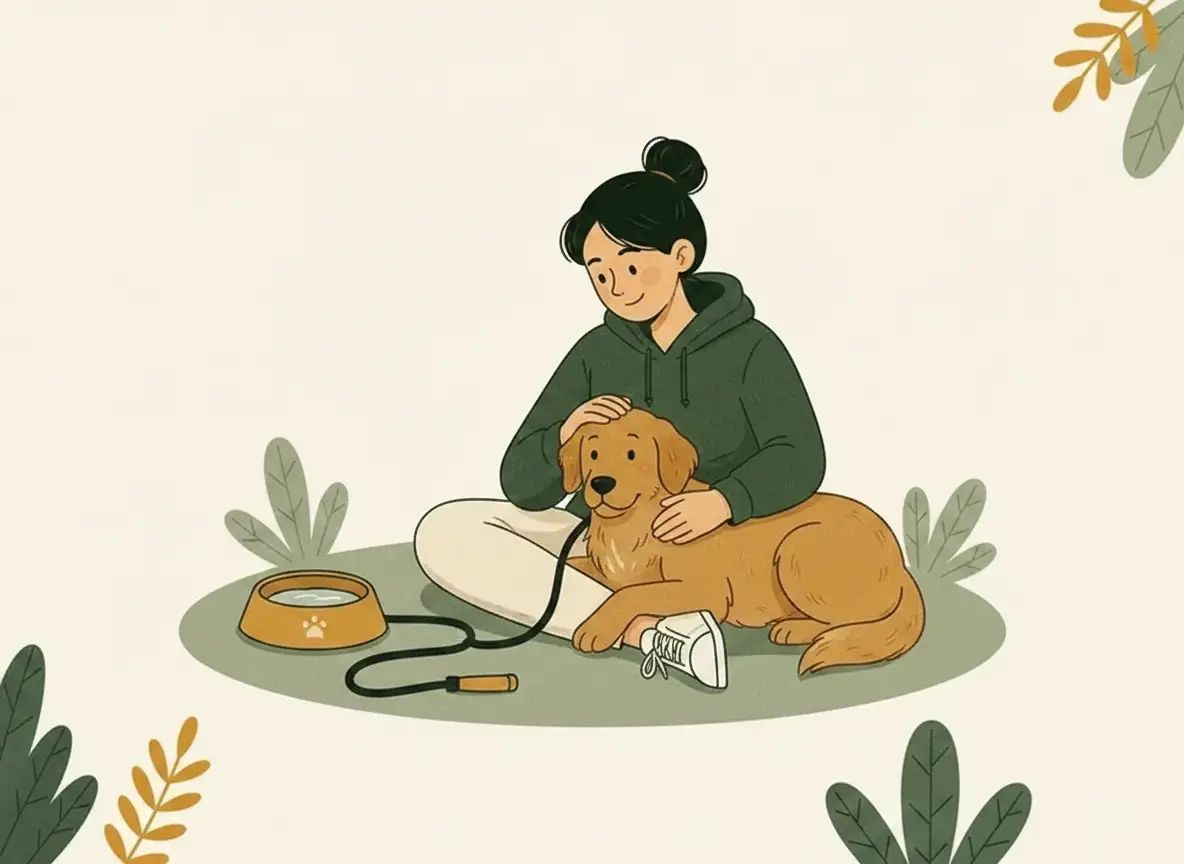
- Move to a low-stimulation space and use a practiced settle sequence.
- Watch panting unrelated to heat, frantic scanning, biting or inability to disengage.
- Use the smallest repeatable change, record the result for a week, and adjust from the dog's comfort and recovery.
Turn this answer into a walk you can actually track.
GetWalkBuddy is a dog walking app for owners who want a simple route tracker, timer, distance view, and daily walk log without turning the walk into a spreadsheet.
What is the practical answer for How to calm an overstimulated dog after exercise?
Calm an overstimulated dog by reducing input, creating distance, using a familiar quiet routine and allowing recovery. Avoid adding intense play.
Post-walk excitement can come from arousal, frustration, fatigue, unmet sniffing needs or a routine that ends too abruptly. More intensity is not automatically the answer.
Recovery is a skill that can be designed into the walk.
Start with this concrete move: Move to a low-stimulation space and use a practiced settle sequence. A useful plan should feel manageable on an ordinary weekday, not only on your most motivated day.
How should you start with How to calm an overstimulated dog after exercise?
Move to a low-stimulation space and use a practiced settle sequence.
Choose a calm baseline you already know the dog can handle. Change only one variable at a time—duration, pace, difficulty or environment—so the response is easy to read.
Use the same final block, doorway pause and rest location each day.
Log the route or activity, approximate time and how the dog behaved later that day and the next morning. That turns guesswork into a pattern you can discuss with a veterinarian or trainer.
What signs matter most when trying How to calm an overstimulated dog after exercise?
Watch panting unrelated to heat, frantic scanning, biting or inability to disengage.
Look beyond the activity itself. Willingness to begin, body language during the session, the ability to settle afterward and normal movement the next day are all part of the answer.
Watch panting unrelated to heat, frantic scanning, biting or inability to disengage. One isolated moment may mean little; a repeated pattern or sudden change deserves attention.
Shortening or ending a session is not failure. It is a useful response to the information the dog is giving you.
When should How to calm an overstimulated dog after exercise involve a veterinarian or professional?
Behavior can change because of pain, fear or illness. Seek veterinary or qualified behavior support for sudden changes, aggression, panic, self-injury, breathing trouble or an inability to settle that is new or worsening.
Behavior can change because of pain, fear or illness. Seek veterinary or qualified behavior support for sudden changes, aggression, panic, self-injury, breathing trouble or an inability to settle that is new or worsening.
This guide is educational and cannot diagnose a medical or behavioral condition. A qualified professional can adapt the plan to health history, medication, body condition, fear and local conditions.
GetWalkBuddy can help make time, routes and consistency visible, but tracking should never delay care or become a reason to push through discomfort.
Questions owners ask when the leash is already in their hand
-
Should I give treats to calm an overstimulated dog?
Food may help some dogs if they can eat calmly, but do not use it to push a distressed dog closer to triggers.
-
How quickly should I change a routine for How to calm an overstimulated dog after exercise?
Make one small change, keep it consistent for several sessions, and review comfort and recovery. Slow down or ask a professional when the dog is sore, distressed or changing suddenly.
Turn a good idea into a routine you can see.
GetWalkBuddy helps you track the walks, time and small wins that make a dog-care routine easier to repeat.