
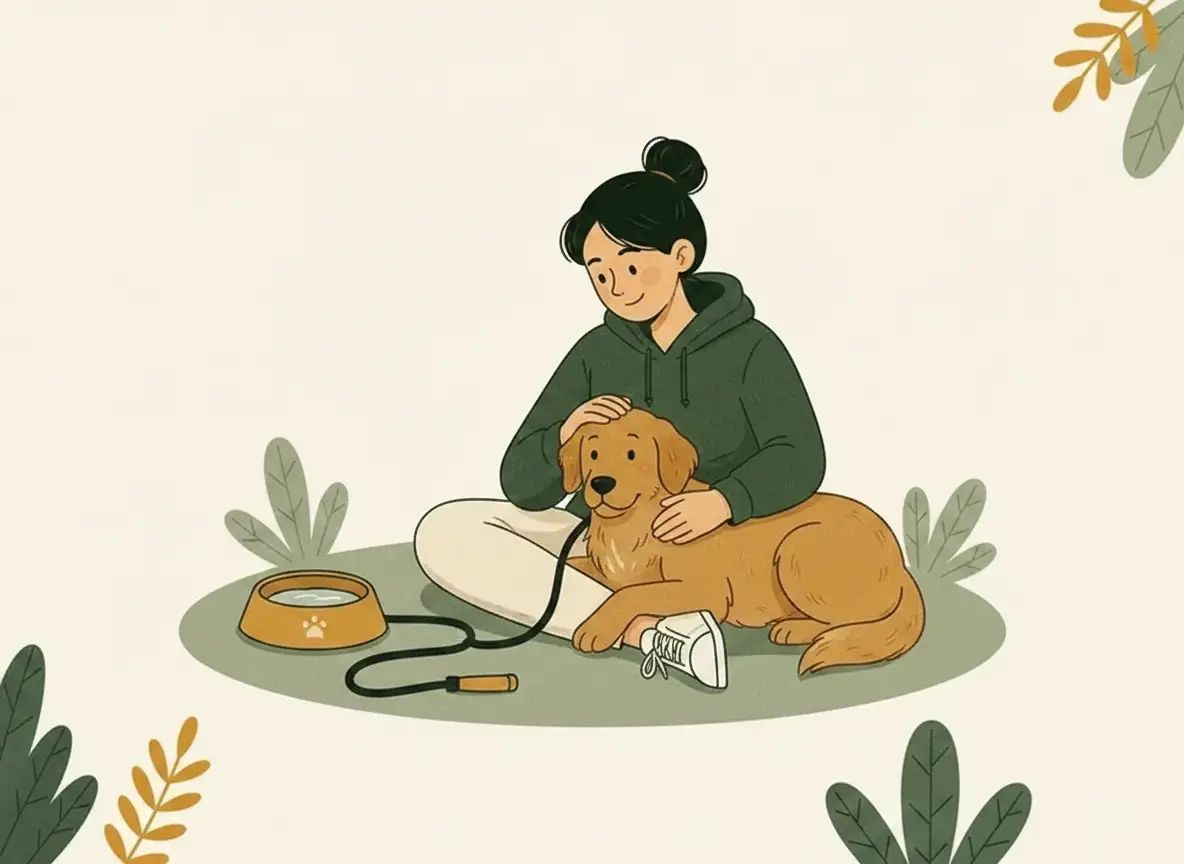
- Teach the post-walk routine after easy outings, before using it on difficult days.
- Lower arousal during the final part of the walk instead of stopping at peak intensity.
- Reward small signs of relaxation and make the task easier if the dog cannot disengage.
Turn this answer into a walk you can actually track.
GetWalkBuddy is a dog walking app for owners who want a simple route tracker, timer, distance view, and daily walk log without turning the walk into a spreadsheet.
Build your 7-day post-walk calm plan
| Day | Walk ending | At home | What to record |
|---|---|---|---|
| 1 | 3 slow sniffing minutes | Quiet entry + water | Minutes until first pause |
| 2 | Repeat the easy route | Reward one relaxed behavior | Body and breathing |
| 3 | 5-minute cooldown | Brief mat practice | Could the dog disengage? |
| 4 | Same structure | Reward voluntary settling | Minutes to lie down |
| 5 | Add one mild distraction | Keep entry predictable | Recovery versus day 4 |
| 6 | Return to easier version if needed | Short successful mat repetition | What made it easier? |
| 7 | Repeat the best walk ending | Repeat the best transition | Save the winning sequence |
This is a training experiment, not a guarantee or treatment plan. See Dogs Trust guidance on hyperactivity and settling.
Why is a dog still hyper after a walk?
A dog may remain hyper because the walk raised arousal, ended abruptly, lacked sniffing, included frustrating triggers, or created overtiredness. Persistent restlessness can also reflect unmet needs, anxiety, pain, or discomfort. More distance is not automatically the solution; first examine the structure and recovery period.
Fast fetch, repeated chasing, crowded routes, and leash frustration can build a fitter dog without teaching recovery.
Watch the final ten minutes. If the walk finishes at its most intense point, the nervous system arrives home before it has begun to settle.
A sudden behavior change, inability to rest, pain, or physical symptoms deserves veterinary advice rather than a harder workout.
What should the first 10 minutes after a walk look like?
Use a predictable sequence: two or three slower sniffing minutes before home, a quiet doorway and gear removal, access to water, then a familiar low-stimulation station. Reward a soft body, looking away, settling on one hip, or resting the head instead of repeatedly cueing a rigid stay.
Keep voices, greetings, toys, and household movement low-key during the transition. The routine should communicate that the exciting part has finished.
If food increases excitement or guarding, use calm environmental access and professional guidance instead. The reward must suit the individual dog.
Release the dog before frustration builds. Several successful short repetitions teach more than one long battle on the mat.
How do you teach post-walk calm over seven days?
Begin with three easy days that pair the same quiet entry with brief mat rewards. Then add small distractions, slightly more exciting walks, and longer relaxed pauses only when the dog succeeds. Track how long settling takes and reduce difficulty after a setback rather than correcting the dog for being over threshold.
Days one and two establish the sequence. Days three and four reward voluntary relaxation. Days five and six add one manageable distraction. Day seven repeats the version that produced the calmest recovery.
The plan is not a promise that every dog will settle in seven days. It is a short experiment that shows which part of the transition needs work.
Practice on ordinary walks. Training only after a trigger-heavy or unusually long outing asks the dog to learn at the hardest possible moment.
When does post-walk hyperactivity need professional help?
Seek veterinary or qualified behavior support when the behavior is sudden, worsening, dangerous, linked to pain or panic, or includes prolonged inability to recover, aggression, self-injury, breathing trouble, or collapse. Video and a simple walk-and-recovery log can help professionals identify patterns without forcing another episode.
Management comes first: use quieter routes, create distance from triggers, shorten the outing, and protect household members while you arrange help.
Avoid punishment for arousal. It may suppress signals without resolving fear, frustration, pain, or an unsuitable exercise pattern.
GetWalkBuddy can show route, time, and consistency, but it does not diagnose a medical or behavioral condition.
Questions owners ask when the leash is already in their hand
-
Should I ignore my dog when they are hyper after a walk?
Do not punish or completely withdraw necessary care. Reduce stimulation, meet water and safety needs, and reinforce small relaxed behaviors when the dog is able to respond.
-
Will a longer walk make my dog calmer afterward?
Not necessarily. More exercise may add fatigue or arousal. Improve sniffing, pacing, trigger distance, and the cooldown before automatically adding duration.
-
Can I teach settle without using a verbal cue?
Yes. Dogs Trust describes rewarding naturally relaxed behavior so the dog learns to settle, rather than relying only on repeated commands.
Save the routine that creates the calmest return.
Track the walk in GetWalkBuddy and use the seven-day experiment below to compare recovery instead of guessing.