
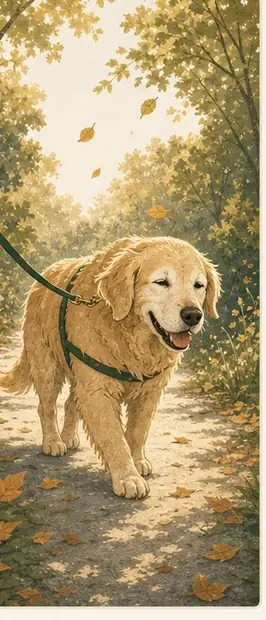
- Old dogs often still need movement, scent, sunlight, and routine.
- The right walk is gentle enough to repeat and useful enough to matter.
- Walking should support comfort. It should not become a test of loyalty or toughness.
Turn this senior-dog answer into a gentler walking routine.
A senior dog walking app should make gentle movement visible: shorter walks, slower routes, willingness changes, recovery signals, and the patterns you may want to discuss with your veterinarian.
Why is walking good for old dogs?
Walking can be good for old dogs because it supports joint mobility, muscle use, weight management, digestion, bathroom routine, mental stimulation, confidence, and connection with the owner. The benefit depends on keeping the walk appropriate and comfortable.
A good senior walk is not just exercise. It is a little proof that the world still belongs to your dog.
Movement helps use the body. Sniffing works the brain. Routine lowers friction. Shared time tells the dog they are still included.
This is why quitting walks too early can steal more than steps.
How do I walk an old dog safely?
Walk an old dog safely by choosing cooler times, easy surfaces, shorter routes, slower pace, sniff breaks, good traction, and predictable endings. Monitor breathing, gait, energy, and recovery, and stop or shorten when your dog shows discomfort.
Safety is usually boring. Good.
Avoid hot pavement, slick floors, steep surprises, and sudden distance jumps. Give your dog time to sniff and time to turn back without turning it into a negotiation.
GetWalkBuddy can help you see which conditions create the best walks, because old dogs often have better days and harder days.
When is walking not good for an old dog?
Walking may not be good for an old dog when the route worsens pain, causes limping, overheating, coughing, collapse, extreme fatigue, fear, or refusal. In those cases, shorten the walk and ask a veterinarian what movement is safe.
The answer is not always more walking. Sometimes it is different walking.
A painful dog may need treatment, weight management, traction changes, shorter outings, or a rehab-style plan from a professional.
The kindest walk is the one your dog can enjoy and recover from.
Questions owners ask when the leash is already in their hand
-
Should I walk my old dog if they have arthritis?
Many dogs with arthritis still benefit from appropriate gentle movement, but the plan should come from your veterinarian. Avoid sudden increases, slippery surfaces, and walks that worsen pain.
-
Do old dogs need mental stimulation on walks?
Yes. Sniffing, slow exploration, and familiar routines can provide mental stimulation for older dogs. Mental work can matter even when physical distance becomes shorter.
-
What is the best walk for an old dog?
The best walk for an old dog is short enough to recover from, interesting enough to enjoy, and safe enough to repeat. That usually means gentle pace, sniffing, easy surfaces, and close attention.
Keep your old dog moving gently.
GetWalkBuddy helps you build a walking routine that respects age, tracks change, and keeps the next gentle outing easy to start.