
- End earlier at the first repeatable sign and review the pattern.
- Watch for symptoms that persist, worsen or appear suddenly.
- Use the smallest repeatable change, record the result for a week, and adjust from the dog's comfort and recovery.
Turn this senior-dog answer into a gentler walking routine.
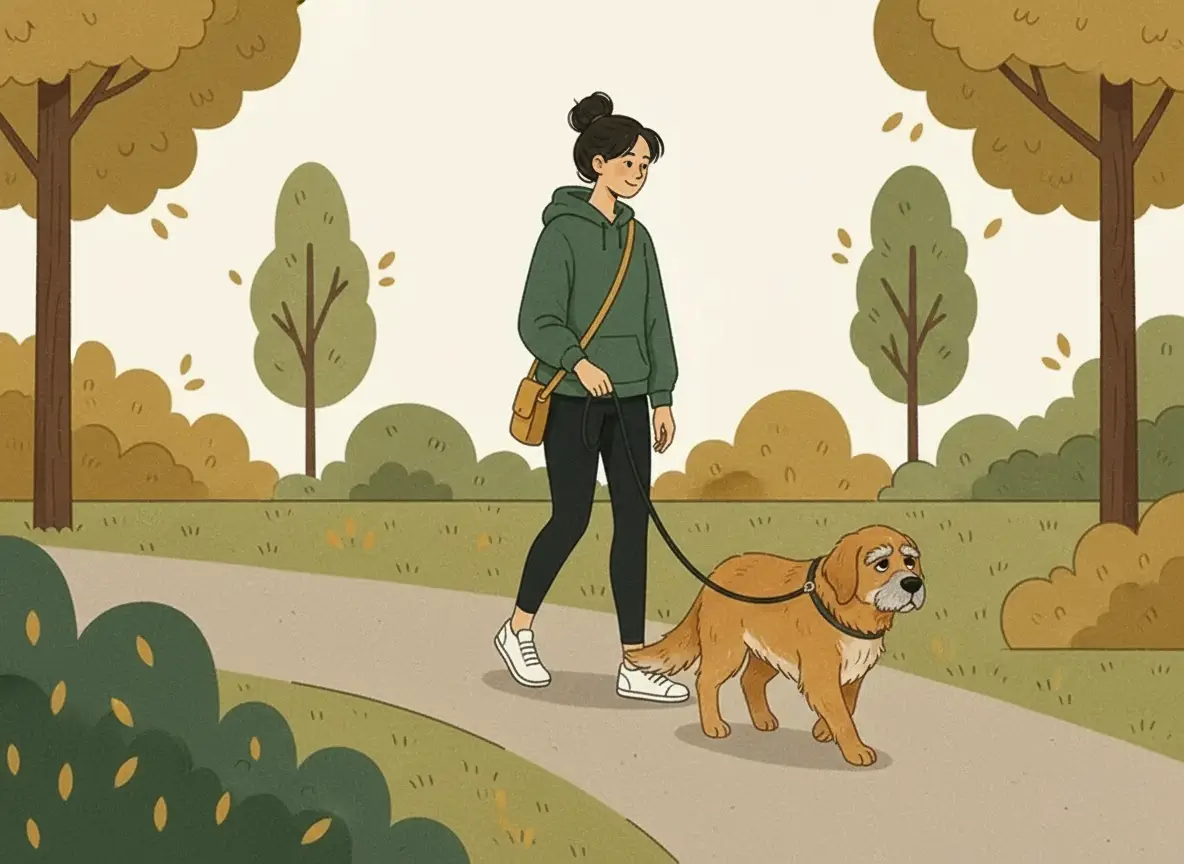
A senior dog walking app should make gentle movement visible: shorter walks, slower routes, willingness changes, recovery signals, and the patterns you may want to discuss with your veterinarian.
What is the practical answer for senior dog over exercise symptoms and signs?
Senior dog over-exercise signs can include lagging, heavy panting, stiffness, limping, restlessness, unusual fatigue and reluctance on the next outing.
Senior-dog movement should preserve comfort, confidence and useful mobility. Consistent low-impact activity is often easier to tolerate than occasional long outings, but the plan must follow the dog's health.
The walk is not over when you reach home; recovery completes the picture.
Start with this concrete move: End earlier at the first repeatable sign and review the pattern. A useful plan should feel manageable on an ordinary weekday, not only on your most motivated day.
How should you start with senior dog over exercise symptoms and signs?
End earlier at the first repeatable sign and review the pattern.
Choose a calm baseline you already know the dog can handle. Change only one variable at a time—duration, pace, difficulty or environment—so the response is easy to read.
Record how long stiffness lasts and whether appetite, sleep or toileting also changed.
Log the route or activity, approximate time and how the dog behaved later that day and the next morning. That turns guesswork into a pattern you can discuss with a veterinarian or trainer.
What signs matter most when trying senior dog over exercise symptoms and signs?
Watch for symptoms that persist, worsen or appear suddenly.
Look beyond the activity itself. Willingness to begin, body language during the session, the ability to settle afterward and normal movement the next day are all part of the answer.
Watch for symptoms that persist, worsen or appear suddenly. One isolated moment may mean little; a repeated pattern or sudden change deserves attention.
Shortening or ending a session is not failure. It is a useful response to the information the dog is giving you.
When should senior dog over exercise symptoms and signs involve a veterinarian or professional?
Do not dismiss a new mobility or behavior change as normal aging. Pain, collapse, sudden weakness, dragging limbs, breathing trouble or inability to stand needs prompt veterinary advice.
Do not dismiss a new mobility or behavior change as normal aging. Pain, collapse, sudden weakness, dragging limbs, breathing trouble or inability to stand needs prompt veterinary advice.
This guide is educational and cannot diagnose a medical or behavioral condition. A qualified professional can adapt the plan to health history, medication, body condition, fear and local conditions.
GetWalkBuddy can help make time, routes and consistency visible, but tracking should never delay care or become a reason to push through discomfort.
Questions owners ask when the leash is already in their hand
-
How long should a senior dog recover after a walk?
Recovery varies, but persistent or worsening symptoms are not a training goal and should be discussed with a veterinarian.
-
How quickly should I change a routine for senior dog over exercise symptoms and signs?
Make one small change, keep it consistent for several sessions, and review comfort and recovery. Slow down or ask a professional when the dog is sore, distressed or changing suddenly.
Turn a good idea into a routine you can see.
GetWalkBuddy helps you track the walks, time and small wins that make a dog-care routine easier to repeat.