
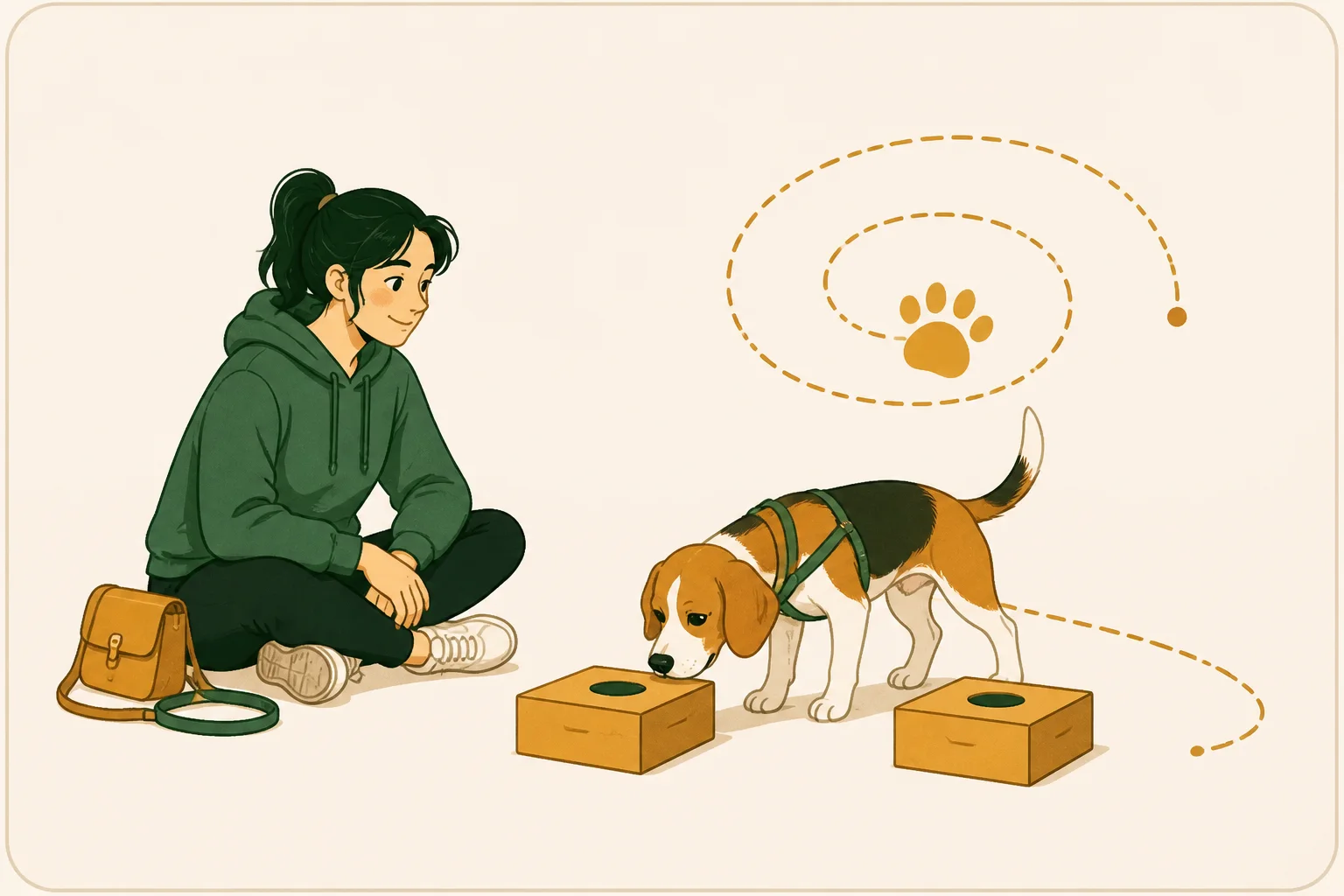
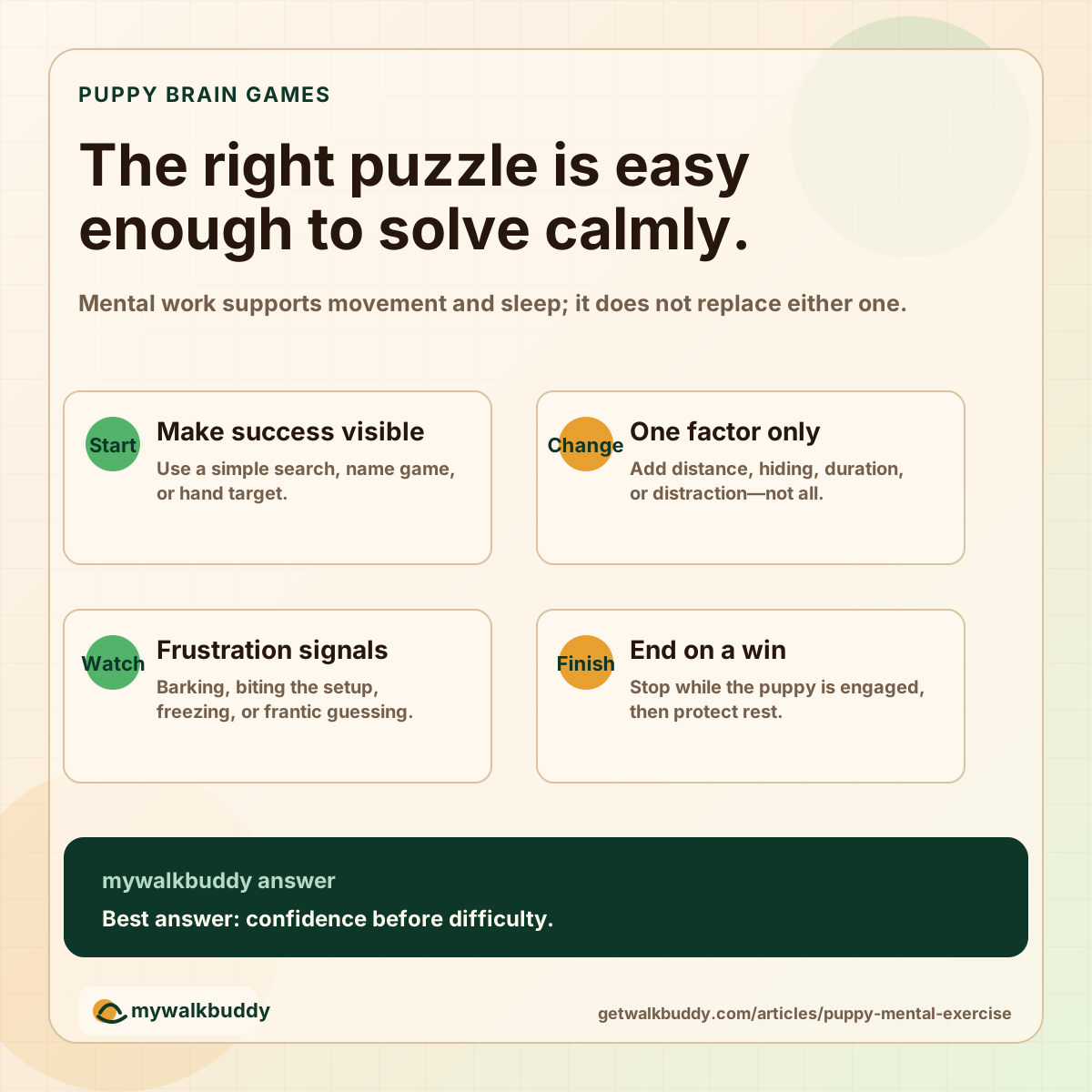
- Start with visible, solvable games and raise only one difficulty factor at a time.
- Use mental work alongside safe movement and sleep, not as a reason to keep the puppy busy all day.
- Stop when the puppy disengages, guesses frantically, guards, becomes fearful, or needs rest.
Turn this puppy answer into a tiny repeatable walk.
A puppy walking schedule app should help you repeat short, age-aware outings, log tiny wins, and protect rest instead of pushing a puppy into adult-distance walks before they are ready.
Which mental exercise games are suitable for a puppy?
Try a visible food or toy search, name response, hand target, two-box choice, follow-the-scent trail, find a familiar toy, explore one safe new surface, watch the world from a comfortable distance, or settle briefly on a mat. Match materials to the puppy's size and chewing style, supervise closely, and keep early wins obvious.
Use part of a normal meal when food is appropriate so enrichment does not quietly add excessive calories.
A toy or praise can replace food for puppies who prefer social play or need a non-food option.
How hard should a puppy brain game be?
A puppy brain game should be easy enough that the puppy experiments calmly and succeeds quickly. Increase only distance, hiding, duration, distraction, or the number of choices at one time. Make the task easier when the puppy barks, bites the setup, walks away, freezes, or guesses frantically. Confidence and recovery matter more than puzzle difficulty.
End after a good repetition rather than waiting until the puppy loses focus.
Remove sharp, loose, toxic, or swallowable items and separate dogs when guarding or competition is possible.
How much mental exercise does a puppy need?
There is no universal minute target for puppy mental work. Several tiny opportunities woven into toileting, meals, play, and walks are often more useful than one long session. Watch engagement, frustration, sleep, and behavior afterward. A mentally rich day still needs age-appropriate physical activity, quiet time, and abundant rest rather than nonstop scheduled entertainment.
AKC notes that mental stimulation supports developing cognitive skills and can help prevent boredom-related behavior.
If a puppy cannot settle despite a balanced routine, review total stimulation and health with a veterinarian or qualified trainer.
Questions owners ask when the leash is already in their hand
-
Can mental exercise replace a puppy walk?
Mental work can enrich a day and reduce impact, but it does not automatically replace safe movement, toileting, social learning, and environmental exposure appropriate to the puppy.
-
Can brain games overstimulate a puppy?
Yes. Tasks that are too hard, long, exciting, or continuous can create frustration and prevent rest. Keep sessions short and protect quiet recovery.
Turn the answer into a routine you can see.
Use GetWalkBuddy to log the walk, route, duration, and recovery note that make this guidance useful for your individual dog.