
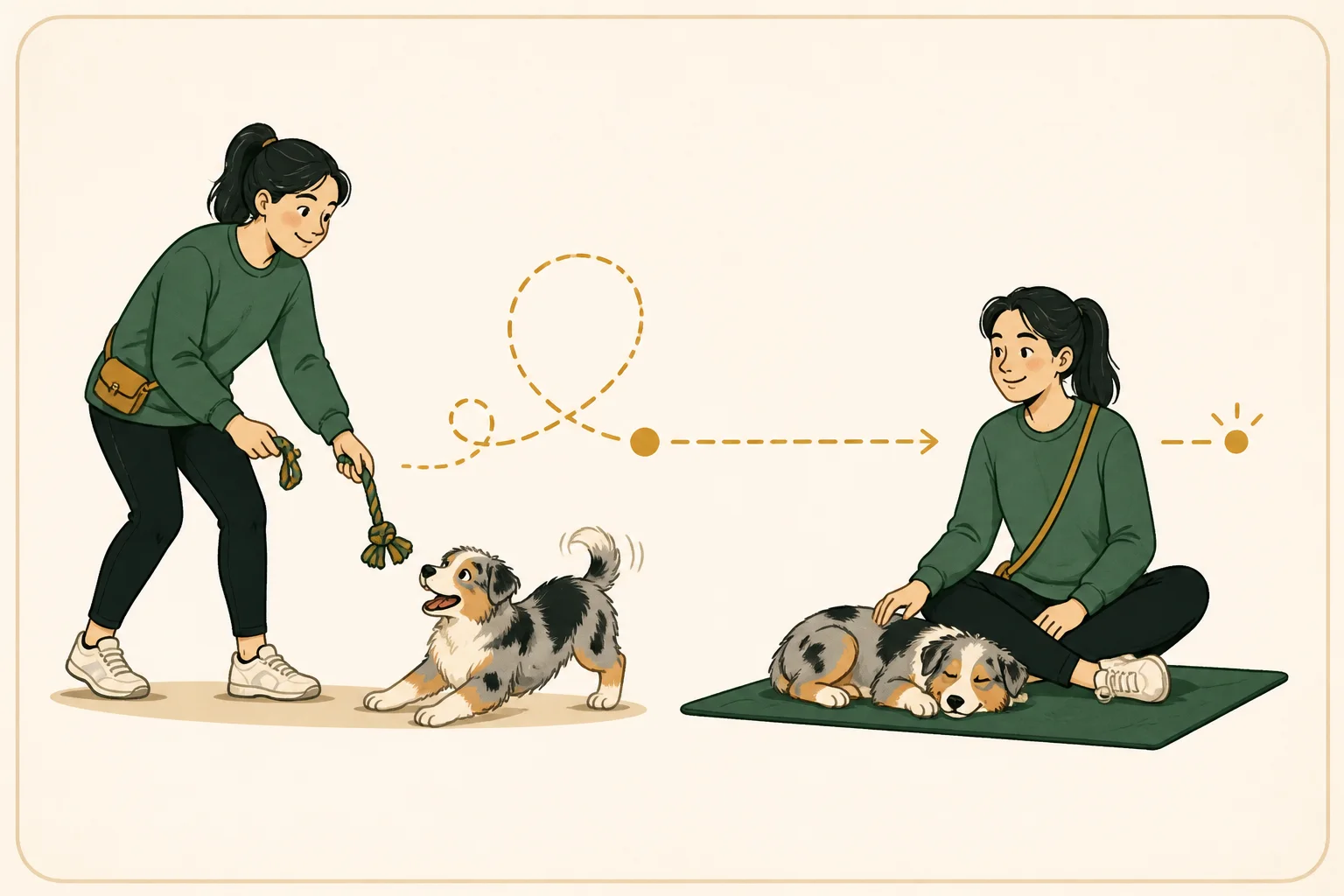
- Split activity into short varied blocks instead of one exhausting workout.
- Train calm transitions and protect sleep rather than trying to outrun every burst of energy.
- Use breed, growth, vaccination guidance, surfaces, and recovery to set the ceiling.
Turn this puppy answer into a tiny repeatable walk.
A puppy walking schedule app should help you repeat short, age-aware outings, log tiny wins, and protect rest instead of pushing a puppy into adult-distance walks before they are ready.
What does a balanced high-energy puppy day include?
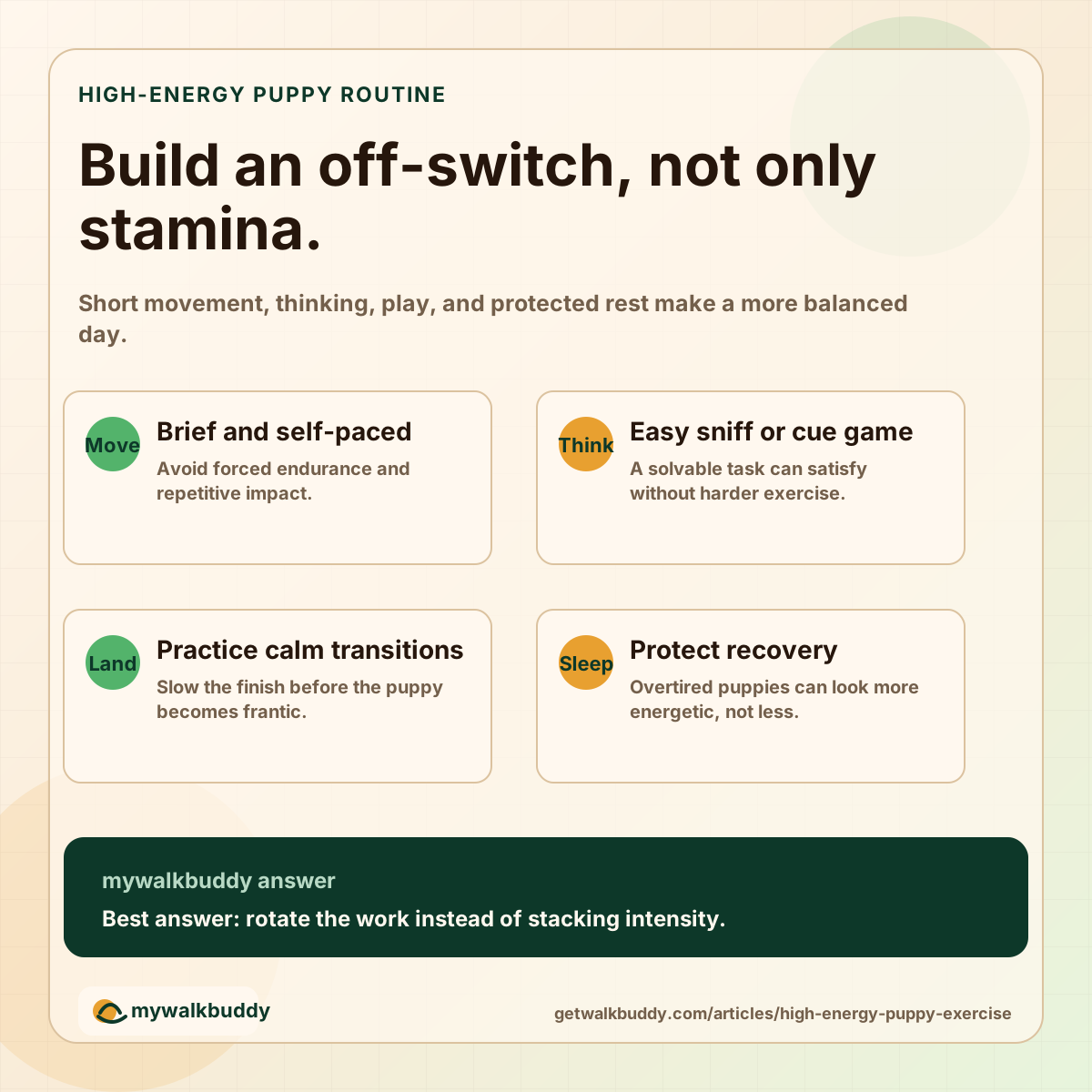
A balanced day includes brief self-paced movement, sniffing, a learning game, safe social or toy play, toilet opportunities, meals, and uninterrupted rest. Rotate the type of work instead of stacking intensity. A puppy who can explore, solve an easy problem, and then settle is developing more useful skills than one conditioned only for continuous motion.
VCA recommends meeting exercise, mental, social, and training needs rather than relying on physical exhaustion alone.
Use short predictable sessions that fit an ordinary weekday, not only a high-effort weekend.
Is a wild puppy under-exercised or overtired?
A puppy may need activity when restlessness repeats after a dull day, but frantic biting, clumsiness, loss of focus, vocalizing, and inability to settle can also reflect overtiredness. Compare the pattern after shorter and richer sessions. Do not answer every evening burst with harder exercise, especially after a stimulating outing, visitors, training, or poor sleep.
Reduce stimulation, provide a familiar quiet space, and protect the next nap when behavior deteriorates after activity.
Sudden behavior change with pain, weakness, vomiting, breathing trouble, or marked lethargy needs veterinary advice.
How should you increase exercise for a high-energy puppy?
Choose a comfortable baseline and change only duration, terrain, pace, or difficulty at one time. Repeat the new version for several sessions while tracking gait, settling, sleep, and next-morning willingness. Increase again only when recovery remains normal. Avoid forced running, repetitive jumping, slippery surfaces, and sudden mileage jumps while the puppy is still growing.
Vaccination status and local disease risk affect where young puppies can move and socialize, so confirm the plan with your veterinarian.
Breed traits suggest useful jobs, but they do not remove growth-stage guardrails.
Questions owners ask when the leash is already in their hand
-
Can you over-exercise a high-energy puppy?
Yes. High drive does not make developing bones and soft tissues mature. Forced endurance, repetitive impact, heat, and sudden increases can exceed the puppy's safe capacity.
-
How do I tire a puppy without a long walk?
Use short sniffing, easy searches, gentle play, tiny training sessions, and age-appropriate exploration, then support rest. The goal is satisfaction and regulation, not exhaustion.
Turn the answer into a routine you can see.
Use GetWalkBuddy to log the walk, route, duration, and recovery note that make this guidance useful for your individual dog.