
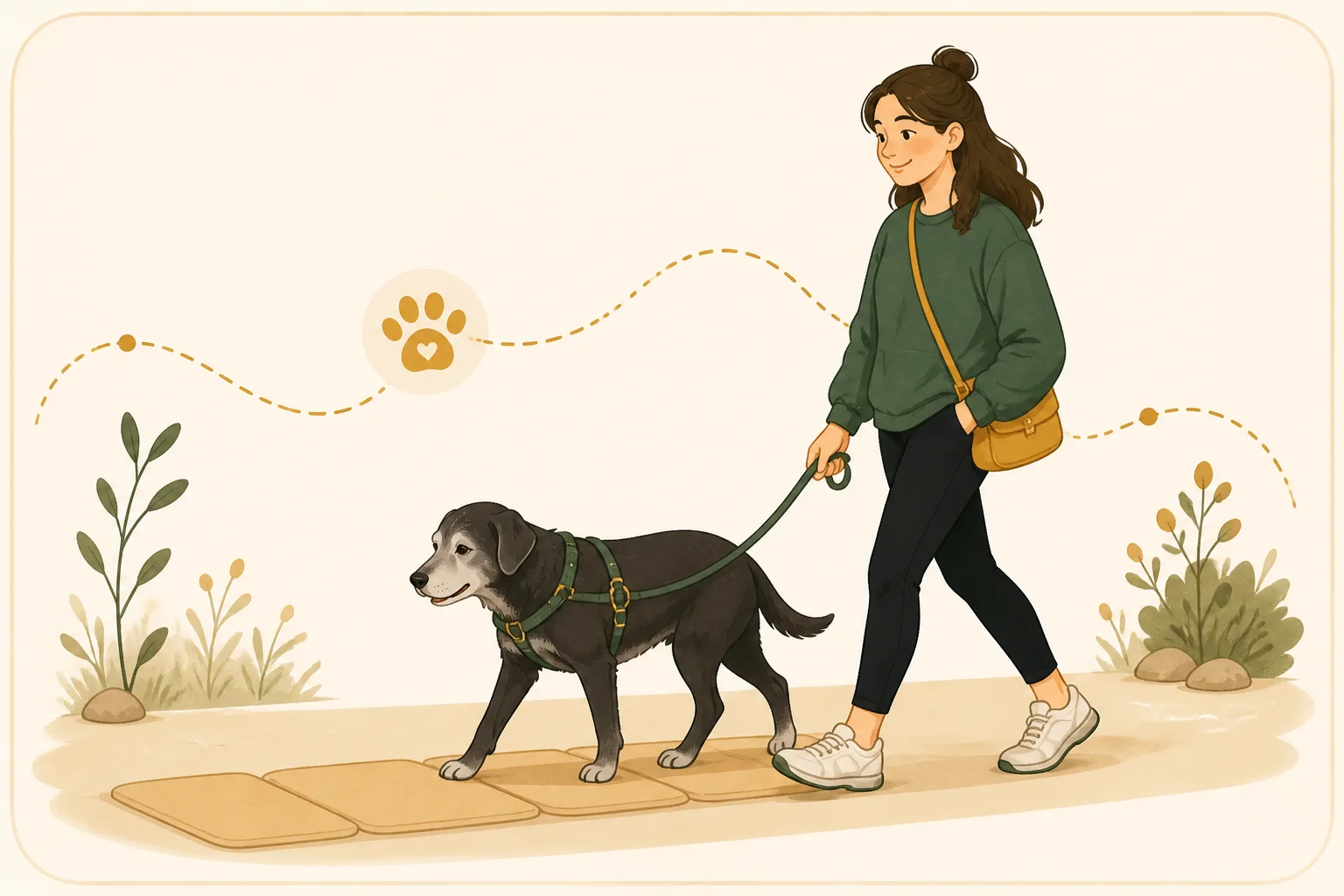
- Choose familiar, level, low-impact activity the dog can repeat without worse recovery.
- Use shorter sessions more often instead of saving activity for one long weekend walk.
- Ask a veterinarian about new mobility changes and before adding swimming or rehabilitation exercises.
Turn this senior-dog answer into a gentler walking routine.
A senior dog walking app should make gentle movement visible: shorter walks, slower routes, willingness changes, recovery signals, and the patterns you may want to discuss with your veterinarian.
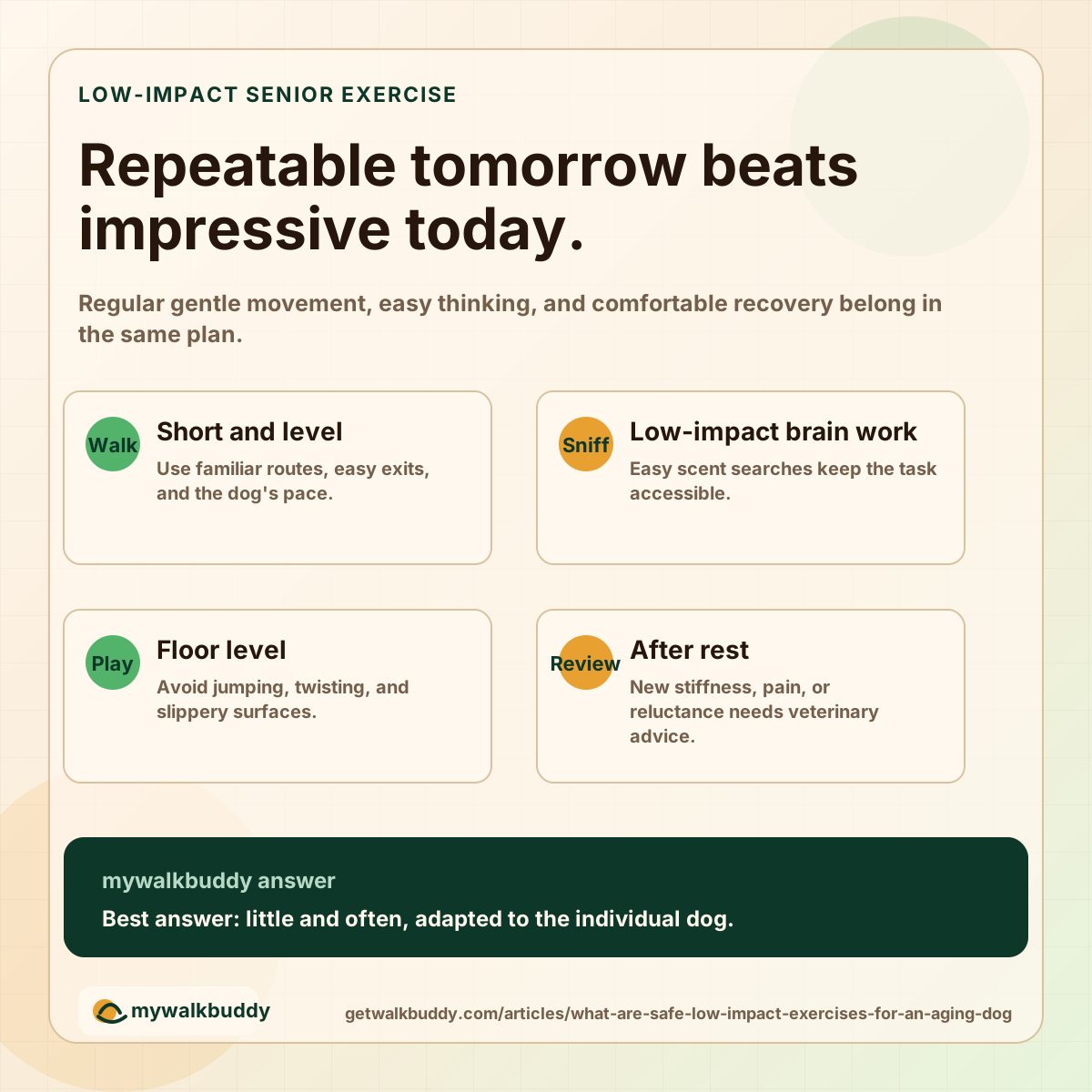
Which low-impact exercises can suit an aging dog?
Useful options include short flat walks, sniff-led loops, easy scent searches, low toy play without jumping, brief reward-based training, safe swimming for dogs who already enjoy it, and rehabilitation exercises prescribed for the individual dog. Each option still needs appropriate traction, temperature, supervision, intensity, and an easy way to stop before fatigue becomes distress.
PDSA recommends regular gentle movement and notes that little and often can be easier on older joints.
Swimming is not automatically safe. Access, water temperature, exit points, confidence, heart and respiratory health all matter.
How should you build a low-impact senior week?
Start with the shortest familiar routine your dog completes comfortably, then repeat it across several days before changing anything. Alternate movement with scent or training work, preserve rest, and add only time, terrain, or difficulty at once. A repeatable modest week protects consistency better than a long outing followed by stiffness and several inactive days.
Keep routes familiar when hearing or vision has changed, and use rugs or runners on slippery indoor floors.
Write down willingness before activity, comfort during it, and movement after rest and the next morning.
When should an aging dog's exercise plan go to the veterinarian?
Arrange veterinary advice for a new limp, repeated stiffness, reluctance, difficulty rising, slipping, confusion, breathing change, pain, or reduced enjoyment. Stop and seek urgent help for collapse, inability to stand, severe weakness, or breathing distress. Do not label a sudden change as normal aging or use exercise to test how far the dog can push.
A veterinarian may recommend pain management, physiotherapy, hydrotherapy, a support harness, or changes to frequency and surface.
Bring a short gait video and your route-and-recovery notes when safe to collect them.
Questions owners ask when the leash is already in their hand
-
Is swimming low impact for every senior dog?
No. Swimming can reduce joint loading for some dogs, but water access, confidence, temperature, medical conditions, and safe exit matter. Ask a veterinarian before starting.
-
Should senior dogs exercise every day?
Many benefit from regular gentle activity, but the safe frequency depends on health and recovery. Your veterinarian should guide changes for pain, heart, respiratory, or neurological conditions.
Turn the answer into a routine you can see.
Use GetWalkBuddy to log the walk, route, duration, and recovery note that make this guidance useful for your individual dog.