
- Treat the calculation as a cautious prompt, never a quota your puppy must complete.
- Count play, training, exploration, and fatigue instead of counting leash minutes alone.
- Let your veterinarian, your puppy's behavior, and next-day recovery overrule the formula.
Turn this puppy answer into a tiny repeatable walk.
A puppy walking schedule app should help you repeat short, age-aware outings, log tiny wins, and protect rest instead of pushing a puppy into adult-distance walks before they are ready.
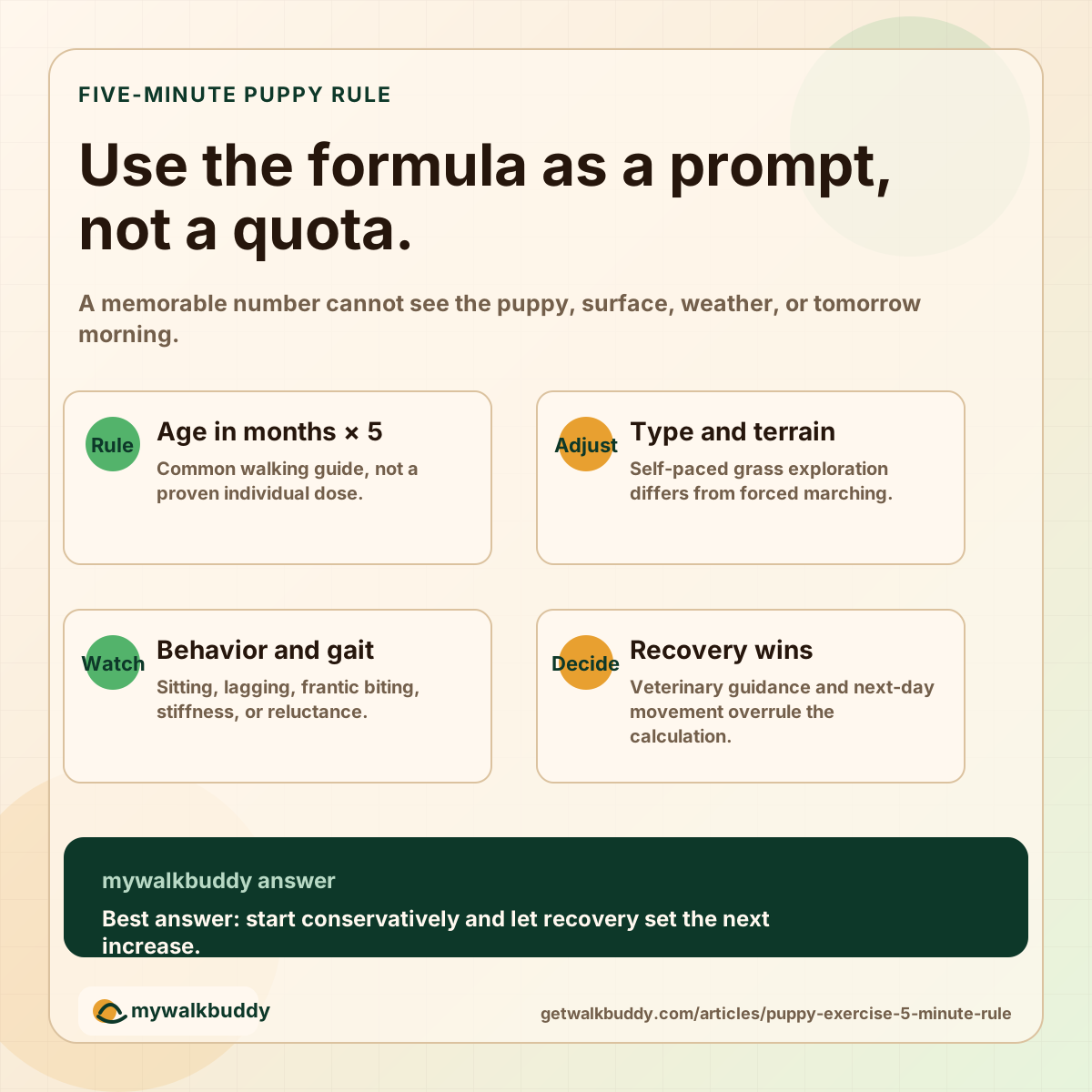
What does the five-minute puppy exercise rule actually say?
The common rule multiplies a puppy's age in months by five to estimate walking minutes, usually once or twice a day. For a four-month-old, that produces about twenty minutes. It is memorable guidance rather than an individualized target, and sources disagree on how confidently it should be presented because strong scientific validation is lacking.
AKC presents the calculation as general guidance, while PDSA explicitly notes the lack of scientific evidence behind a fixed calculation.
That disagreement is the reason to label the number honestly and keep the puppy's response at the center.
What matters more than the five-minute formula?
Activity type, pace, surface, breed size, growth stage, confidence, vaccination status, weather, play, training, and sleep all change the workload. Five minutes of forced marching is not equivalent to five minutes of self-paced grass exploration. Use one stable routine, change a single variable, and review willingness, gait, settling, and movement the next morning.
A growing puppy needs repeated opportunities to stop. Avoid turning a calculation into forced endurance.
Ask your veterinarian when public-ground exposure is appropriate for local vaccination and disease conditions.
What signs suggest the puppy routine was too much?
Shorten the next session when a puppy repeatedly sits, lags, loses coordination, becomes unusually frantic or bitey, struggles to settle, moves stiffly, or seems reluctant the next day. Sudden limping, pain, weakness, vomiting, breathing trouble, or marked lethargy needs veterinary advice. Recovery is a better feedback signal than finishing the planned minutes.
Track three things for one week: activity type, post-session behavior, and next-morning movement.
Increase duration only after the easier routine remains comfortable and repeatable.
Questions owners ask when the leash is already in their hand
-
Does the five-minute rule include puppy play?
The formula is usually discussed as walking guidance, but total daily load also includes play, training, exploration, and excitement. Review the whole day rather than adding formula minutes on top.
-
Can a puppy walk longer than the five-minute rule?
Some puppies may comfortably do more self-paced activity, while others need less. Do not exceed a rule just to reach a target; use veterinary guidance, activity type, and recovery.
Turn the answer into a routine you can see.
Use GetWalkBuddy to log the walk, route, duration, and recovery note that make this guidance useful for your individual dog.