
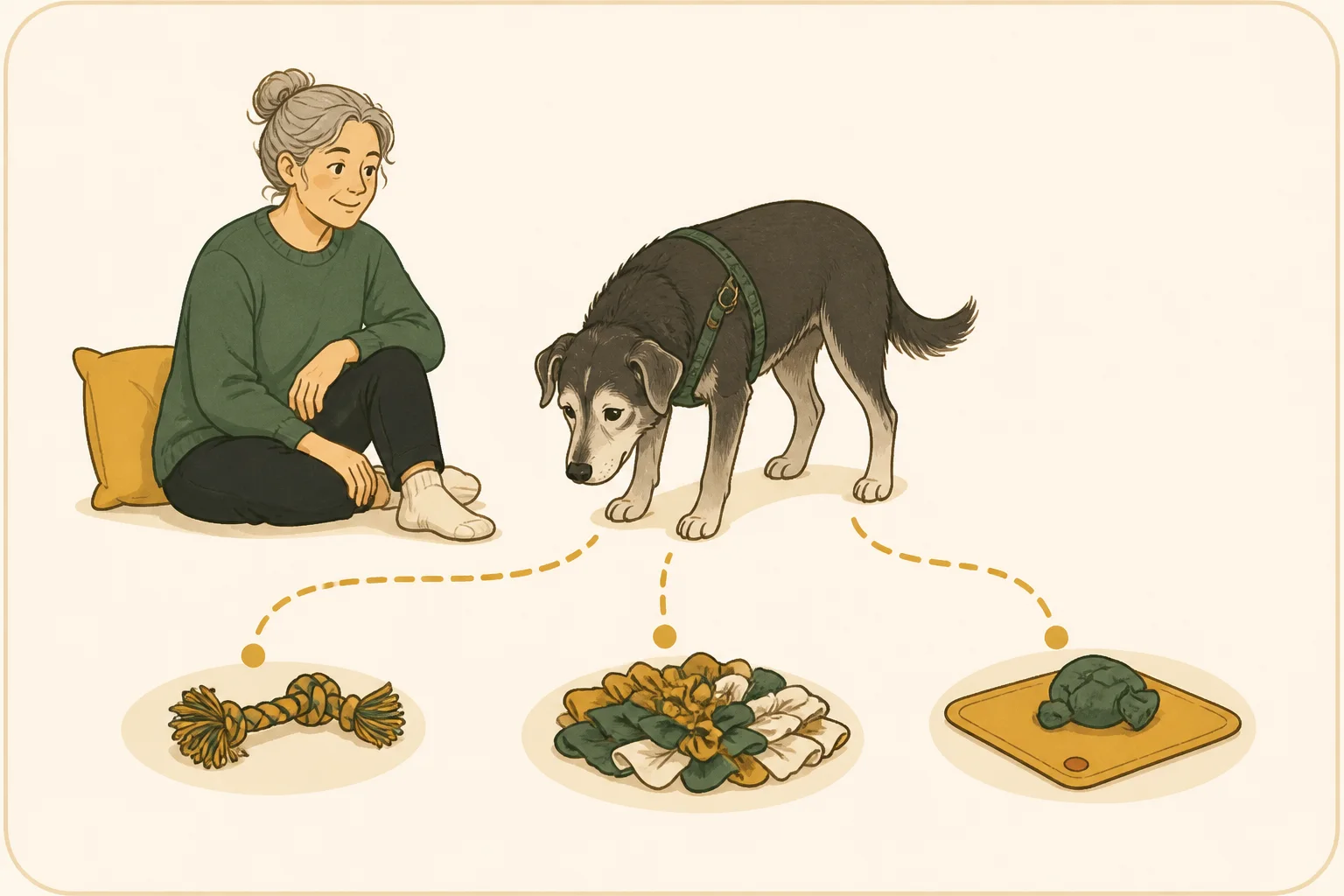
- Adapt a familiar favorite before introducing a complex new puzzle.
- Lower the physical and cognitive difficulty while preserving choice and successful engagement.
- Treat sudden confusion, pain, mobility loss, or behavior change as a veterinary issue, not boredom alone.
Turn this senior-dog answer into a gentler walking routine.
A senior dog walking app should make gentle movement visible: shorter walks, slower routes, willingness changes, recovery signals, and the patterns you may want to discuss with your veterinarian.
Which enrichment ideas work for senior dogs?
Try a slow sniff walk, easy floor-level search, familiar toy find, gentle social visit, soft tug without twisting, two-object choice, simple known cues, calm grooming by consent, window or porch observation, accessible scatter on a mat, short car ride to a familiar park, or veterinarian-approved swimming. Choose based on comfort, senses, and preference.
Keep hiding places visible or shallow when smell, vision, mobility, or confidence has changed.
Food activities must fit the veterinarian-approved diet, swallowing safety, and household guarding risk.
How do you adapt a favorite game for an older dog?
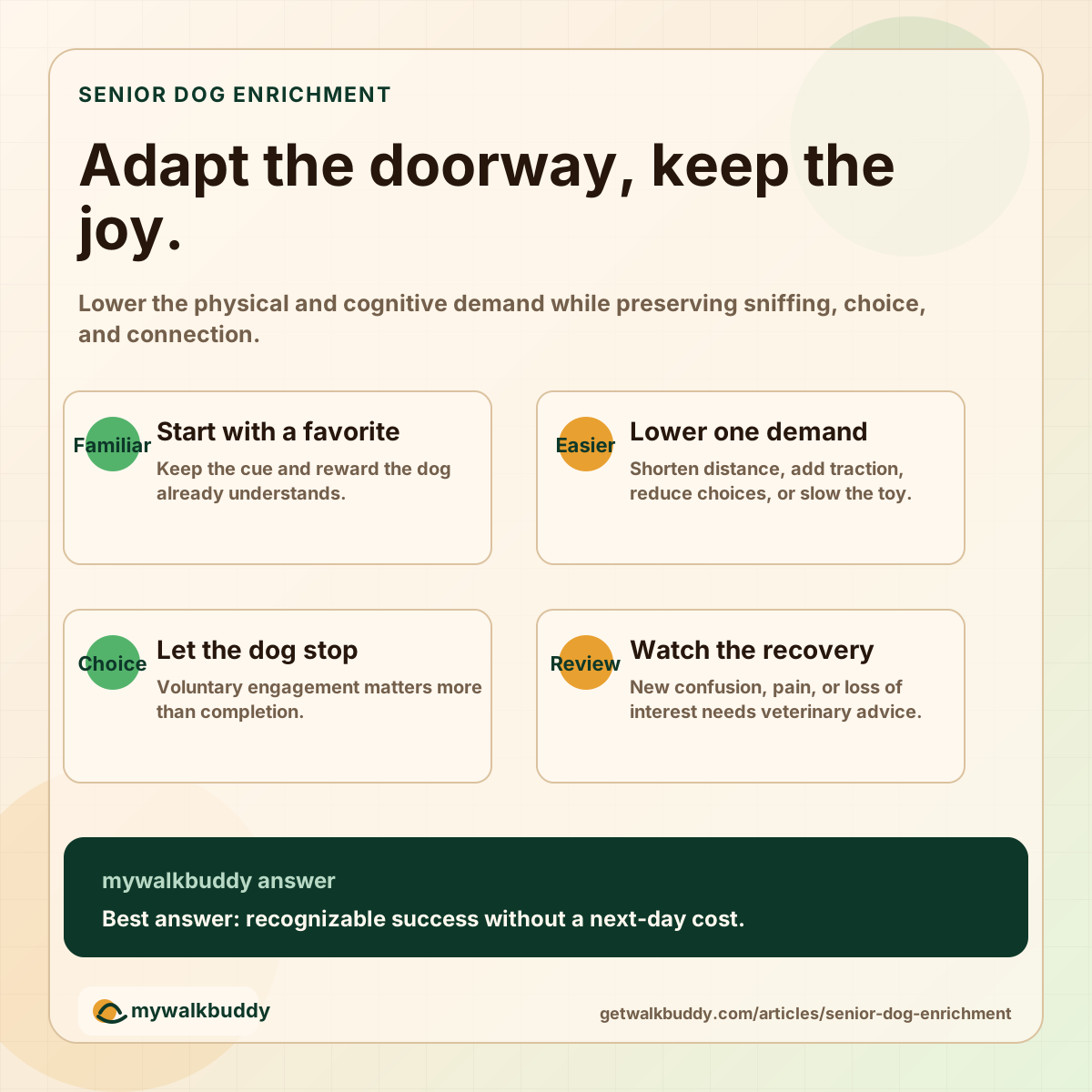
Keep the familiar cue and reward while lowering one demand: shorten distance, remove jumping, slow the toy, add traction, raise a bowl to an appropriate height, reduce choices, or use a quieter location. Let the dog stop freely. The goal is success without painful movement, sensory overload, frustration, or a recovery cost the next day.
PDSA recommends regular gentle activity at the senior dog's pace and notes that indoor games can help in unsuitable weather.
A dog who no longer enjoys a favorite activity may need a health review before a replacement is chosen.
Can enrichment help a senior dog with cognitive change?
Gentle familiar routines may support engagement for some senior dogs with cognitive change, but enrichment does not diagnose or treat dementia by itself. Keep activities predictable, easy, and supervised, then stop if the dog becomes distressed or confused. Sleep-wake changes, house soiling, disorientation, anxiety, and altered interaction should be discussed with a veterinarian.
Use consistent paths, lighting, rest locations, and cue wording to reduce unnecessary confusion.
Track which activities produce calm engagement versus pacing or fatigue and share the pattern with the clinic.
Questions owners ask when the leash is already in their hand
-
Do senior dogs still need mental stimulation?
Yes. Many older dogs continue to benefit from sniffing, simple learning, social connection, and choice, with difficulty adapted for comfort, senses, health, and recovery.
-
What if my senior dog loses interest in enrichment?
Reduce difficulty and try a familiar activity, but arrange veterinary advice when loss of interest is sudden, persistent, or paired with pain, appetite, sleep, or mobility changes.
Turn the answer into a routine you can see.
Use GetWalkBuddy to log the walk, route, duration, and recovery note that make this guidance useful for your individual dog.