
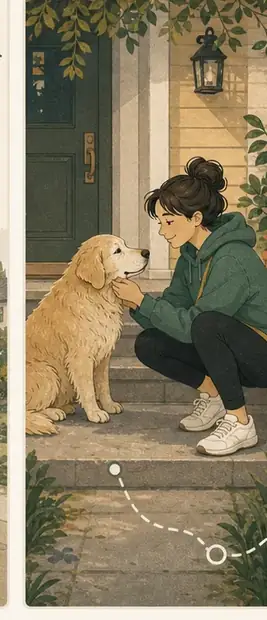
- A sudden change in walking comfort deserves a veterinary conversation.
- Restart with short, familiar routes and reward calm movement.
- Do not drag, punish, or turn reluctance into an endurance test.
Turn this senior-dog answer into a gentler walking routine.
A senior dog walking app should make gentle movement visible: shorter walks, slower routes, willingness changes, recovery signals, and the patterns you may want to discuss with your veterinarian.
Why would an older dog suddenly dislike the leash?
An older dog may resist the leash because of pain, stiffness, vision or hearing changes, fear, a poorly fitting harness, or a negative experience. Sudden reluctance is a cue to slow down and check what changed.
The leash can become the thing your dog associates with discomfort, even when the real problem is a sore joint or a scary sidewalk situation.
A veterinarian can help assess a new change in mobility or behavior. Training works better once the dog is comfortable enough to learn.
How do I restart leash training with a senior dog?
Restart indoors or just outside with a few calm steps, a reward, and a return home before the dog is overwhelmed. Use familiar ground and build duration only when the dog looks relaxed and recovers well.
Your goal is not a dramatic before-and-after walk. It is a dog who sees the leash and thinks, this is manageable.
Keep sessions brief enough to end with success. A small daily win is more valuable than a long route that makes tomorrow harder.
Does equipment matter for an older dog's leash walk?
Yes. A comfortable, well-fitted harness or collar and an appropriate leash can reduce unnecessary strain and give you better control without pulling the dog. Ask a qualified professional for fit guidance if you are unsure.
Avoid using gear as a shortcut for pain or fear. No tool replaces watching how the dog moves.
Choose the setup that lets you stay close, keep the pace calm, and avoid sudden pressure on a sensitive body.
Questions owners ask when the leash is already in their hand
-
Can you train an old dog to walk nicely on a leash?
Yes, older dogs can learn or refresh leash skills. Go slowly, use rewards, and address discomfort or fear first.
-
Should I pull my older dog if they stop walking?
No. Stop, assess the environment and your dog's body language, and avoid forcing movement. A sudden or repeated refusal should be discussed with a veterinarian.
Make the next senior walk feel manageable.
GetWalkBuddy helps you keep a gentle record of short routes and steady progress, not push an older dog past comfort.