
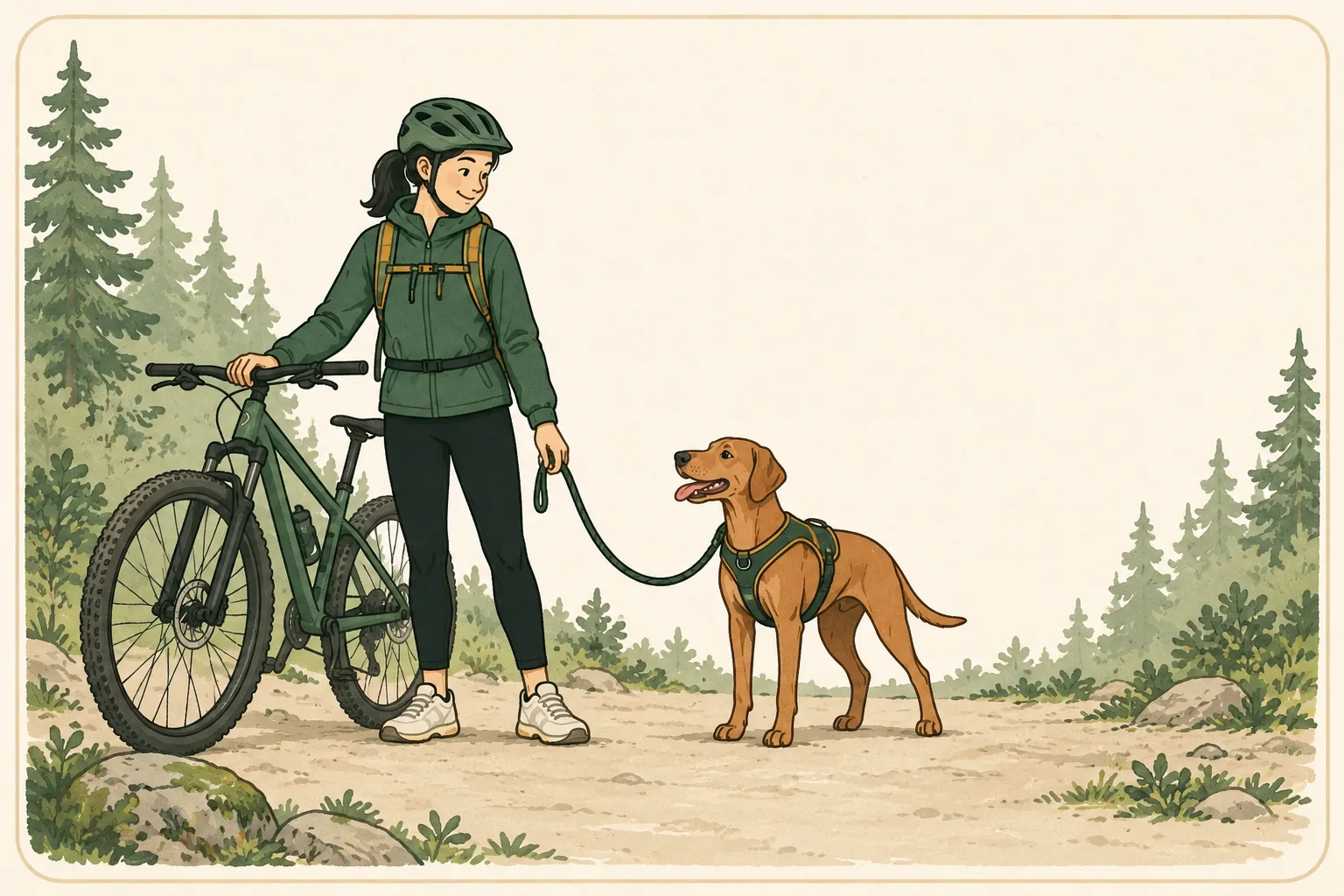
- Prepare the dog, rider and equipment as separate tasks.
- Learn stopping and direction cues before combining them with riding.
- Choose a permitted, quiet trail and a plan for ending early.
Turn this answer into a walk you can actually track.
GetWalkBuddy is a dog walking app for owners who want a simple route tracker, timer, distance view, and daily walk log without turning the walk into a spreadsheet.
What should be ready before the first ride?
Start with an individual suitability check and experienced instruction. Non-stop dogwear’s athlete guide puts health, appropriate age and fitness ahead of the first training ride.
Tell your veterinarian what you mean by the activity: running and pulling in front of a bicycle, on the surface and in the conditions you expect to use. “Can my dog exercise?” is a less useful question than a description of the actual task.
Then discuss your own cycling experience with an instructor. Handling the bike and communicating with a moving dog are separate skills. A familiar walking route does not automatically become a suitable cycling route.
Make a three-column preparation sheet: dog, rider and setup. Put unresolved questions in the relevant column. This prevents a new piece of equipment from creating the impression that every other prerequisite has been met.
What equipment needs checking?
A purpose-designed setup typically includes an appropriate harness, elastic line and bike antenna, alongside a suitable bicycle and rider protection. The manufacturer explains that the antenna helps keep the line away from the front wheel.
Ask the instructor to inspect the complete assembled system, including attachment points and fit, rather than checking each item in isolation. Follow the instructions for your actual equipment. A product photograph is not an assembly guide.
Use a helmet and have the bicycle’s brakes and condition checked. The equipment source is a manufacturer’s guide, not an independent comparison of brands; this article does not rank or claim to have tested its products.
Keep a separate walking leash for managing the dog when you are not riding. Decide how the dog will be held while you prepare the bike so you are not improvising beside moving wheels.
Which skills can be practiced before riding?
Non-stop dogwear recommends teaching direction cues before getting on the bike and introducing the equipment gradually. Starting, slowing and stopping cues also deserve a clear plan.
Write down the exact words you and your instructor will use. Traditional sport vocabulary is optional; consistency is what makes the plan usable for everyone handling the dog.
Ask the instructor to distinguish two lessons: being comfortable near the bicycle and understanding the task of running ahead. A dog who calmly investigates a stationary bike has learned something useful, but that alone does not establish readiness to pull it.
For a first appointment, bring a description of what the dog already knows. “Turns left with me on walks” tells the instructor more than “knows directions.” Let them decide how to progress safely in a controlled setting.
How do you choose a beginner route?
Favor a permitted, quiet route with good visibility and manageable terrain. The athlete guide recommends avoiding car traffic and beginning with relatively flat trails rather than sharp corners and hills.
Walk the proposed route first. Mark junctions, narrow sections, places where other users appear suddenly and any section where you would struggle to stop or leave. Check access rules with the land manager.
Create a short-route option before the session. An out-and-back route is not automatically easy to shorten if turning around safely is difficult; ask the instructor to review that detail.
Weather, footing and the dog’s condition can change the decision on the day. Do not use a preselected distance or a race distance as a required beginner workout. Keep the session plan individual.
What should the first lesson produce?
Aim to leave with clear answers about your setup, your dog’s readiness and the next practice task. A completed fast ride is not the only useful outcome.
Use a brief after-lesson note: what was checked; what the dog found comfortable; which handling skill needs work; what to practice before returning. Ask the instructor to review the next step while it is still fresh.
If the session stays entirely on preparation, record that accurately. It is better information than treating a parked-bike introduction as a successful pulling session.
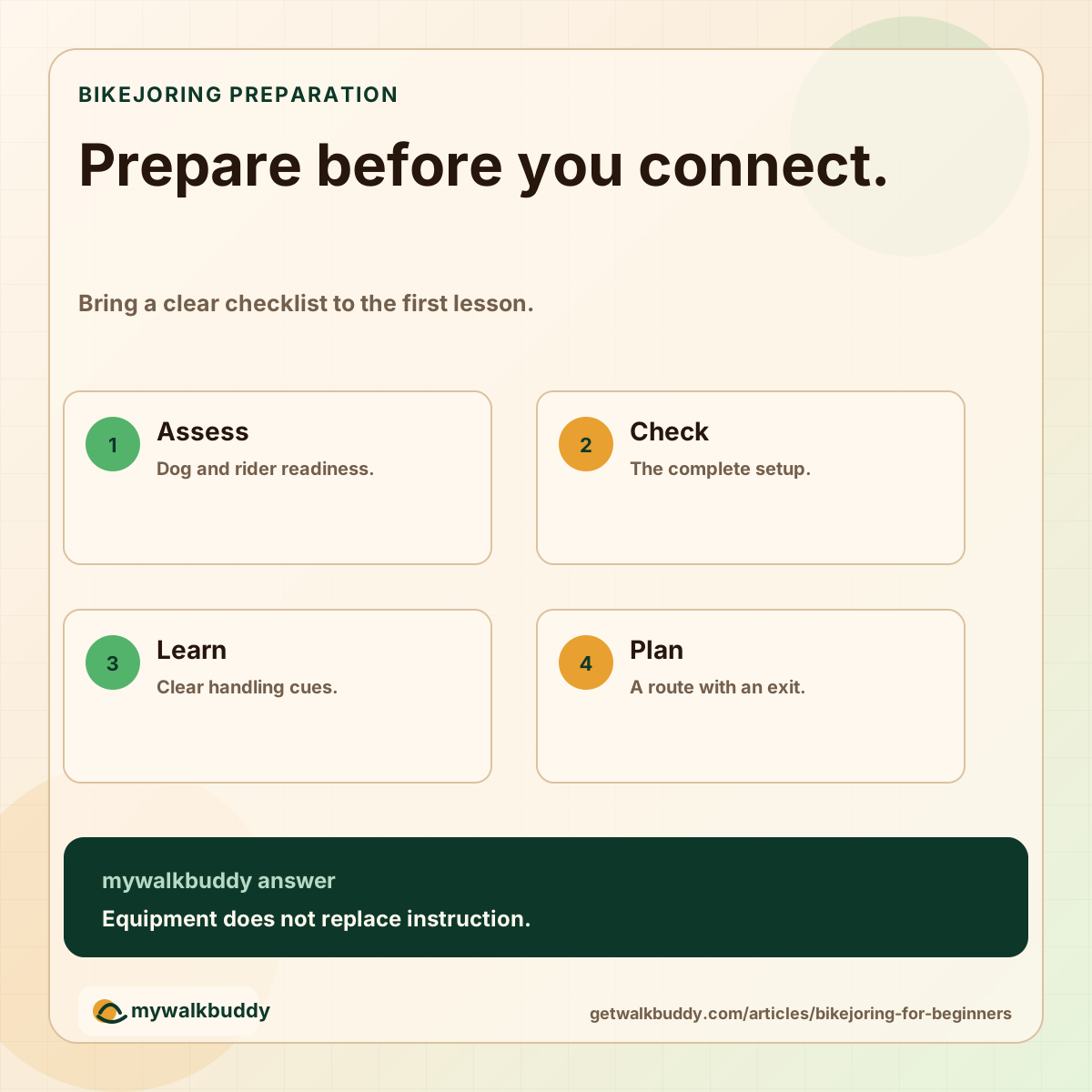
- Before: check suitability and book experienced instruction.
- Prepare: inspect the complete setup and rider protection.
- Plan: identify cues, route and an early exit.
- Review: record the next task rather than a speed target.
Questions owners ask when the leash is already in their hand
-
Is bikejoring the same as cycling beside a dog?
No. Bikejoring involves a dog running ahead and pulling through a suitable setup. Do not assume equipment or handling methods transfer unchanged between activities.
-
Can I attach a normal walking leash to my bike?
Do not improvise that as a bikejoring setup. Get instruction on sport-appropriate equipment, attachment and line management.
-
How far should a beginner dog run?
There is no universal first-session distance. Suitability, conditioning, terrain and conditions need individual assessment.
-
Should I begin with two dogs?
Start by learning with each dog individually under instruction. Managing a team adds complexity before the first dog-and-rider partnership is established.
Keep ordinary walks in the picture.
Use GetWalkBuddy for walking route, time and distance. Keep bikejoring training notes separately so a ride is not mistaken for an ordinary walk.