
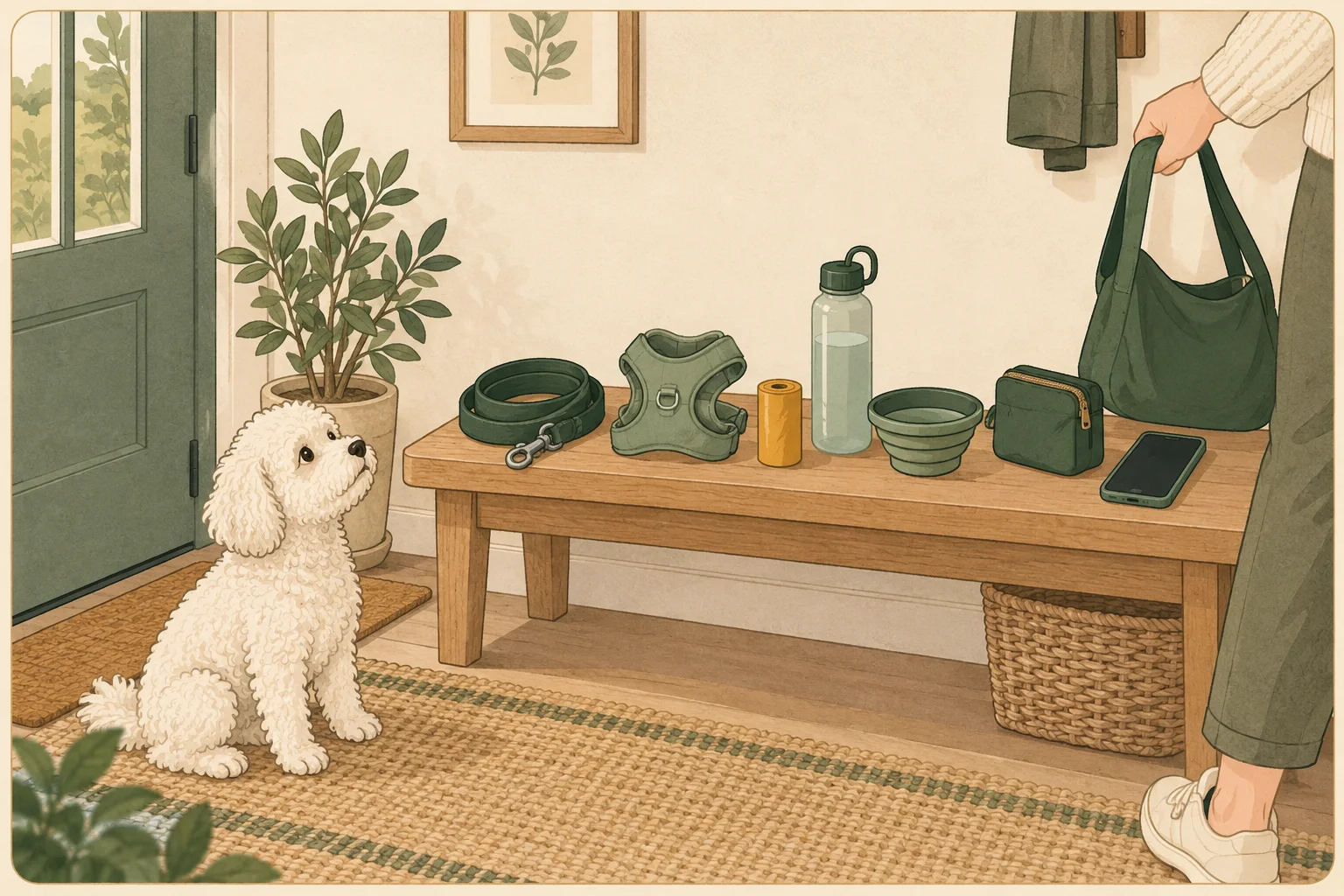
- Start with the functions the kit must cover, then choose items you already own.
- Add for the actual route and conditions instead of carrying every possible accessory.
- Restock at the end of the outing so the next walker starts ready.
Turn this answer into a walk you can actually track.
GetWalkBuddy is a dog walking app for owners who want a simple route tracker, timer, distance view, and daily walk log without turning the walk into a spreadsheet.
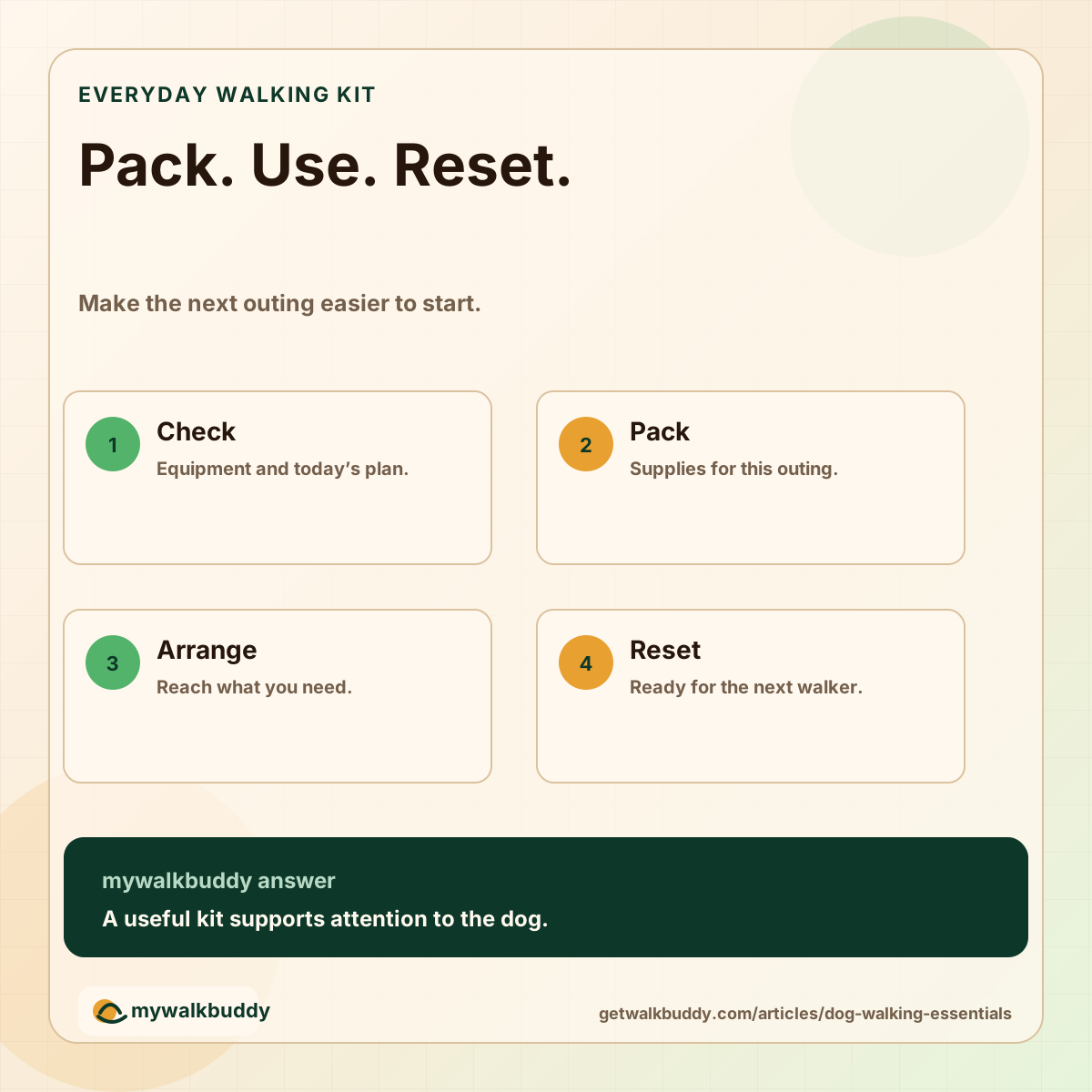
What should an everyday dog walking kit cover?
Build around handling, cleanup, hydration when needed and communication. The National Park Service’s B.A.R.K. principles emphasize waste collection, leashing, respecting wildlife and knowing where pets may go. Use those responsibilities as a starting check, then adapt the kit to your local outing.
Handling: the dog’s suitable walking equipment, checked before departure. Cleanup: usable waste bags you can reach while managing the lead. Hydration: fresh water and a usable bowl when the outing requires them, rather than assuming a public source will be available.
Communication: your phone and the information needed if plans change. Keep the screen task brief so the kit supports your attention to the dog. If you use a walk tracker, start the record before moving into a busy place.
Lay the items out once and ask what each is for. If two objects do the same job, choose the one you can use more comfortably. If an item has no role in this outing, it may belong in a separate trip bag instead.
What changes for rain, darkness or a longer outing?
Add equipment for a specific condition or task. A longer route, poor visibility or wet weather may change what you carry, but a larger bag does not make unsuitable conditions safe. Decide whether the outing itself still works before packing additions.
Use a three-question departure check: What changed today? What item addresses it? Can I still use the kit comfortably? For an after-dark outing, that may mean checking the lights and visibility equipment you use. For rain, it may mean a dry place for your phone and a towel waiting at home.
For a new destination, save the access instructions and a return option before leaving. An extra toy cannot solve a closed gate or an unexpected restriction. Check route information as deliberately as physical supplies.
Keep specialized trips separate. A beach, long hike or travel day needs its own planning. This everyday kit is not a complete remote-area emergency pack or a replacement for destination-specific preparation.
How should you organize a dog walking bag?
Arrange items in the order you need them, with frequently used supplies accessible without releasing control of the dog. Test the arrangement at home before depending on it outside.
Put a waste bag where you can reach it without emptying the whole pouch. Keep water separate from items that must stay dry. Choose a consistent place for keys so finding them at the door does not turn into a full bag search.
Try a dry run with the empty lead in your hand: retrieve a bag, open the water container, put the phone away and reach the keys. This is a packing rehearsal, not a dog-handling exercise. If a closure requires both hands and awkward balancing, move that item or choose a simpler arrangement.
If household members share the kit, agree on the same locations. A smaller consistent kit is often easier to hand over than several personal bags with different contents.
How do you keep the kit ready for the next walker?
Tie restocking to the return from the walk. Replace used supplies, clean what needs cleaning and set aside damaged equipment before the next person reaches for it. Dogs Trust recommends regular checks of harnesses, collars and leads for wear.
Use a simple return sequence: dog settled safely, used items dealt with, consumables replaced, kit returned to its usual place. Put an empty roll or discharged light where it will prompt the required action, rather than leaving it in the ready-to-go kit.
Keep a small refill store next to the kit. The point is to make replacement easier than remembering to do it later. If two people share the walks, the person returning can reset the kit and leave a short note for any unresolved issue.
After a few outings, review which missing or awkward item actually caused a problem. Adjust that part of the kit. Avoid buying another accessory merely because the bag has an empty pocket.
What is a useful final check before leaving?
Check the dog, the kit and the plan together. Readiness includes knowing where you are going and whether the walking equipment is suitable.
Use this four-line check:
- Before: check the dog’s walking setup and today’s route or conditions.
- Carry: reachable waste bags and the water, bowl and supplies this outing needs.
- Use: arrange the bag so essential items are accessible while maintaining control.
- Return: replace used supplies and remove damaged items from the ready kit.
Questions owners ask when the leash is already in their hand
-
Do I need a special dog walking bag?
Not necessarily. An existing bag or pocket arrangement can work if it holds the necessary supplies securely and lets you reach them comfortably. Choose based on the job it needs to do.
-
Should every walk use the same kit?
Keep a consistent everyday core, then adapt it to the dog, route, duration and conditions. A short familiar outing and a remote hike need different preparation.
-
What dog walking essentials are useful in winter?
Start with the same handling and cleanup basics, then consider visibility, footing, weather protection and the dog’s comfort. If conditions make the route unsuitable, change the outing rather than relying on extra gear.
-
Should I keep treats in the walking kit?
If rewards are part of your dog’s plan, carry suitable rewards in an accessible container and account for the dog’s dietary needs. They are a planned training aid, not a substitute for safe handling or an appropriate route.
Add a walk record to a ready routine.
Start GetWalkBuddy before setting off, then review the outing after returning while you reset the kit for next time.