
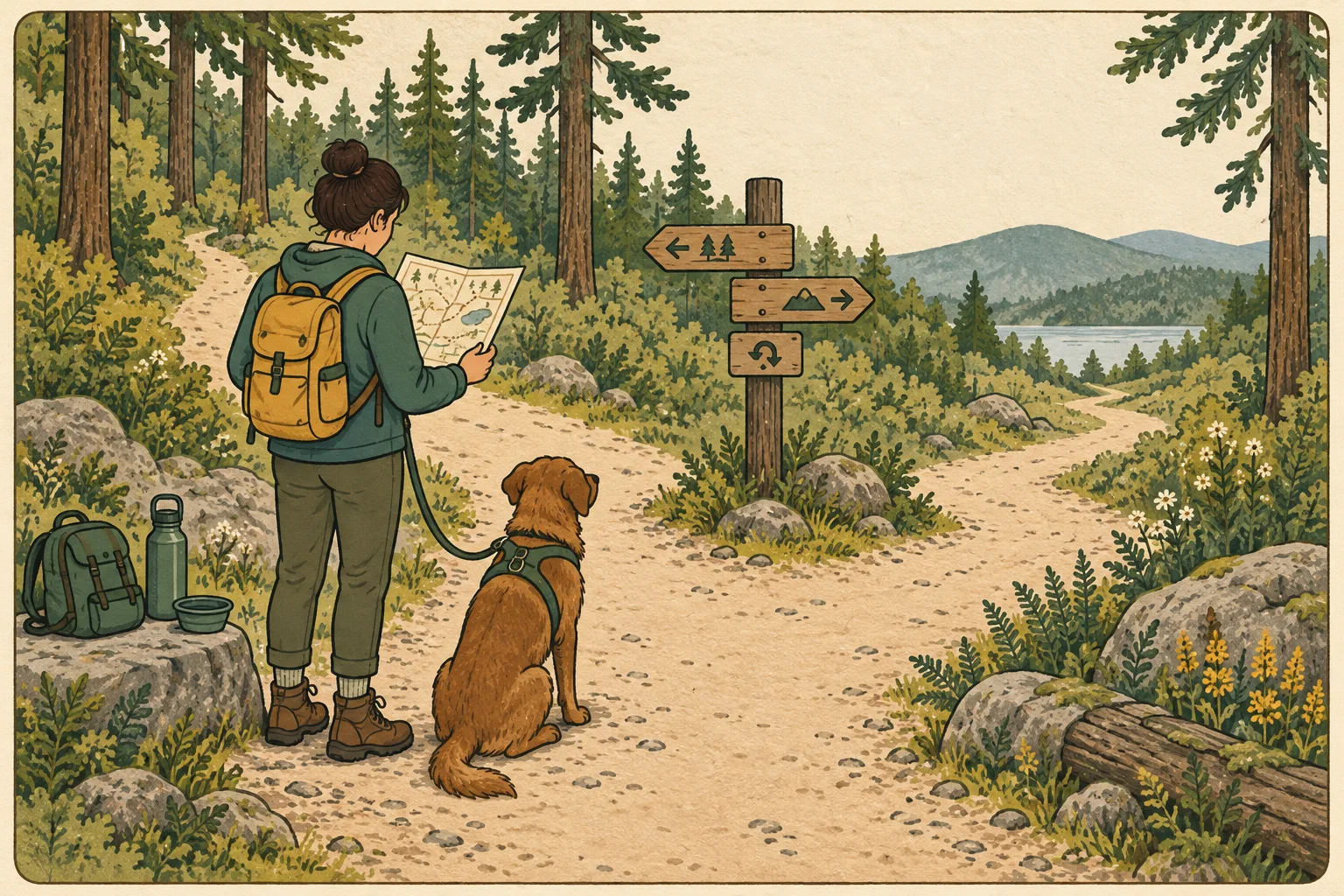
- Choose the trail for the dog you have today, not the photo at the summit.
- Verify dog access for the exact route, including the return path.
- Use a turn-back decision and a packing check before extending a familiar walk into a hike.
Turn this answer into a walk you can actually track.
GetWalkBuddy is a dog walking app for owners who want a simple route tracker, timer, distance view, and daily walk log without turning the walk into a spreadsheet.
How do you choose a first dog-friendly hiking trail?
Screen the exact route for dog access, terrain, escape options and expected activity. A trail marked easy for people can still have narrow ledges, rough surfaces or steps that change the outing for a dog. Prefer a simple route you can shorten without needing to finish an entire loop.
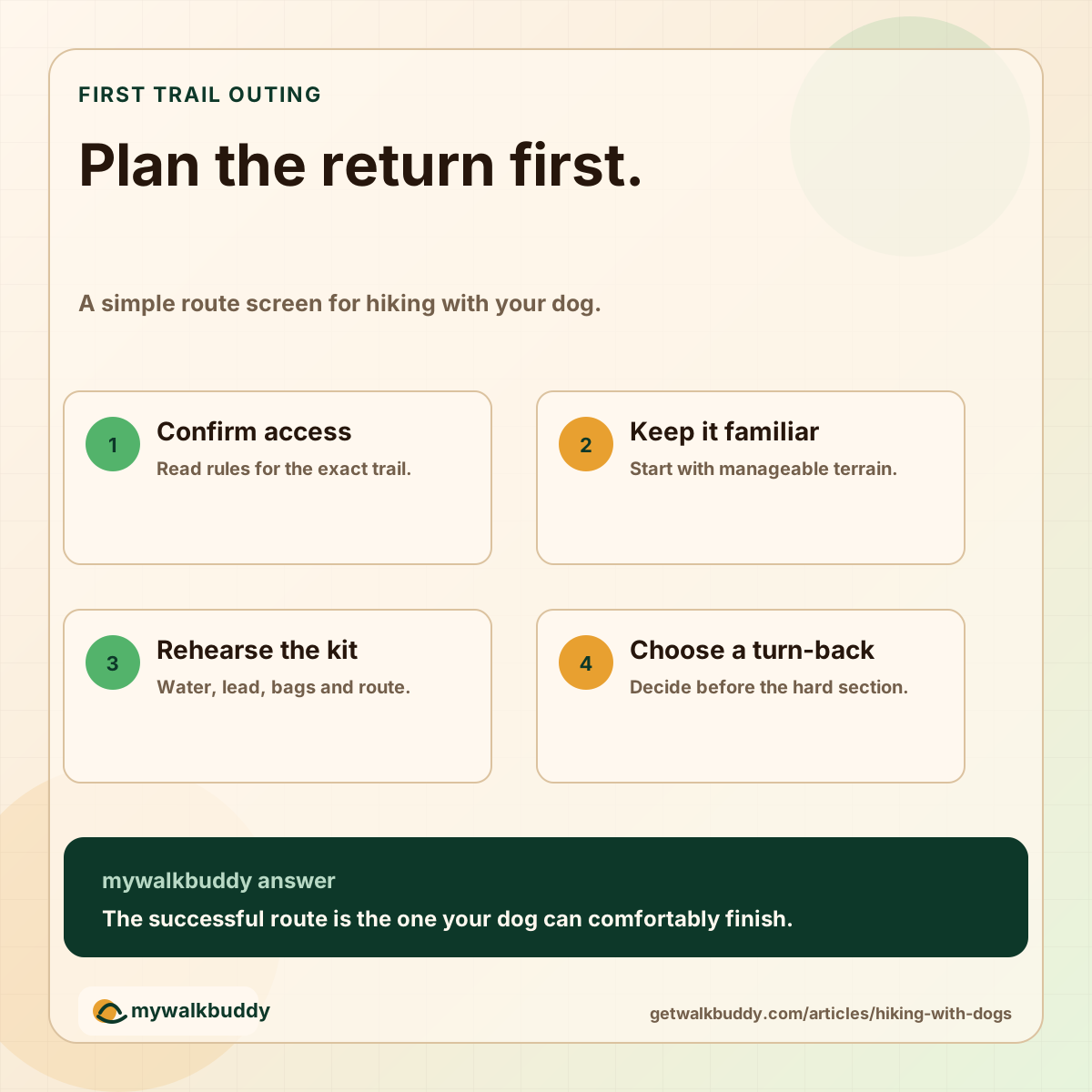
Use this four-box route card: permission confirmed; footing visible and manageable; a straightforward return; room to pause away from passing traffic. A blank box means there is more planning to do. This is an owner planning aid, not a certification that a trail is safe.
For example, compare a flat out-and-back path with a longer loop that has a steep final descent. Even if the map labels both easy, the out-and-back gives you more control over the point where you finish. Check the return journey as carefully as the outward leg.
The National Park Service directs visitors to park-specific pet information. A park welcoming pets does not mean every trail, building or shuttle accepts dogs. Read current rules for the named route, and check closure notices before traveling.
Sources: National Park Service: pets in parks
Is your dog ready for a longer trail outing?
Start from what your dog already handles comfortably on ordinary walks. Do not make the first hike simultaneously longer, steeper, hotter and busier. If health, mobility or exercise restrictions are uncertain, get veterinary guidance before planning a demanding outing.
Write down a recent comfortable walk: surface, pace, stops, weather and how your dog moved afterward. Use it as a planning reference rather than converting it into a guaranteed maximum distance. A dog who enjoys flat grass has not automatically practiced rocky descents.
Pick one modest change for a first outing, such as a new but easy surface while keeping the route short. Leave demanding terrain for a different plan. For puppies, older dogs or dogs returning after illness, individualized advice matters more than a mileage target.
If the dog is hesitant or moving differently, stop and reassess instead of using the destination as motivation to continue. New pain, weakness or breathing difficulty calls for veterinary advice rather than a hiking progression.
What should you pack for hiking with a dog?
Pack a secure walking setup, drinking water and a usable bowl, waste bags, identification and a route plan that remains available without reception. Add supplies appropriate to the location and your dog’s established needs. Check that you can carry everything for the return journey.
Do a small rehearsal near home: open the bowl, offer water, collect the waste bag and put everything away while keeping hold of the lead. Equipment that looks convenient on a shopping page may be awkward when both hands already have a job.
The B.A.R.K. principles from the National Park Service emphasize waste collection, leashing, wildlife respect and knowing where pets may go. Translate those into a bag you can actually use: spare bags, a secure place for used bags, sound lead hardware and saved route information.
Record the trailhead, intended route, turnaround location and expected return for a trusted person. A charged phone is useful, but plan for weak signal rather than assuming a tracking app supplies rescue coverage. GetWalkBuddy records walks; it is not an emergency response service.
When should you shorten the hike?
Turn back when the conditions or your dog’s response no longer fit the plan. The first decision point should come while returning is still straightforward. A summit, distance goal or app streak is not a reason to continue through a deteriorating situation.
Choose a visible checkpoint near the start, such as the first junction. Pause there and ask: is the dog moving normally, is the footing what we expected, and is the route still comfortable to manage? Answer each question before continuing.
If a narrow section becomes crowded, wait in a suitable open place or choose another route. If conditions change, use the earlier exit. Avoid improvising an unmarked shortcut just because the mapped return feels inconvenient.
After the hike, compare the actual route with the plan. Note the surface or bottleneck that changed your decision. A shorter outing that you can repeat comfortably is useful information for the next trip.
What is a reusable first-hike checklist?
Confirm permission, choose a reversible route, rehearse the equipment and record the result. Use the checklist again even when returning to the same location, because access and conditions can change.
Copy these four lines into your trip notes:
- Before: confirm the exact trail permits dogs, check current conditions and mark a straightforward return.
- Pack: lead and harness, water and bowl, waste supplies, identification and offline route details.
- During: reassess at the first junction; shorten the outing when terrain, crowds or the dog’s response changes.
- After: note what was comfortable and what would make the next route easier.
Questions owners ask when the leash is already in their hand
-
How many miles can a dog hike?
There is no useful single distance for every dog. Build from a comfortable routine and account for terrain, conditions, age and health. Ask your vet when your dog’s exercise tolerance is uncertain.
-
Are dogs allowed on every national park trail?
No. Check the current pet rules for the specific park and trail. General pet-friendly descriptions do not establish permission for the whole route.
-
Should the first hike be a loop?
An easy out-and-back can make an early return simpler. A loop can work if the full route is suitable and there are clear shortening options. Choose based on the actual map, not the route label.
-
Can I let my dog off leash on a hike?
Follow the site’s current rules and keep wildlife and other visitors in mind. For a first hike, a manageable leashed route avoids adding off-leash decision-making to an unfamiliar outing.
Keep a useful record of the outing.
Record the walk in GetWalkBuddy and keep notes on the terrain and stopping points you would choose again.