
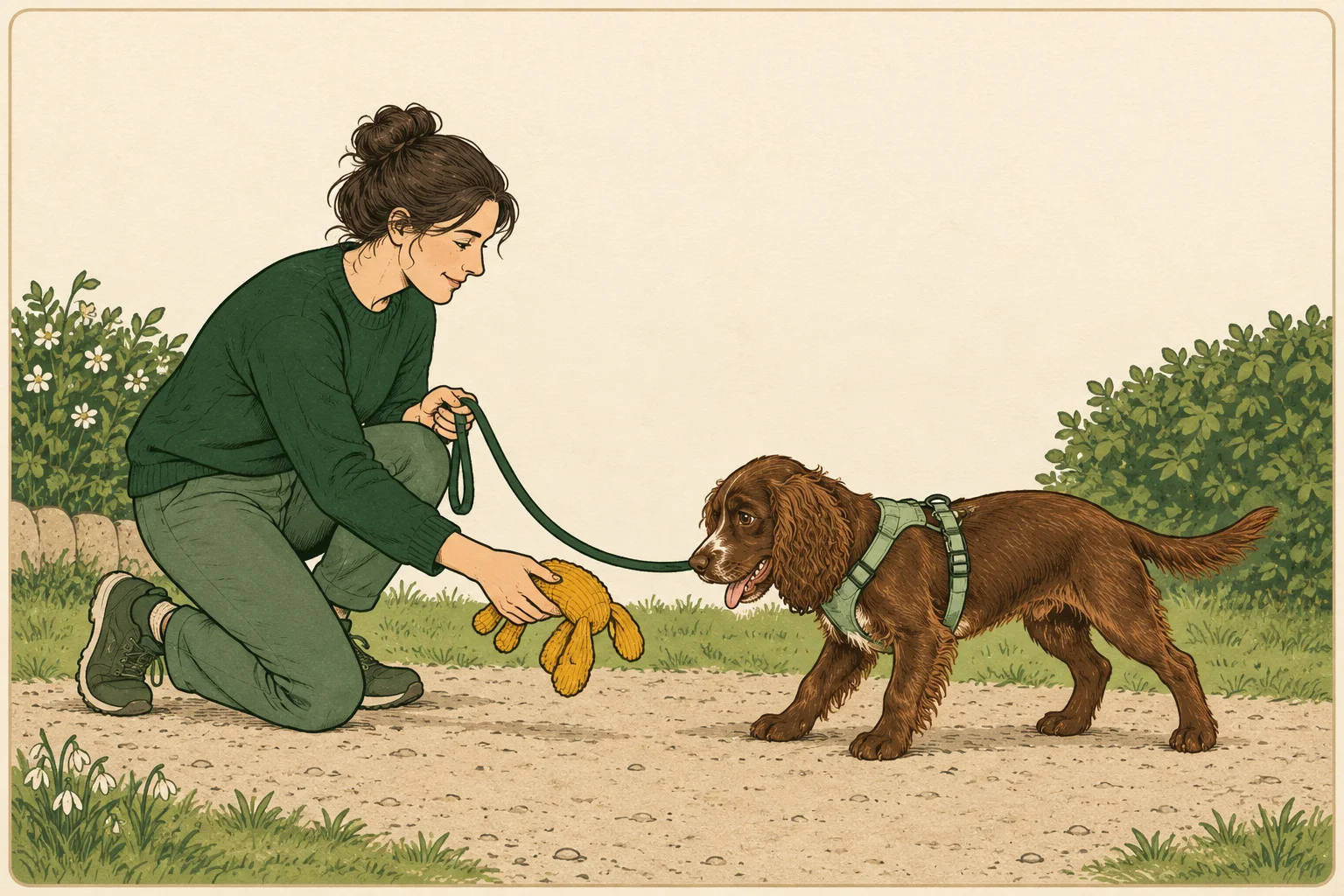
- Describe the situation before the bite instead of labeling the dog stubborn.
- Plan a response before a familiar difficult moment occurs.
- Get professional help when biting involves people, clothing or other dogs.
Turn this answer into a walk you can actually track.
GetWalkBuddy is a dog walking app for owners who want a simple route tracker, timer, distance view, and daily walk log without turning the walk into a spreadsheet.
Why does a dog bite the leash while walking?
Dogs Trust describes several possible contexts, including anxiety, frustration and learning that grabbing produces attention or play. The same visible action can serve different purposes. Your first task is to record the circumstances, not diagnose the cause from the bite alone.
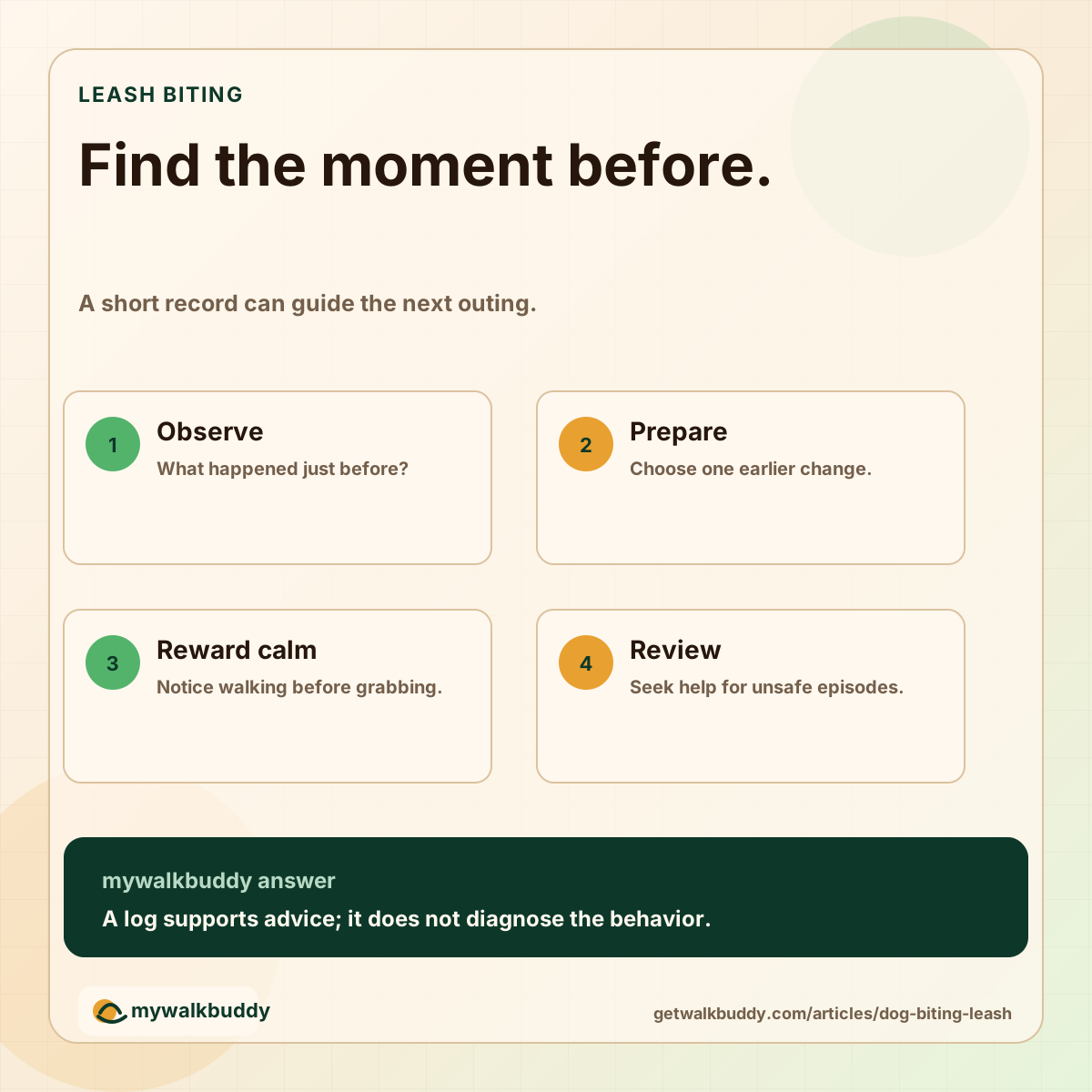
Use three columns: before, action and next event. “We stopped to talk; dog grabbed the lead; I moved my hand and spoke” is observable. “Dog tried to take charge” is an interpretation that does not tell you what to change.
Include occasions when grabbing did not happen. If the dog walks comfortably past the same place at a quieter time, that comparison is more informative than collecting only difficult moments. It still does not establish a cause by itself.
Keep the record brief enough to complete after the outing. Do not film or type during an episode if that interferes with keeping the dog and people safe.
Sources: Dogs Trust: lead ragging
What should you do when your dog grabs the lead?
Keep control of the walking setup and avoid making the episode a tug contest. Dogs Trust suggests a suitable toy held low or a food scatter as possible redirections. Choose an option that is safe in the actual surroundings, and do not reserve all rewards for moments after biting.
Prepare your response at home. Decide what you can reach without dropping the lead, where you can move away from a difficult situation and when you will end the outing. If you cannot safely handle the dog during these episodes, get hands-on professional support before repeating that route.
A narrow roadside is a poor place to improvise a training exercise. Maintain a secure connection and prioritize reaching a manageable setting. Never unclip the only secure lead to stop the dog biting it.
After an episode, check the equipment before the next outing. Damaged equipment needs replacement; a stronger lead alone does not explain or address the behavior.
Sources: Dogs Trust: lead ragging
How do you change the next walk instead of repeating the problem?
Choose one predictable difficult moment and plan around it. Dogs Trust recommends identifying situations that precede grabbing and preparing in advance. Your log can turn that advice into a specific route or handling decision.
Use a four-field plan: difficult moment; earlier cue you can notice; planned adjustment; observation afterward. For an illustrative example: stopping for a conversation; another person approaches; explain that you need to keep moving; note whether the outing stayed manageable.
Compare similar outings where practical. If you change the route, time, handler and duration together, you may improve the experience but will not know which change mattered. Record the bundle honestly rather than announcing that one trick fixed the problem.
Give the next household walker the plan before handing over. “Keep moving past our usual conversation stop today” is actionable. “Watch out, he was bad yesterday” is not.
For calm walking practice, use a setting where the dog can succeed and notice those ordinary moments before grabbing starts. Keep a separate record of practice and difficult episodes so emergency redirection does not become the whole training plan.
When does leash biting need professional help?
Ask your veterinarian for guidance when the problem persists, worsens or involves biting people, clothing or other dogs. Dogs Trust highlights those situations as reasons for tailored support and possible referral to a qualified behaviorist. A written log can make that conversation more useful.
Bring the short record, the equipment details and the situations you are avoiding. Describe what you can and cannot manage safely. You do not need to provoke another episode to demonstrate that the problem exists.
Write your question in practical terms: “How can we complete necessary toilet outings while working on this?” That gives the professional a concrete management need alongside the longer training goal.
If a new behavior appears alongside signs of pain or illness, mention the change to your veterinarian. Do not assume a training explanation simply because the behavior happens during a walk.
Sources: Dogs Trust: lead ragging
What should you prepare before the next outing?
Carry a simple plan rather than a long list of tricks. The aim is a safer, more manageable outing and a clearer record of the pattern.
Use this short preparation card:
- Before: inspect the lead and harness and choose a manageable route.
- Plan: identify the difficult moment and decide what to change earlier.
- During: maintain control, reward calm walking and avoid escalating a tug game.
- After: note before, action and next event; seek tailored help if the behavior is unsafe or persistent.
Questions owners ask when the leash is already in their hand
-
Does leash biting always mean aggression?
No. The action alone does not identify its cause. Record the context and seek tailored advice if handling becomes unsafe or biting involves people, clothing or other dogs.
-
Should I pull the leash out of my dog’s mouth?
Avoid turning the episode into a tug game. Maintain safe control and use an appropriate planned redirection. If you cannot do that safely, a qualified professional should help design the handling plan.
-
Will a chew-proof leash solve the problem?
Equipment may change what gets damaged, but it does not explain why grabbing happens. Check equipment safety and address the circumstances and training needs rather than treating a purchase as a complete solution.
-
What if the dog also jumps when biting the leash?
Include the jumping in your record and avoid creating another episode to test an idea. If you struggle to stay safe or the dog grabs clothing or people, contact your veterinarian and a qualified behavior professional.
Keep the walk record and the behavior context.
Record the outing in GetWalkBuddy and add a separate before–action–next-event note for your next walk or training appointment.