
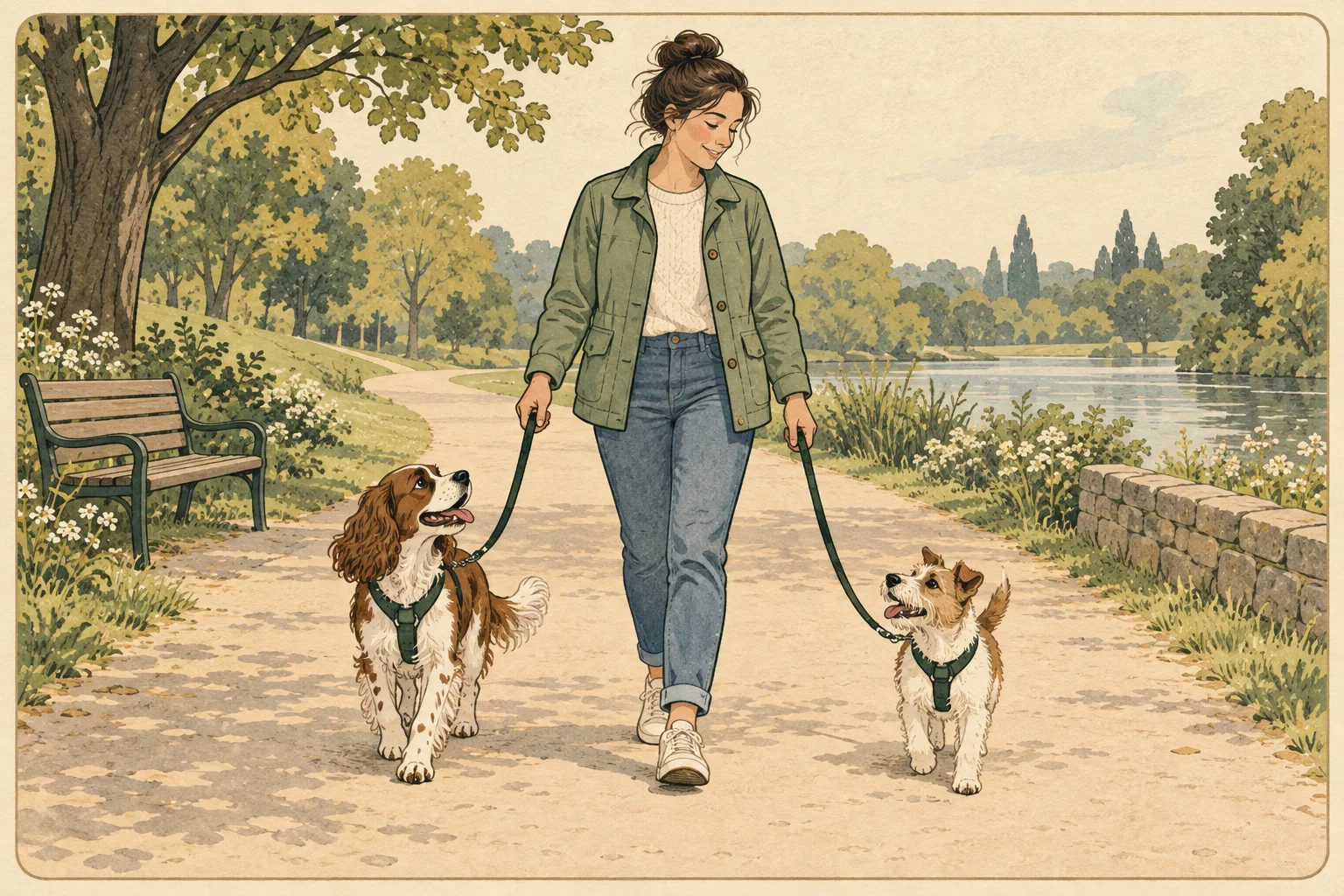
- Check each dog individually before testing the pair.
- Start with a manageable route and separate leads so you can respond to each dog.
- Keep individual walks available; sharing every outing is not the goal.
Turn this answer into a walk you can actually track.
GetWalkBuddy is a dog walking app for owners who want a simple route tracker, timer, distance view, and daily walk log without turning the walk into a spreadsheet.
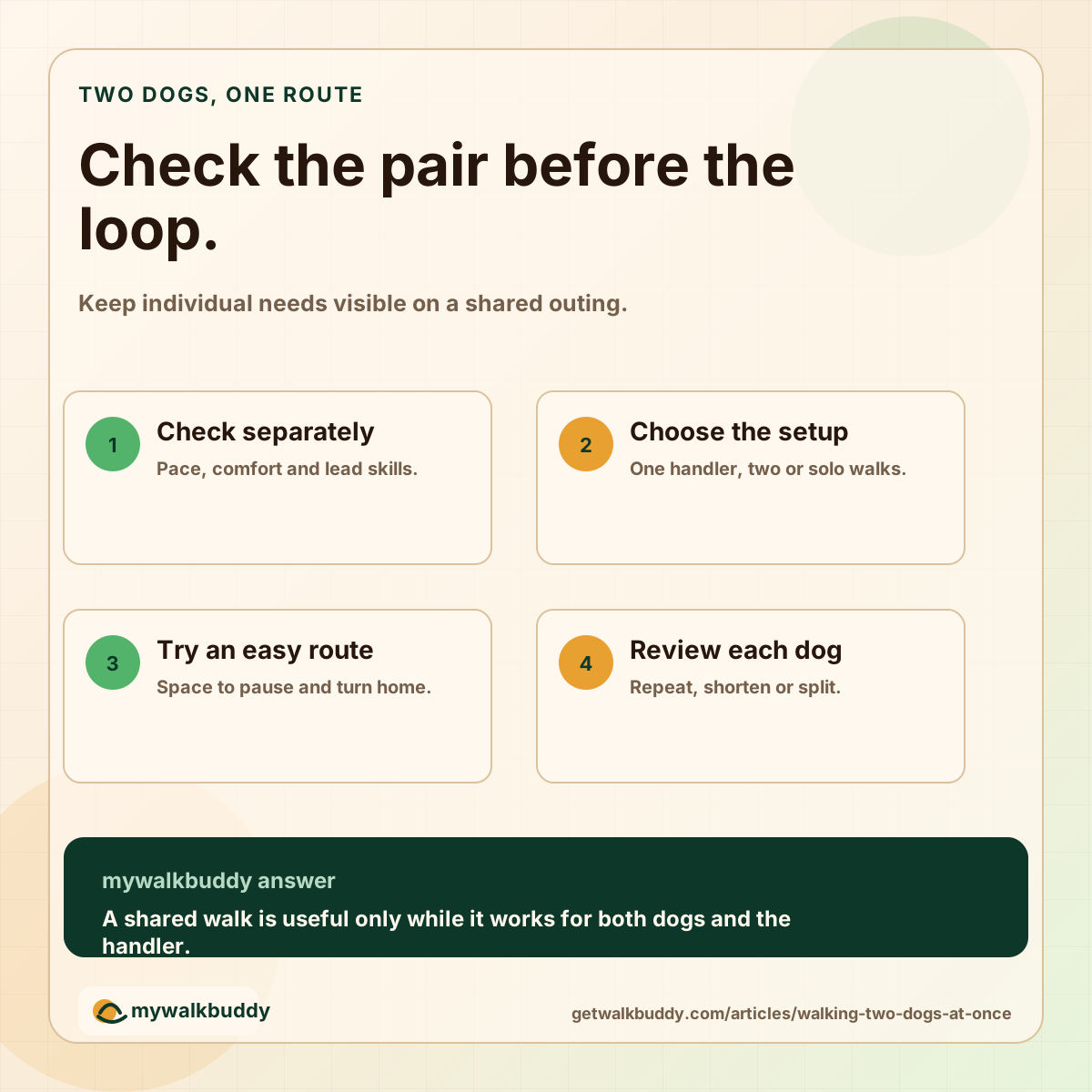
How do you know whether two dogs are ready to walk together?
Look for compatible behavior, a comfortable shared pace and manageable lead skills from each dog. Then consider your own ability to stop, turn and respond while holding both leads. Being friendly at home is useful, but a doorway, passing dog or narrow path can make a joint outing harder than expected.
Dogs Trust’s professional-walker guidance emphasizes checking compatibility and planning around individual needs. For a household, the practical question is whether this particular pair works with this handler on this route. The fact that a professional can walk a group does not establish that your pair is ready.
Assess one ordinary solo outing for each dog. Can you pause while the dog sniffs, turn home without a struggle, and pass the usual distractions with room to spare? If you spend the whole walk managing one dog’s pulling or distress, adding another creates another task before the first is manageable.
This guide assumes the dogs already know each other and can spend time together comfortably. Introducing unfamiliar dogs, managing conflict between them, or handling a history of bites calls for an individual plan with qualified support.
Should you use one handler, two handlers or separate walks?
Use one handler for a pair that already works comfortably together. Use two capable handlers to explore a shared route while keeping individual control and space. Choose separate walks when the dogs need different paces, environments or training. None of these options has to be a permanent decision for every outing.
One handler: the route is wide and familiar, both dogs can pause and turn with you, and neither needs constant individual intervention. Start with the easiest version of the outing, not the busiest walk of the week.
Two handlers: each person manages one dog, with enough separation that the dogs are not competing for the same sniff or reward. Agree where to turn back before setting off. Avoid transferring a lead between people beside traffic or while either dog is pulling.
Separate walks: one dog needs a slower toilet-and-sniff outing while the other needs a different routine; one repeatedly becomes distressed; or the handler cannot comfortably manage both. A shorter shared segment followed by appropriate individual time may also fit some households.
For example, two compatible dogs might share the quiet loop near home, while a second adult later takes one on their usual additional outing. That is a planning example, not a fixed exercise dose or a recommendation to leave a dog distressed at home.
Is one double leash better than two separate leads?
Two separate leads are a practical starting point because you can adjust each dog’s space independently. A coupler links the dogs’ movement and may be a poor match when their pace or size differs. No leash design replaces training. Choose comfortable, properly fitted equipment that you can handle without tangled or trailing line.
This is a handling tradeoff, not a tested product ranking. Follow the equipment maker’s instructions and check both attachments before leaving. Distinct lead colors can help you identify which line belongs to which dog at a glance.
Decide where each dog will generally walk before starting. One on each side may be workable on a wide path; the route and handler determine the arrangement. Do not insist on a position that puts a dog at the road edge or forces you to step over leads.
When lines cross, pause in a suitable open space and reset calmly before moving on. Repeated tangles are a reason to simplify the outing or return to solo practice. A tighter grip and faster pace do not make an awkward setup easier to understand.
How should you try the first shared walk?
Choose a quiet, familiar route close to home, with wide places to pause and an easy turnaround. Practice calm starts and a few manageable steps before attempting the full loop. Reward each dog individually for the behavior you want, and end the trial if handling becomes difficult rather than pressing on to finish.
Dogs Trust recommends beginning loose-lead training in quiet settings and rewarding the dog for staying near you. Teach the relevant skills to each dog separately first. A shared outing should use familiar cues, not become the first lesson for two beginners at once.
Treat the doorway, first turn and first stop as separate observations. You might find the walk itself easy but the exit too crowded. In that case, a second handler or separate departures may solve the practical bottleneck without changing the whole route.
Avoid scattering food between dogs. If you use food rewards, keep delivery separate and stop if competition develops. Choose another way to reward or work individually with qualified guidance when food or toys are guarded.
Sources: Dogs Trust: Teach your dog to walk nicely on a lead
What should you record after walking two dogs together?
Record how each dog handled the same route, rather than giving the outing a single success label. Note pace, crossings, sniff stops and any point where you needed more hands or space. Use those observations to repeat the setup, shorten the shared segment, add a handler or walk separately next time.
Use this short card for the first few shared outings. It is an observation aid, not a behavior assessment or a safety certification.
- Before: check each dog’s equipment, choose a quiet route and agree on a simple way to return.
- During: check that both can move comfortably and that you can stop, turn and manage waste bags without losing control.
- Stop or split: change the plan for repeated tangles, incompatible pace, escalating pulling, conflict or distress.
- After: note one observation for each dog and one change to the next outing, if needed.
Questions owners ask when the leash is already in their hand
-
Can you walk two dogs of different sizes together?
Sometimes. Size is only part of the decision: pace, strength, behavior and the handler’s ability matter too. Separate leads preserve independent control; split walks if one dog is continually hurried or held back.
-
Should two reactive dogs be walked together?
Do not use a joint walk as an experiment in managing two dogs who already struggle individually. Use separate outings and seek qualified support for an individual plan before combining them.
-
Can one dog teach the other to stop pulling?
Do not rely on it. Teach and practice lead skills with each dog separately. The pair may behave differently together, so assess the joint setup instead of assuming the calmer dog will solve the problem.
-
How long should the first walk with two dogs be?
Keep it short enough to observe the setup and return easily. There is no required number of minutes. End the trial before managing both dogs becomes difficult, and meet remaining care needs separately as appropriate.
Keep the household walking routine clear.
Use GetWalkBuddy to record completed walks, and keep a brief note of each dog’s response when planning the next shared outing.