
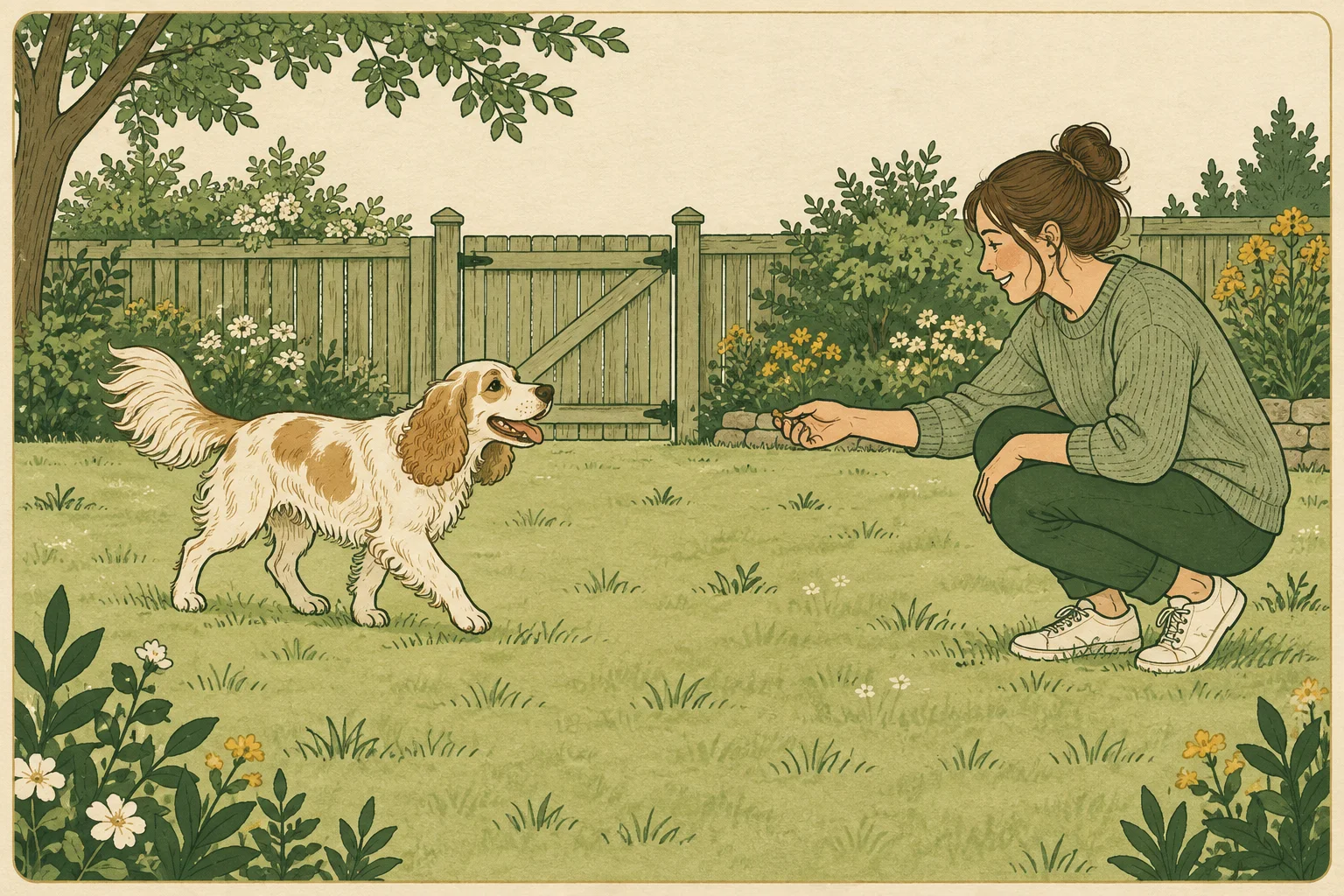
- A consistent cue helps the household practice the same behavior.
- Make the setting easier when returns become unreliable.
- Use a practice log to track context; one successful return is not proof of reliability everywhere.
Turn this answer into a walk you can actually track.
GetWalkBuddy is a dog walking app for owners who want a simple route tracker, timer, distance view, and daily walk log without turning the walk into a spreadsheet.
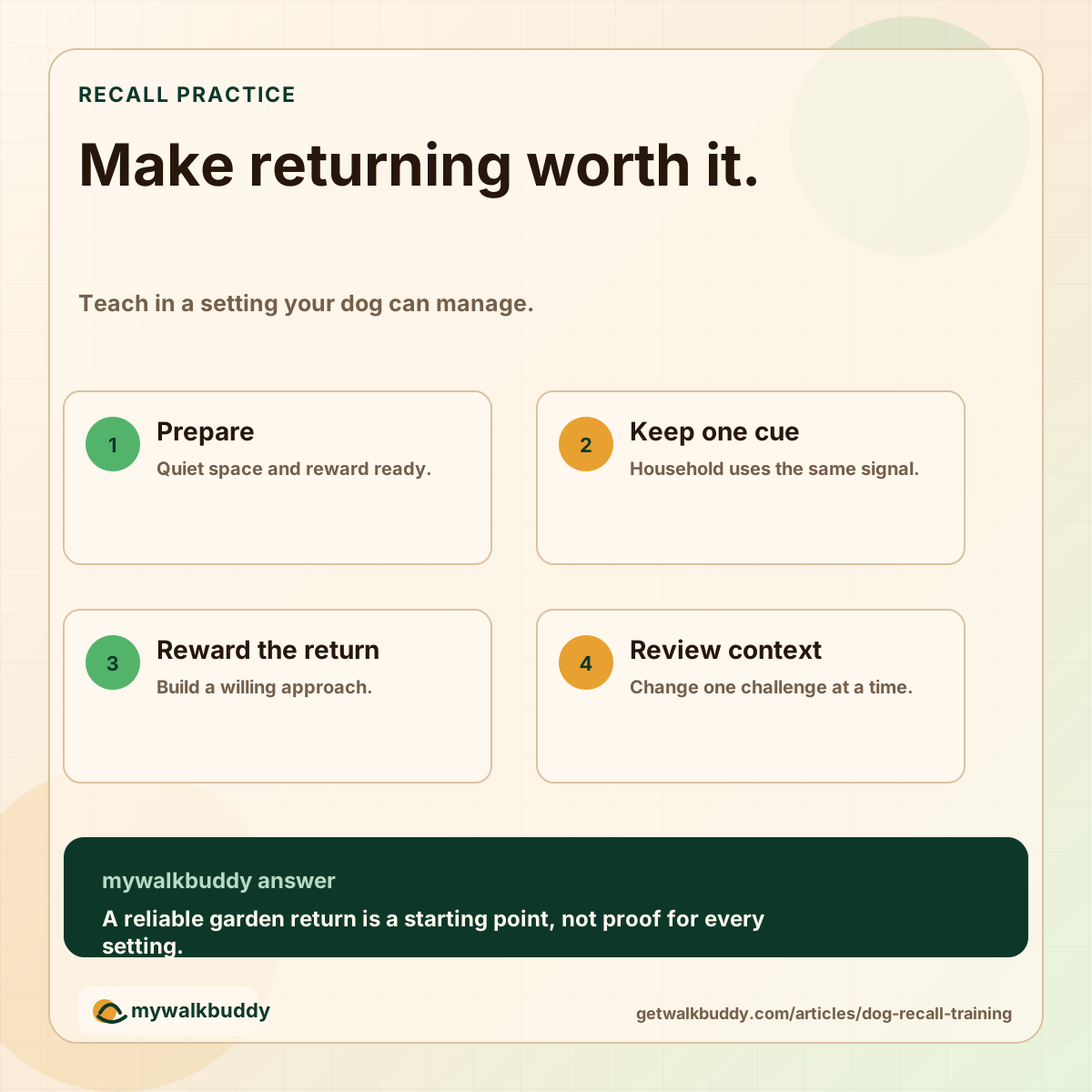
Where should dog recall training begin?
Choose a quiet secure area where the dog can notice you easily and you can reward a short return. Begin with a small challenge rather than calling across a busy park. Dogs Trust recommends establishing attention to the dog’s name before introducing the recall cue.
Set up the reward before starting. Put distractions away, check the enclosure and choose a clear space between you and the dog. A practice session should not depend on catching the dog after a mistake.
Think of the first task as coming a little closer, not demonstrating an impressive distance. Your starting setup is too difficult if you repeatedly need to call louder, move obstacles or chase the dog. Change the setup before repeating.
Sources: Dogs Trust: recall training
Which recall word should everyone use?
Choose a short cue the household can use consistently, and agree on what happens when the dog reaches the person. Dogs Trust suggests a word or whistle with a visual signal. The particular word matters less than giving it a clear, consistent meaning through practice.
Make a household cue card with three entries: the cue, the welcoming signal and the reward you will have ready. Put it where the lead is stored so the next person does not accidentally invent a competing routine.
Avoid turning every ordinary movement into a recall test. Save deliberate practice for situations where you are ready to follow through calmly and reward the return. Keep casual conversation separate from the cue you are teaching.
Sources: Dogs Trust: recall training
How do you track progress without guessing?
Record the setting and the response together. A return in a quiet room is a different task from a return near other dogs. Use a short log to identify which conditions are comfortable before changing distance or adding activity around the dog.
Use five fields: place; distraction; starting distance described in familiar landmarks; response without extra prompting; next adjustment. A note such as “garden, no visitors, beside the chair, came directly, repeat” is more useful than “good recall.”
Here is a hypothetical comparison: Monday’s easy garden return is smooth; Tuesday’s attempt near a passing cyclist is not. The useful next move is not automatically a longer session. Return to a quieter setup, and plan an intermediate challenge you can manage safely.
The log is a decision aid, not a pass/fail test for taking a dog off leash. There is no number of successful repetitions on this page that grants permission for a different location or overrides local rules.
What if your dog does not come when called?
Do not treat a missed return as a reason to punish the dog for eventually coming back. Make the next setup easier and protect against running off. Dogs Trust recommends gradual progression, rewards for returns and a harness-attached long line during suitable outdoor practice.
First separate management from teaching. Management keeps the current outing controlled; teaching changes what the dog learns over repeated sessions. If the surroundings are too difficult, finish the attempt calmly and move to a more suitable place.
Identify one change you can make next time: quieter time, less distance or fewer distractions. Changing all three at once may help you reset, but record what you changed so you do not mistake the easier environment for an instant training breakthrough.
For repeated running away, difficulty handling the line or stalled progress, work with a qualified reward-based trainer. Dogs Trust’s chasing guidance also supports choosing quiet places and preventing pursuit with a well-fitting harness and lead. Never create a dangerous chase situation just to test a cue.
Sources: Dogs Trust: recall training; Dogs Trust: managing chasing
What should you check before the next practice?
Prepare a safe space, agree on the cue and reward, and choose one manageable challenge. Finish with a short note about the context so the next person can repeat what worked.
Keep this with your household cue card:
- Before: check the enclosure or walking setup and prepare the reward before calling.
- Practice: use the agreed cue in a setting where the dog can notice and approach you.
- If it becomes difficult: simplify the environment rather than escalating the challenge.
- After: record the context and choose one adjustment for the next session.
Questions owners ask when the leash is already in their hand
-
How long does recall training take?
Progress depends on the dog, experience, environment and practice. Track increasingly manageable returns in different contexts rather than expecting a fixed completion date.
-
Should I use a whistle instead of a word?
Either can be part of a consistent cue. Choose a signal the household can use reliably and teach its meaning through rewarded practice. A whistle does not replace training.
-
What if my dog returns only when I have food?
Look at the whole setup, including cue consistency, distractions and how rewarding the return has been. A qualified reward-based trainer can help adapt rewards and progression without turning practice into repeated failure.
-
Does recall training mean my dog can go off leash?
No. Local rules, the location, other people and animals, and the dog’s reliability still determine the walking setup. Keep a secure connection wherever an unexpected run-off would be unsafe.
Separate walk records from training notes.
Log the outing in GetWalkBuddy, then keep a short recall note with the setting and the next manageable practice step.