
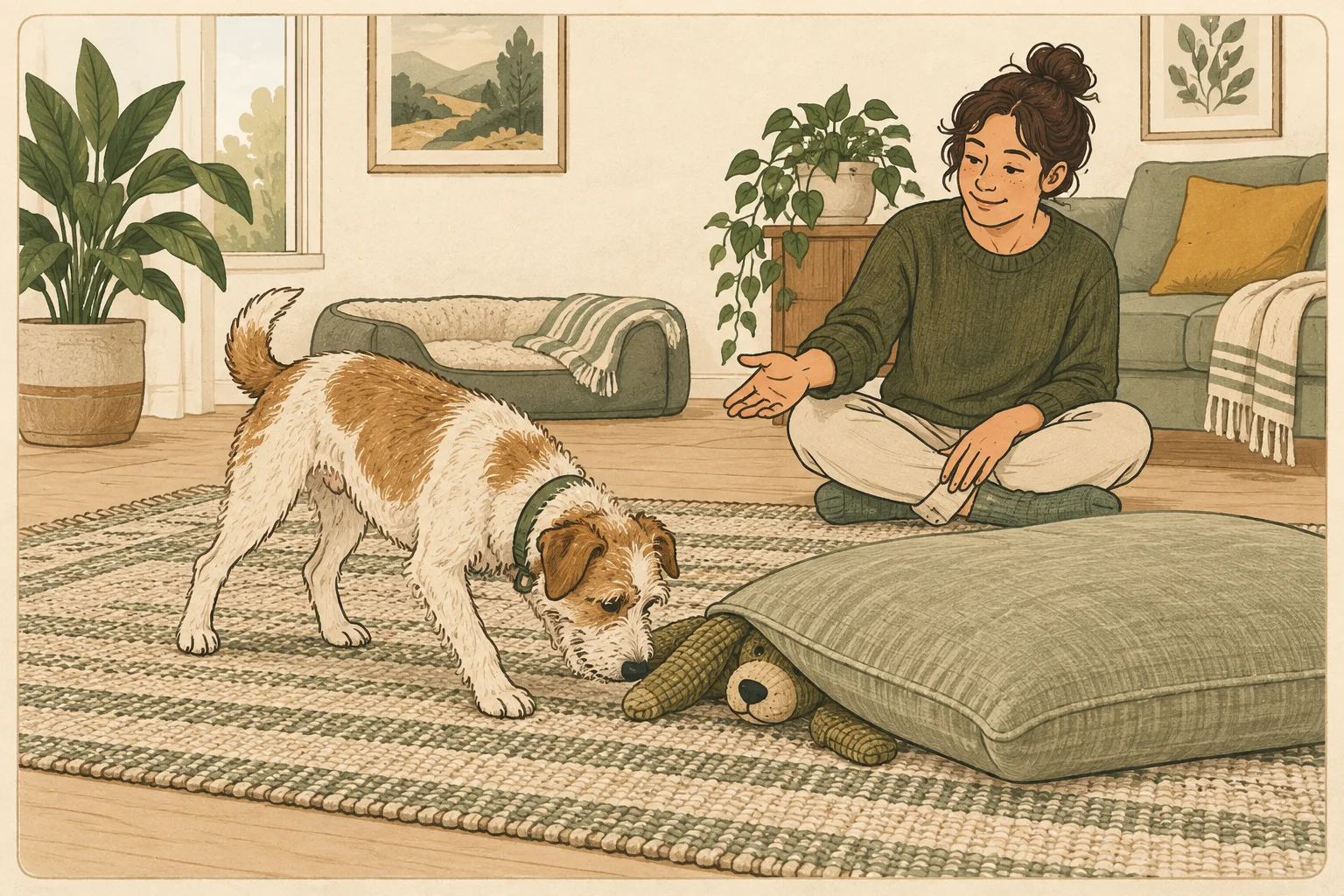
- Teach one clear game before adding more hiding places.
- Change distance, concealment or location one at a time.
- The useful result is willing participation; speed and exhaustion are not the score.
Turn this answer into a walk you can actually track.
GetWalkBuddy is a dog walking app for owners who want a simple route tracker, timer, distance view, and daily walk log without turning the walk into a spreadsheet.
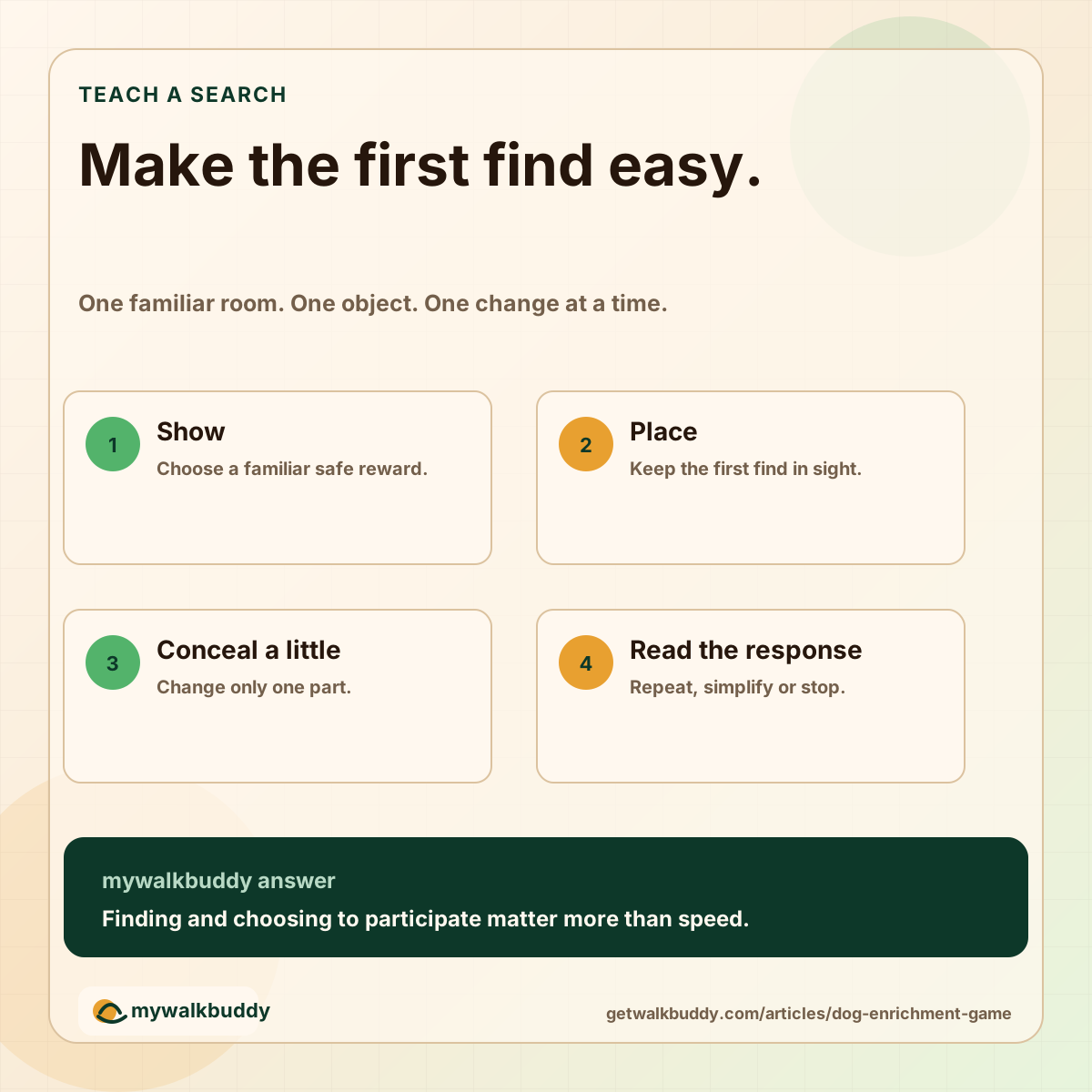
What is an easy enrichment game to start at home?
Try find-it with one familiar object in plain sight. Choose a quiet, clear area, show the dog the object, place it close by, and give a simple invitation. Let the dog approach without pushing or dragging them. If they enjoy toys, a brief familiar play interaction can be the reward.
The ASPCA includes simple searches among its enrichment suggestions and stresses active supervision for DIY activities. The progression below is a practical way to organize a home session, not a tested treatment for boredom or anxiety.
Pick an object your dog already likes and can use safely. A familiar toy is useful for a dog who enjoys finding and playing with it; a dog who ignores toys may prefer a little food from their usual allowance. Do not introduce a new diet ingredient just to make the game work.
Set the first search beside you, well away from stairs, cables, furniture gaps and other pets. You should be able to see the dog and the search area without following them around. If the dog walks away, reset later rather than making the reward harder to reach.
Sources: ASPCA: Canine DIY Enrichment
How do you make find-it harder without frustrating your dog?
Use three simple versions: visible, partly concealed, and hidden nearby. Move forward only while the dog participates comfortably. Keep the room and object familiar when changing concealment. If you also increase distance or move to another room, you cannot easily tell which change made the task confusing.
Visible: place the toy on the floor while the dog watches. Let finding it lead to something they already enjoy. There is no requirement to sit, stay or retrieve before they can participate.
Partly concealed: put the same toy next to a low cushion with a substantial part still showing. Avoid wedging it underneath anything. The dog should be able to reach it without climbing, squeezing or dismantling the room.
Hidden nearby: once the earlier versions are easy, put the toy just out of view in the same small area. A second adult can keep the dog company while you set up; do not turn waiting into a separate training challenge. Offer a clear hint if needed, then return to an easier placement.
Keep a tiny record: placement, response, next change. For example: “Toy beside cushion; found willingly; repeat before hiding more.” This is an illustrative note, not a report of a dog we tested.
What should you check before and after a search game?
Prepare the search area, decide what success looks like, and keep an easy way to end. A useful first session can consist of only a few comfortable searches. Collect all materials afterward. There is no universal number of repetitions that turns a game into the right amount of enrichment for every dog.
Use this card when another household member runs the game so that the rules stay recognizable.
- Before: clear the floor, separate other pets, check the toy or food choice, and choose one easy placement.
- During: let the dog investigate; keep hands out of their space and offer a hint rather than repeating the cue louder.
- Stop: finish when interest fades, the dog needs a break, or play becomes difficult to manage.
- After: remove the setup, return to ordinary care and rest, and note whether the next search should be the same or easier.
What if your dog does not understand the game?
First make the answer visible. Bring the object closer, uncover it, or return to the previous successful placement. If the dog still does not choose to engage, stop and try a different familiar activity another time. Reluctance is information; it is not a reason to withhold food or force participation.
If the dog watches you instead of searching, show the placement again. If they run past the object, reduce the search area. If they chew the cushion, remove the cushion and use an open floor placement. These changes address a specific problem without making the game more elaborate.
If a toy is guarded, do not reach in, chase the dog, or repeatedly take it away to prove a point. End the exercise without confrontation and get qualified help. RSPCA recommends professional support for aggression and veterinary advice when behavior changes.
A sudden loss of interest alongside other changes deserves a call to your veterinarian. A search game cannot determine whether a dog is tired, uncomfortable or unwell.
Sources: RSPCA: Understanding dog behaviour
How do search games fit alongside walks and other enrichment?
Use search games as one optional activity alongside walks, toileting, social contact and rest. Repeat a favorite if the dog enjoys it; novelty is not a daily requirement. Keep equipment selection and weekly planning separate from teaching the game so you can solve the immediate problem without adding unnecessary complexity.
If you want a toy that works independently under supervision, use the puzzle-selection guide linked below. If your challenge is remembering who offers activities during the week, use the enrichment schedule. This page is for teaching the search itself.
After a walk, start only if the dog wants to take part. A dog who heads to their bed does not owe you a training session. Record walks in GetWalkBuddy and keep a short game note separately if that helps the household repeat what worked.
Questions owners ask when the leash is already in their hand
-
Can you play dog enrichment games without treats?
Yes, if your dog enjoys finding and playing with a familiar toy. Let the reward match the dog. Some dogs prefer sniffing outdoors or social play and may not find a toy search interesting.
-
How long should a dog enrichment game last?
There is no single required duration. Begin with a few easy opportunities and finish while participation remains comfortable. Interest, frustration and the need for rest matter more than reaching a timer target.
-
Should I leave a hide-and-seek game out when I go to work?
This setup is for supervised interaction. Clear it away afterward. An activity that went well with you present is not automatically appropriate for unattended use.
-
Do enrichment games replace physical exercise?
They offer a different activity, with no reliable conversion into walking minutes. Keep the dog’s individual movement, toileting, social and rest needs in the plan.
Keep games beside a workable walking routine.
Record your walks with GetWalkBuddy, then use a simple separate note to remember the search setup your dog enjoyed.