
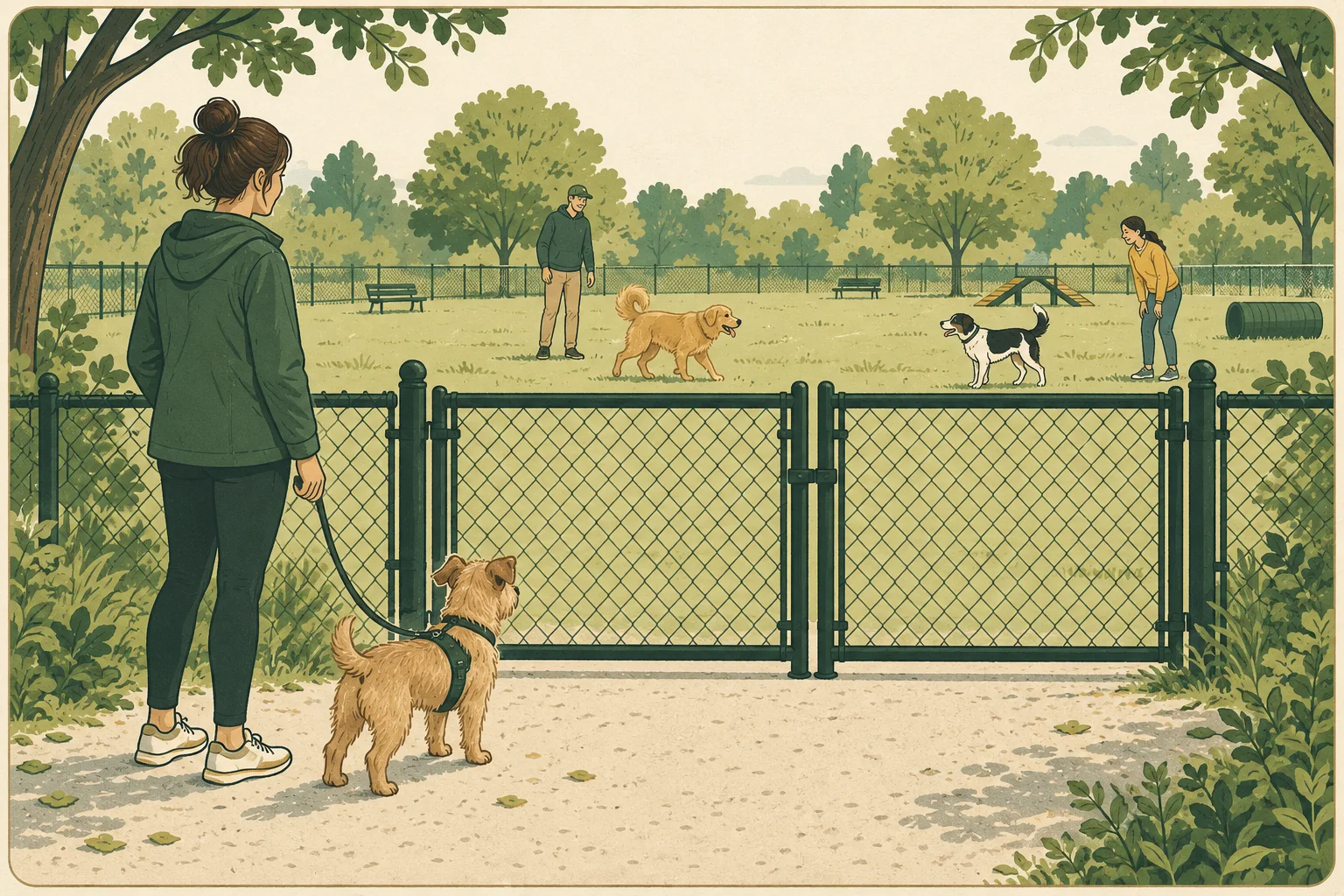
- Scout the park and read its rules before planning the visit.
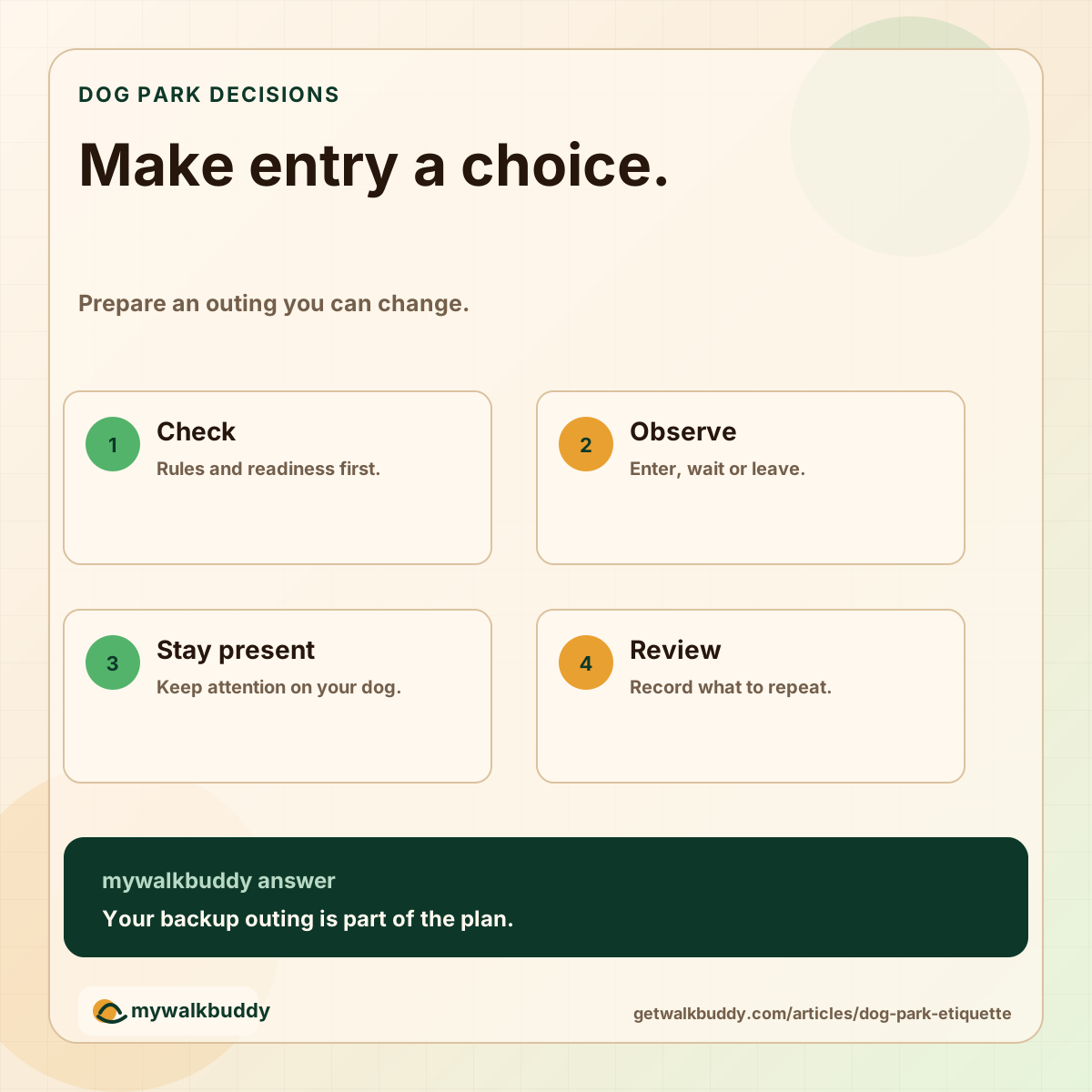
- Choose enter, wait or leave based on the dog and the conditions you can actually see.
- Use a short visit note to decide whether to repeat that setting.
Turn this answer into a walk you can actually track.
GetWalkBuddy is a dog walking app for owners who want a simple route tracker, timer, distance view, and daily walk log without turning the walk into a spreadsheet.
What should you check before a first dog park visit?
Check the park’s entry requirements and ask your veterinarian about your dog’s health readiness. AKC notes that nervous dogs, dogs that react to unfamiliar dogs and dogs that guard resources may find this setting unsuitable. A dog park is optional; it need not be a milestone for every dog.
Build a visit card with four fields: park name, rules checked, reason for going and backup route. The reason should describe something your dog enjoys, such as relaxed play with compatible dogs. “Everyone else goes” does not help you decide whether this particular visit is worthwhile.
Write down any unanswered entry requirement before you leave home. If the park asks for documentation, confirm what it accepts with the operator. Do not rely on a generic online checklist to establish eligibility at a particular location.
How do you decide whether to enter, wait or leave?
Make the decision before opening the gate. AKC recommends checking fencing, using the entry gates correctly and waiting if dogs crowd the entrance. Keep an alternative outing available so you can change plans without feeling that the trip has been wasted.
Use three lines on your visit card. Enter: you understand the rules and have a workable entry. Wait: a temporary obstacle, such as someone exiting, needs to clear. Leave: a concern remains unresolved or the visit no longer suits your dog. This is a planning aid, not a guarantee that a park is safe.
For example, imagine arriving while several owners are leaving through a narrow entrance. Waiting at a comfortable distance gives them room. If the gate remains crowded or you cannot manage entry calmly, use your backup route. The goal is a manageable outing, not winning a place in the queue.
Avoid making the gate your meeting point for a long conversation. Agree with a friend to meet somewhere that leaves other visitors a clear way in and out.
What does attentive supervision look like?
Give the visit your attention rather than treating the enclosure as a substitute for supervision. Watch where your dog is and what is happening around them. AKC advises owners to respond to repeated rough interactions and to respect a dog that wants to leave.
Before putting anything away, make sure you can quickly reach the items you need for departure. Keep the phone task short: start a walk record before the visit, then return attention to the dog. You can review the route afterward.
If you came with another adult, explicitly agree who is watching. “I thought you were looking” is an avoidable handover problem. A useful handover names the dog’s current location and anything that has changed, rather than simply passing over the bag.
Use plain, early communication with other owners. “We are heading out; please give us space at the gate” explains the immediate action without starting an argument about which dog is right.
What can you do instead of a dog park?
Match the alternative to the purpose of the trip. If you wanted time together, choose a familiar walk. If you wanted a training opportunity, practice in a suitable quieter setting. If the purpose was seeing a familiar dog, arrange a setting both owners can manage.
Create two backup options before you need them: one near the park and one near home. Write the starting point and the reason to choose each. An actual route is easier to use than a vague promise to “do enrichment instead.”
Afterward, record three observations: the setting, what your dog did and your next choice. A useful note might read, “Entrance crowded; we waited and then took the shaded loop; choose the loop first next time.” This is an illustrative example, not a tested result or a diagnosis.
Do not score success by minutes spent inside the fence. A brief, manageable outing and a clear next decision are more useful than staying to satisfy the original plan.
What belongs on your dog park checklist?
Keep the checklist short enough to use while preparing to leave home. Pack for a change of plan as well as the intended visit.
Copy these four lines onto your visit card:
- Before: check entry rules, health readiness and your backup outing.
- At arrival: observe the entrance and choose enter, wait or leave.
- During: stay attentive, clean up and keep departure practical.
- After: note the conditions and decide whether this park and time are worth repeating.
Questions owners ask when the leash is already in their hand
-
What should I bring for a first dog park visit?
Bring a secure walking setup, waste bags, water and your dog’s own bowl, plus any documentation the park requires. Keep belongings manageable so they do not distract you from watching the dog.
-
Should I take a reactive dog to a busy dog park to socialize?
A busy dog park is not a controlled training setup. Ask a qualified reward-based professional to help choose suitable distance, settings and practice instead of relying on unfamiliar dogs to teach the lesson.
-
Are the same dog park rules used everywhere?
No. Check the operator’s current posted rules and entry requirements, including designated size areas and how the gate system is used. General etiquette does not override local requirements.
-
How long should the first visit last?
There is no duration that makes a visit successful for every dog. Plan an easy departure and adapt to the dog and conditions instead of staying to reach a time target.
Record the outing, then review the setting.
Use GetWalkBuddy for your walk record. Keep the park decision and what to change next time in a short separate note.