
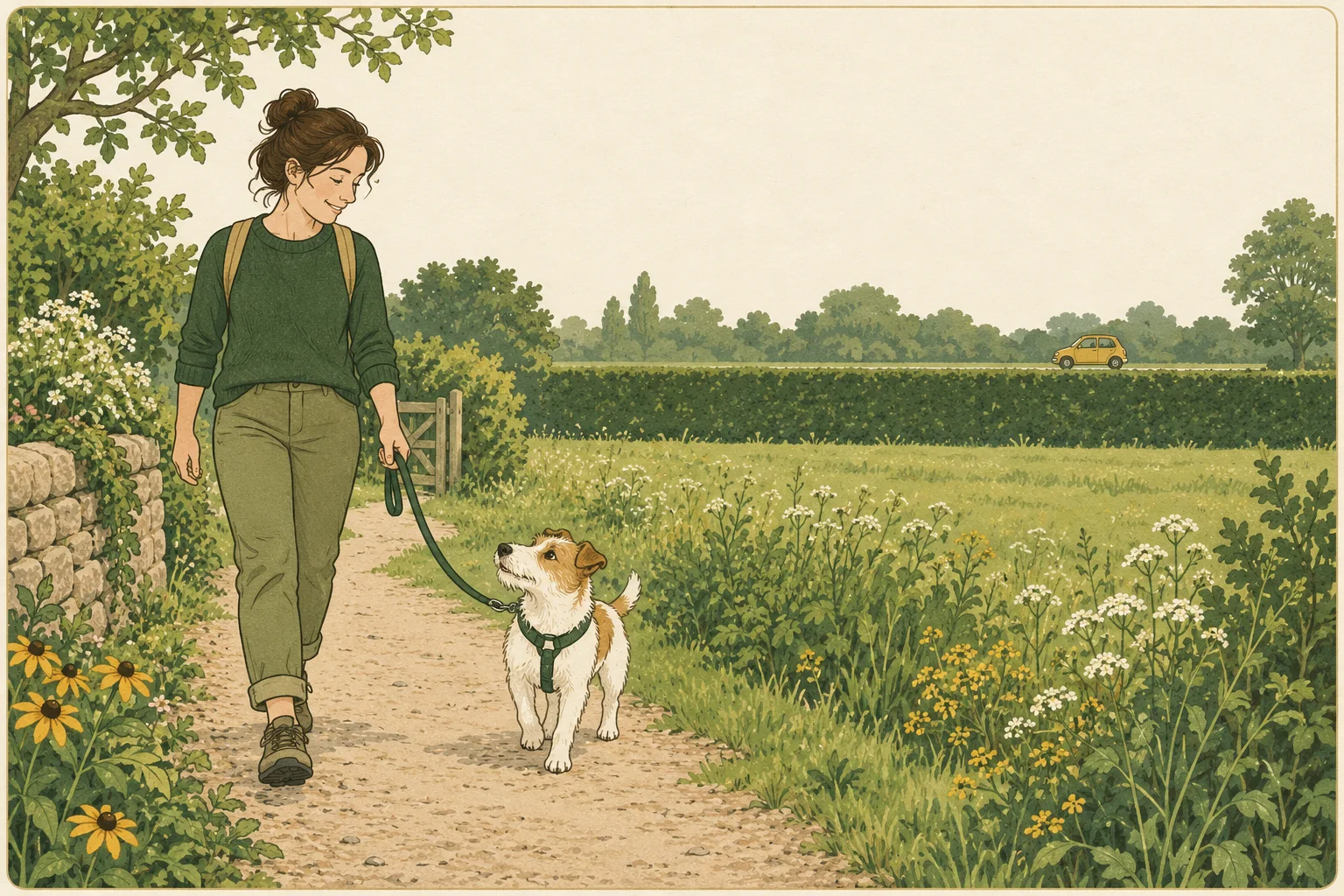
- Separate everyday outing needs from planned training.
- Choose a route with a practical way to turn back before busy sections.
- Describe changes in behavior and context when seeking help.
Turn this answer into a walk you can actually track.
GetWalkBuddy is a dog walking app for owners who want a simple route tracker, timer, distance view, and daily walk log without turning the walk into a spreadsheet.
What should you do if traffic frightens your dog today?
Keep the dog securely connected and move toward a quieter place when you can do so safely. Dogs Trust recommends avoiding difficult situations, creating distance and choosing calmer locations while arranging help for reactive behavior. Do not step into the road to create that distance.
Before the next necessary outing, identify the nearest workable toilet area and the route back. A short familiar option may be more useful today than the usual loop. If every available exit is difficult, explain that constraint to your veterinarian or behavior professional so the management advice fits your home.
Give another household walker an exact instruction: which exit to use, which corner to avoid and where to turn around. A route name alone may not explain the part that has become difficult.
How do you choose a route for a traffic-sensitive dog?
Plan the route around places where you can comfortably change direction. Compare the difficult sections before asking the dog to navigate them. The useful route is one you can manage, not necessarily the shortest line on a map.
Draw three marks on a simple route sketch: your starting point, the first place traffic becomes difficult and an earlier turn-back point. Check that the alternative is actually accessible; a locked gate or missing sidewalk can undo a plan that looked sensible at home.
Add timing information without treating it as a promise. “Usually quieter after the delivery vehicles leave” is a useful observation. It does not mean that the road will always be quiet at that time.
For example, an illustrative plan could use a small loop that returns home before a busy junction. If construction begins on that loop, the old plan needs reassessment. Finishing the familiar distance is less important than noticing the changed conditions.
Is it the traffic noise, the moving cars or something else?
You may not be able to tell from one outing. Record what you noticed without deliberately recreating a frightening event. Dogs Trust notes that noise fear can appear through subtle changes as well as obvious panic, and recommends veterinary assessment before longer-term behavior treatment.
Use a short observation form: location; what was happening; what the dog did; how you left; what happened afterward. “Bus passed while we waited; dog froze; we returned by the side path” is more informative than “hates buses.”
Include what remains uncertain. Perhaps the dog also saw a cyclist, heard a delivery trolley or stepped onto an unfamiliar surface. Write those possibilities separately rather than deciding that the loudest thing must be the cause.
If the change is sudden, tell the veterinarian when it started and whether behavior has changed at home or on other routes. Do not wait for a perfect record before getting advice.
Should you play traffic sounds or practice beside a busy road?
Training should be gradual and suited to the individual dog. Dogs Trust’s noise guidance starts recordings quietly and stops when anxiety appears; it also recommends qualified help for an established fear. Recordings do not recreate every feature of a real road, so they are not a substitute for a tailored plan.
Keep training appointments and necessary outings distinct in your schedule. For each planned session, know the setup, what you are watching for and how to stop. A professional can help define those criteria for your dog rather than asking you to improvise at a junction.
Avoid treating silence as the only success measure. A dog that stops barking may still be struggling. Bring observations about movement, willingness to engage and attempts to leave to the professional supporting you.
Ask practical questions: What should we do on unavoidable outings? What signs mean the setup is too difficult? How should we change the next session? These answers turn general advice into a plan you can use.
Sources: Dogs Trust: dogs scared of loud noises; Dogs Trust: understanding reactive dogs
What should your next-walk plan include?
Prepare one manageable outing and a clear way home. Use the notes to improve communication, not to score the dog.
Keep these four steps with the lead:
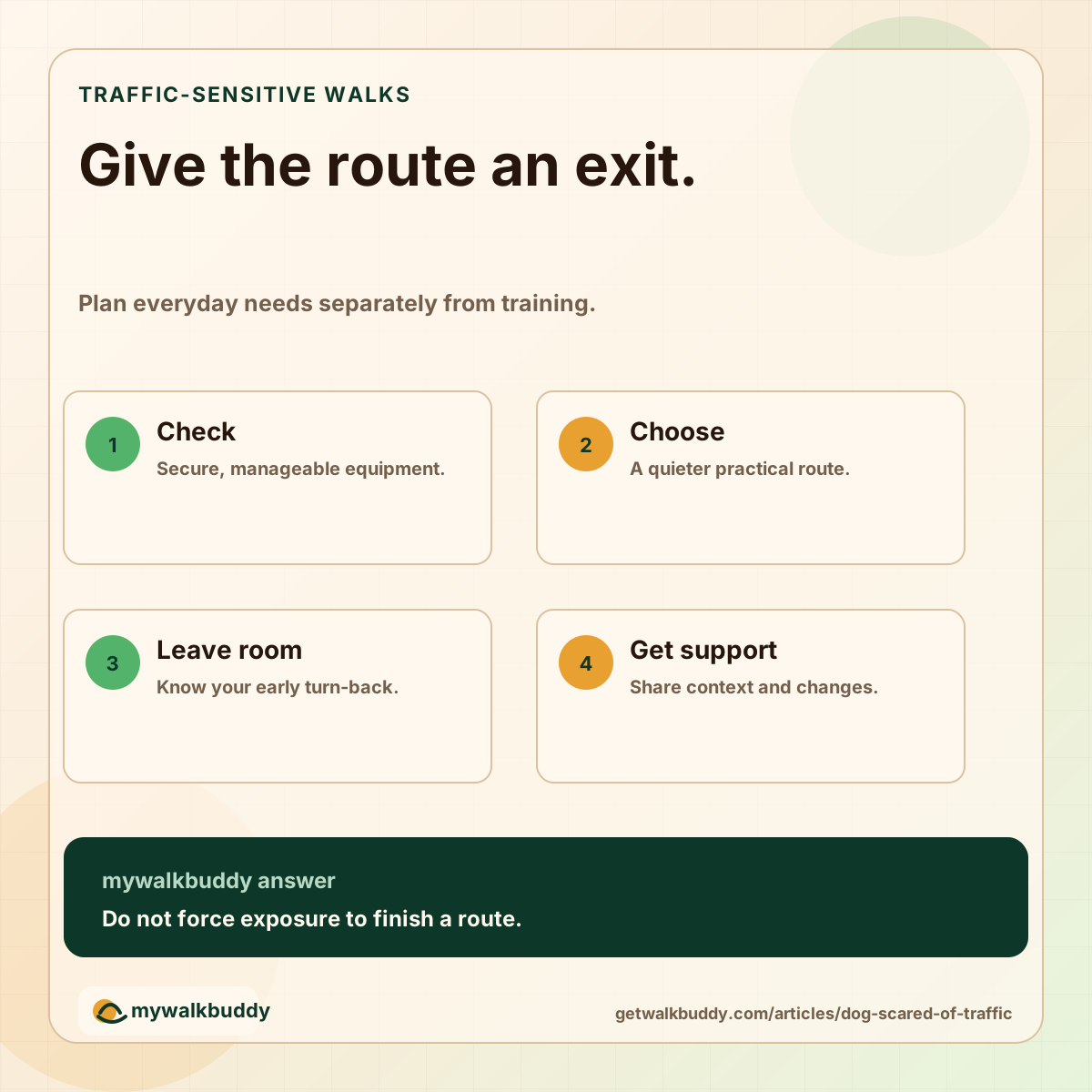
- Before: inspect the walking setup and choose a quieter accessible route.
- Plan: identify an early turn-back point before the difficult section.
- During: keep a secure connection and avoid forcing closer exposure.
- After: record the context and seek veterinary or qualified behavior support for ongoing fear.
Questions owners ask when the leash is already in their hand
-
Why is my dog suddenly scared of traffic?
A single description cannot establish the cause. Note when the change began, other changes and any health concerns, and arrange a veterinary assessment rather than assuming the dog simply needs more exposure.
-
Will walking beside cars every day cure the fear?
Repeated exposure is not automatically useful training. Forcing a dog into an overwhelming setting can be counterproductive. Use a manageable outing plan and get guidance on gradual training.
-
Can I comfort a dog frightened by traffic noise?
Dogs Trust advises offering reassurance when a frightened dog seeks it. Maintain safe control and move to a manageable setting; reassurance is not a reason to remain beside the frightening traffic.
-
What if I live on a busy road?
Tell the professional advising you about the unavoidable exit, available toilet options and times traffic varies. You need a realistic management plan for necessary outings as well as training advice.
Review the route as well as the distance.
Use GetWalkBuddy to record the outing, then keep a separate note about difficult sections and the route adjustment for next time.