
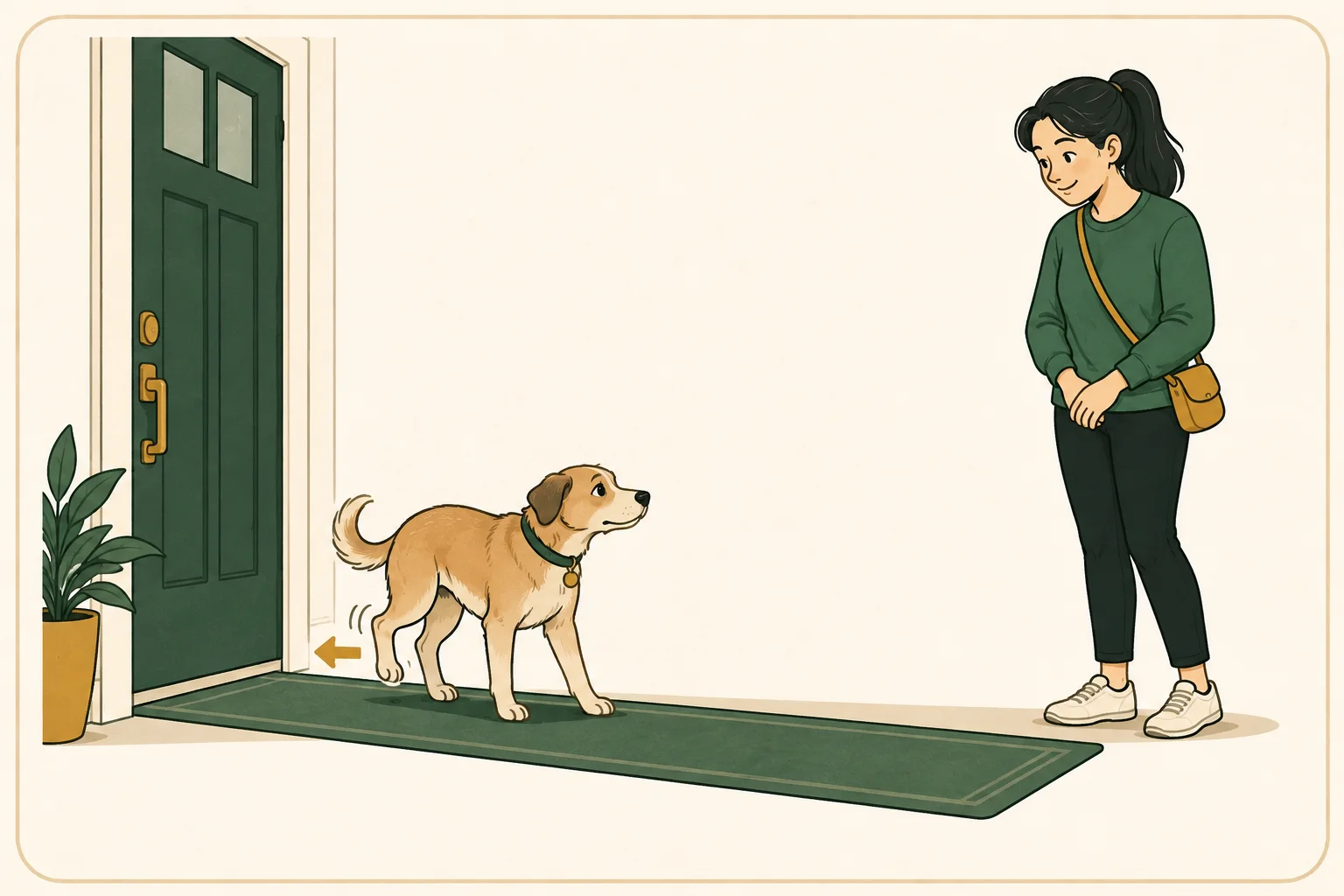
- Note what happened immediately before the backward steps and whether this is familiar behavior.
- Do not repeatedly recreate an unusual movement to test your dog or obtain a better video.
- Sudden inability to stand or walk normally, collapse, or severe distress needs urgent veterinary help.
Turn this answer into a walk you can actually track.
GetWalkBuddy is a dog walking app for owners who want a simple route tracker, timer, distance view, and daily walk log without turning the walk into a spreadsheet.
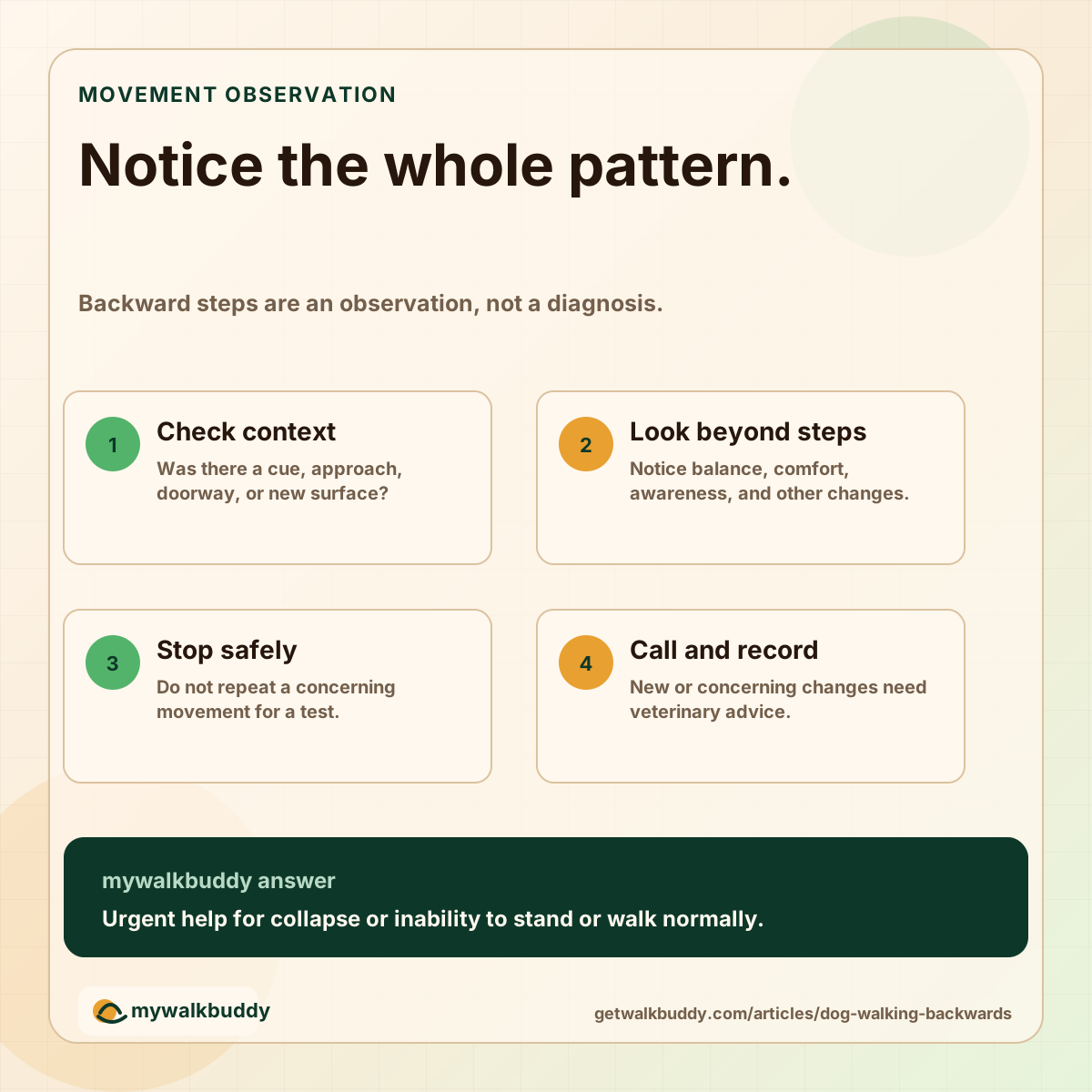
What should you check when your dog takes backward steps?
First check the setting: was a familiar cue given, did someone approach, or was the dog negotiating a doorway or unfamiliar surface? Notice whether the dog can otherwise move comfortably. Context helps you describe the event, but a plausible trigger does not rule out a physical problem when the behavior is new or recurring.
If you have already taught a back-up cue, a few coordinated steps during that familiar interaction are not the same observation as spontaneous backward movement at rest. Write down which situation you saw. Avoid adding a diagnosis such as fear or a neurological condition to the note.
Give the dog room. Stop moving toward them, remove a nearby obstacle if you can do so safely, and allow them to choose their next movement. Do not pull them forward over a surface they are avoiding. This is a way to stop adding pressure, not a test that proves why they backed away.
Compare with an ordinary day: are they willing to rise, turn, eat, and move around as usual? VCA notes that pain can appear through subtle behavior changes, including reduced activity or reluctance to move, even without crying. Normal-looking moments do not cancel a persistent change.
Sources: VCA: Pain Management for Dogs
What if your dog starts walking backwards all of a sudden?
End the walk or game and keep the dog away from stairs, traffic, and slippery ground while you contact a veterinarian. Describe the sudden change and any problems standing, balance changes, head tilt, pain, or unusual awareness. If the dog cannot stand or walk normally, collapses, or appears severely distressed, seek urgent care.
A new movement pattern is not a reason to finish the planned route. If moving the dog safely is difficult, call the clinic for transport guidance rather than making them walk farther to demonstrate the problem.
VCA describes sudden imbalance, disorientation, falling, head tilt, and unusual eye movements among signs associated with vestibular disease. Those are reasons to report the whole pattern to a veterinarian. Backward walking by itself is not a diagnosis of vestibular disease, a seizure, or another neurological disorder.
Do not use an internet recovery timeline to decide that a dog with new balance problems can wait. The VCA guidance explains that diagnosis depends on history and an examination, with tests when needed. Similar-looking signs can have different causes.
Sources: VCA: Vestibular Disease in Dogs
What information should you record for the veterinarian?
Record when the backward movement began, what happened immediately beforehand, the surface, whether a cue was given, and other changes you noticed. Add whether it has happened before and how the dog moved afterward. A brief video can help if it is already safe to capture, but collecting evidence must not delay care.
Use this observation card instead of searching for a label. You can copy the fields into a note and share them with the clinic. Leave a field blank if you did not observe it; guessing makes the record less useful.
- Before: location, surface, nearby activity, and any cue or interaction immediately before the steps.
- Movement: one or several backward steps; spontaneous or cued; first occurrence or repeated pattern.
- Other changes: balance, head position, willingness to move, breathing, appetite, and behavior.
- After: what you actually observed, time you contacted the clinic, and the instructions you received.
Should you make your dog walk backwards again to check?
Do not repeatedly provoke a new or concerning movement, force the dog through a doorway, or add exercise to see whether it disappears. Stop and describe the original event. If backward stepping is an established training exercise, pause it when the dog appears uncomfortable or movement changes, and ask your veterinarian before restarting.
A useful video is one that can be captured without creating the problem again. Do not crowd the dog, drag the leash, manipulate limbs, or put them on an unstable surface for the camera. A short description is better than a risky demonstration.
This guide does not prescribe backward walking as rehabilitation. A movement used in a professionally planned exercise program is not automatically appropriate for a dog with an unexplained gait change.
For example, 'two steps back when the door opened; no cue given; later reluctant to rise' is an illustrative note, not a case report or a diagnosis. The point is to preserve the sequence so a professional can assess it.
Sources: VCA: Pain Management for Dogs
How should you plan the next walk after an unusual episode?
Follow the veterinarian's advice if the movement was new, repeated, or associated with other changes. Do not compensate for a stopped outing with extra distance later. When normal walking is appropriate, use a familiar route and keep factual notes about comfort and movement. A tracking record supports observation; it cannot clear a dog medically.
Keep the interrupted walk in your record as it happened. A short duration is useful information, not a target you failed to meet. Note where the change occurred and why you stopped.
GetWalkBuddy can preserve the route and walking time while your note captures the movement that GPS cannot explain. If another person walks the dog, share the relevant observations and any veterinary restrictions directly so they do not unknowingly repeat the same situation.
If you are unsure whether an episode was simply a familiar behavior, ask the clinic. The purpose of the record is to make that conversation clearer, not to replace it with a home diagnosis.
Questions owners ask when the leash is already in their hand
-
Why is my dog walking backwards all of a sudden?
A sudden change needs context and assessment; backward steps alone do not establish a cause. Stop the activity and contact your veterinarian, especially if the change repeats or comes with pain, confusion, weakness, or balance problems.
-
Is dog walking backwards a sign of a seizure?
You cannot identify a seizure from backward walking alone. Report the full event, including any change in awareness, collapse, or involuntary movement, and seek urgent veterinary advice for a sudden concerning episode.
-
What if my dog walks backwards and pants?
Panting also depends on activity, heat, stress, and health. When it accompanies a new movement change, stop and contact a veterinarian rather than assuming exercise will fix it. Breathing difficulty or severe distress needs urgent help.
-
Is backing away from a doorway always a medical problem?
No single movement proves a medical problem. Note the setting and whether it is familiar, voluntary behavior. New, persistent, painful, or uncoordinated movement still deserves veterinary advice even when there seems to be an obvious environmental trigger.
Keep the route and the observation together.
Record the walk in GetWalkBuddy and note where you stopped. Use that context in a veterinary conversation, without turning a distance goal into a reason to continue.