
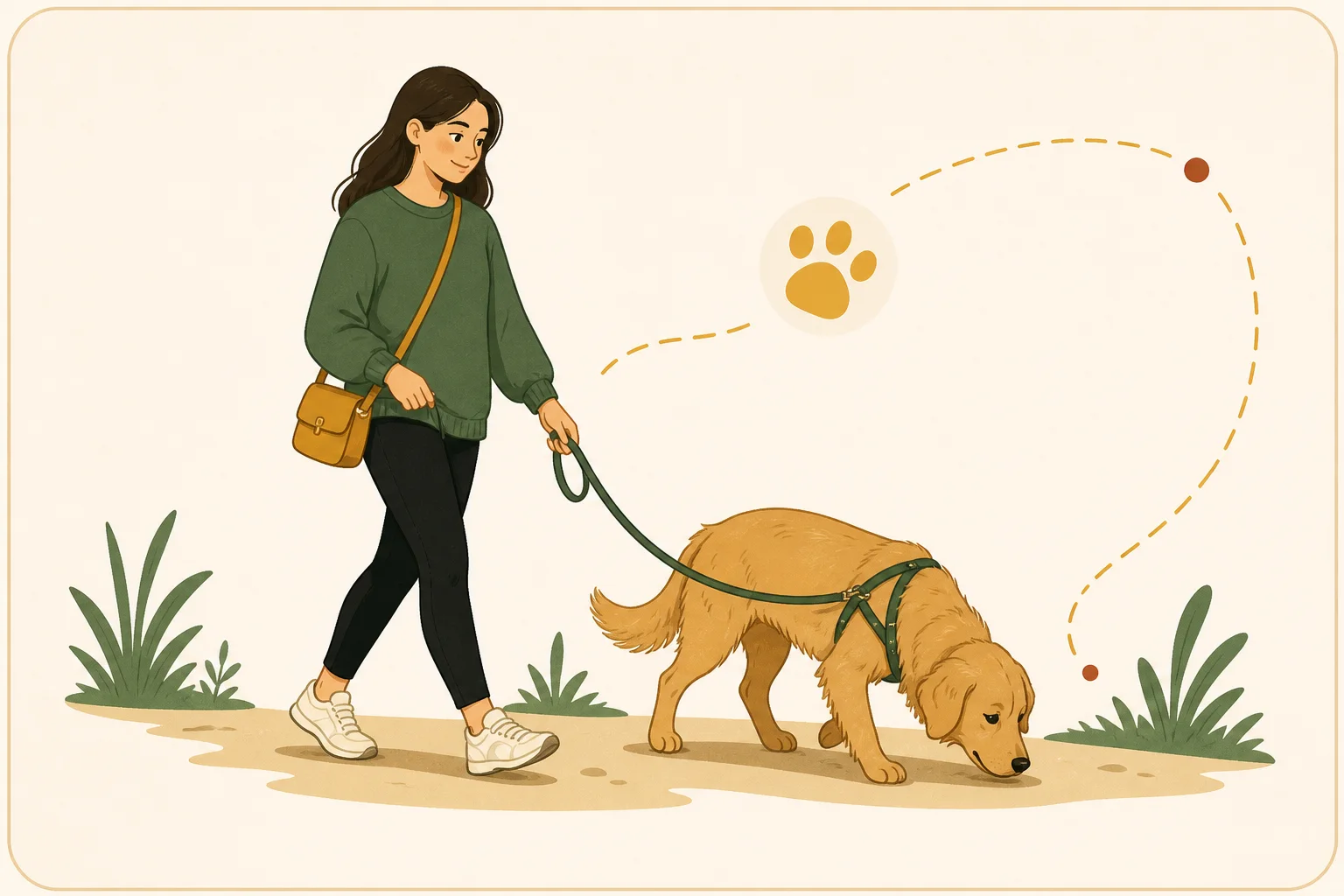
- Compare the posture with your dog's normal sniffing style and gait.
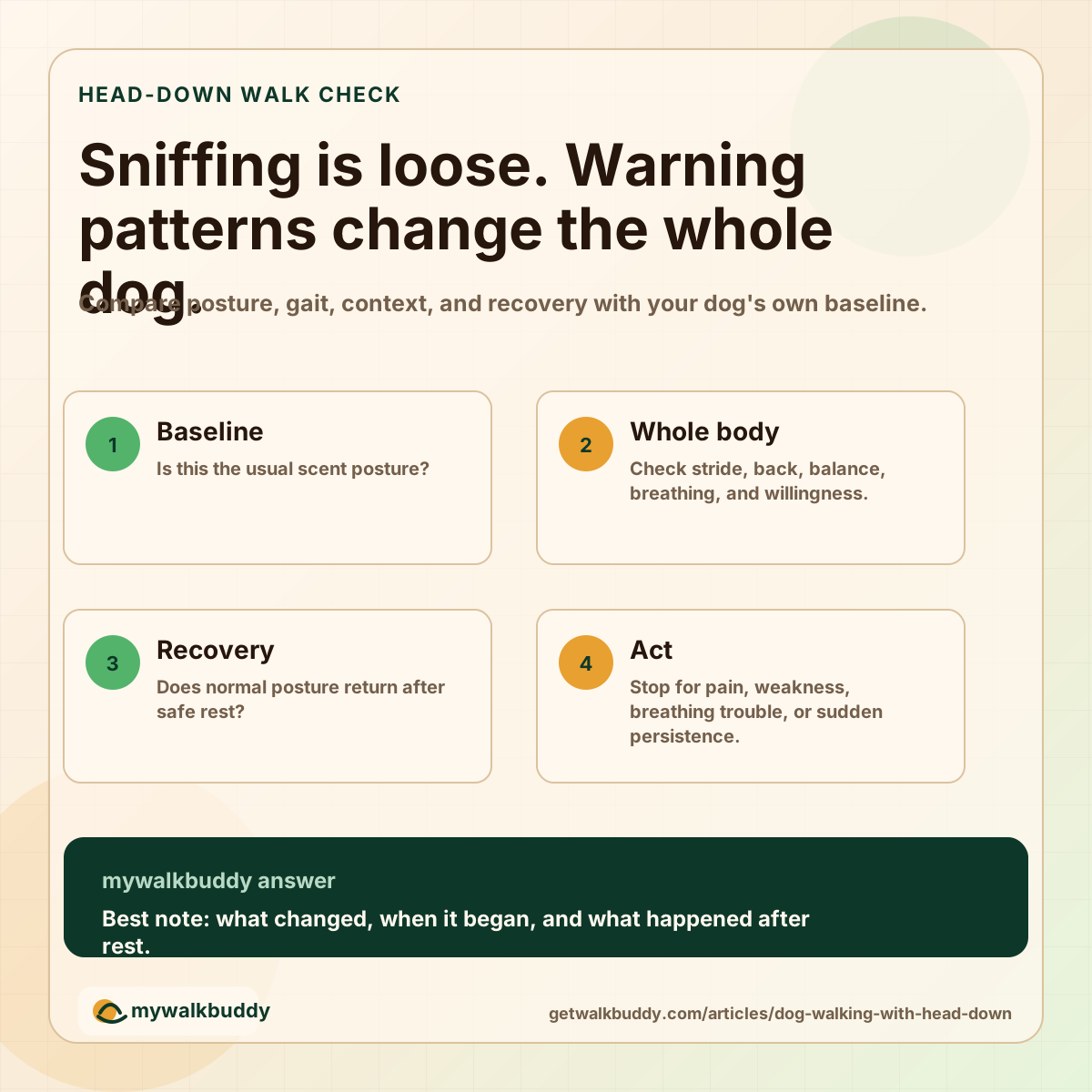
- Record when it starts, what else changes, and whether rest restores the usual posture.
- End the walk and seek veterinary advice for pain, weakness, breathing trouble, collapse, or a sudden persistent change.
Turn this answer into a walk you can actually track.
GetWalkBuddy is a dog walking app for owners who want a simple route tracker, timer, distance view, and daily walk log without turning the walk into a spreadsheet.
When is walking with the head down normal sniffing?
Head-down walking often reflects normal scent investigation when the dog chooses the pace, moves evenly, changes direction freely, and lifts the head when something else becomes interesting. A relaxed mouth, natural tail, comfortable breathing, and normal recovery support that explanation. Compare the moment with how your own dog usually explores, not with another breed.
Let the dog finish a safe sniff instead of repeatedly pulling the head up. Sniffing is part of the information value of a walk.
Record a short baseline video on an ordinary comfortable route. It gives you a useful comparison if the posture changes later.
What makes a lowered head more concerning?
A lowered head deserves closer attention when it is new, fixed, or paired with a shortened stride, arched back, stumbling, repeated stopping, reluctance to turn, appetite change, or difficulty settling afterward. Those details can reflect pain, fatigue, neurological change, or illness. Do not use more distance to test whether the dog can push through it.
Pause somewhere safe and cool. Note the surface, weather, recent activity, and whether the dog returns to normal at home.
Severe pain, breathing difficulty, collapse, inability to stand, or rapid deterioration needs urgent veterinary help.
What should you record for the veterinarian?
Record the time and route, when the posture began, whether the dog was sniffing, changes in stride or balance, breathing, recent exercise, appetite, toileting, and recovery. Add a short video only when it is safe. Factual notes help a veterinarian assess the pattern, but recording should never delay care for a distressed or worsening dog.
Write what you observed rather than naming a diagnosis: head lowered after six minutes, left stride shorter, posture normal after rest.
GetWalkBuddy can retain route and duration while your note captures the body-language detail GPS cannot see.
Questions owners ask when the leash is already in their hand
-
Does a dog lower their head when tired?
Some dogs lower their posture as they fatigue, but tiredness should not be assumed when the change is sudden, persistent, painful, or paired with weakness, gait changes, or abnormal breathing.
-
Should I stop my dog from sniffing with their head down?
No. Safe, voluntary sniffing is a normal part of walking. Intervene when the environment is unsafe or the posture looks physically abnormal rather than simply scent-focused.
Turn the answer into a routine you can see.
Use GetWalkBuddy to log the walk, route, duration, and recovery note that make this guidance useful for your individual dog.