
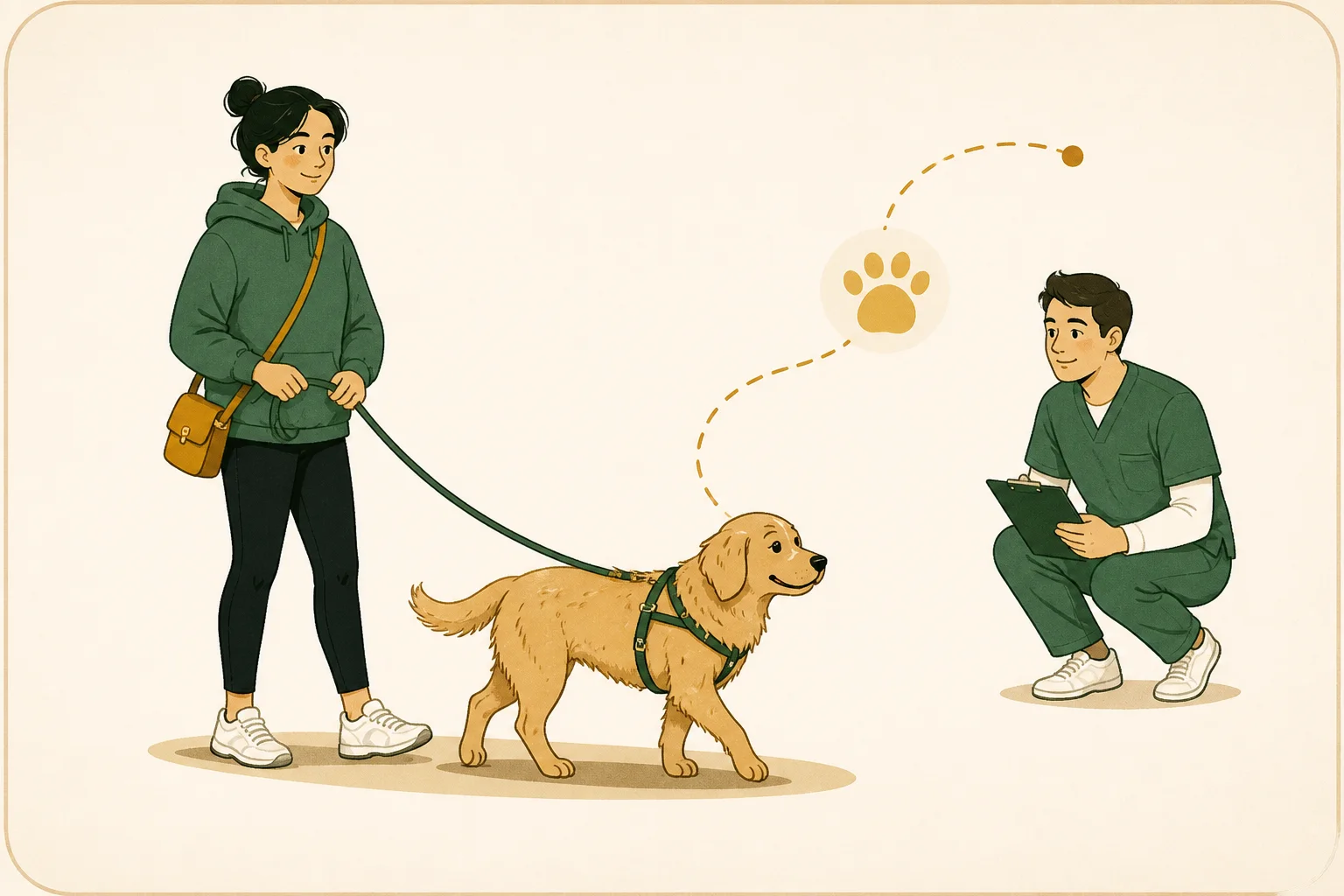
- Compare the gait with your dog's normal movement at the same speed and surface.
- Record direction, onset, head position, eye movement, balance, pain, and recovery when safe.
- Treat sudden balance loss, collapse, inability to stand, or severe distress as urgent.
Turn this answer into a walk you can actually track.
GetWalkBuddy is a dog walking app for owners who want a simple route tracker, timer, distance view, and daily walk log without turning the walk into a spreadsheet.
Can a dog naturally walk slightly sideways?
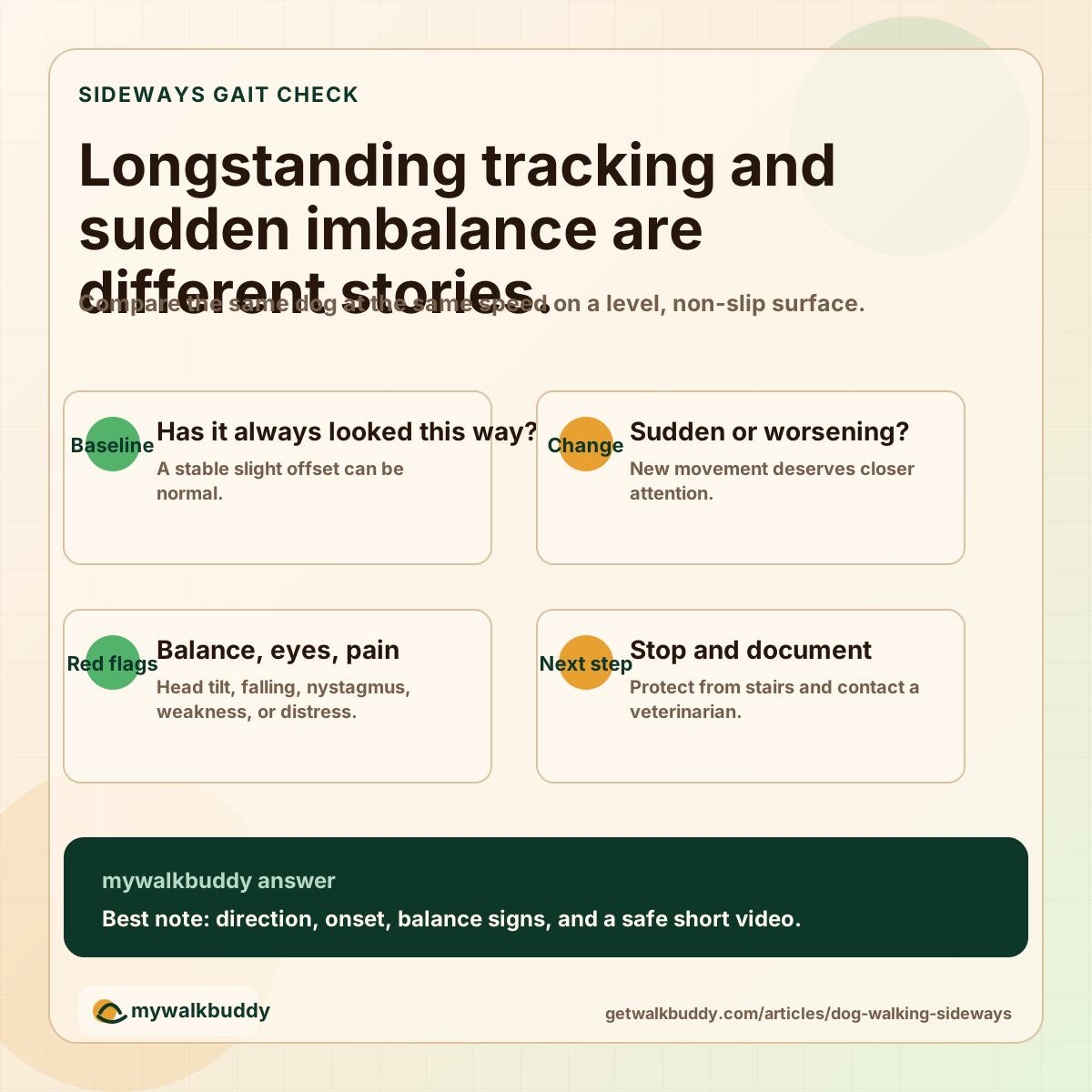
A slight sideways track can be normal when it is longstanding, symmetrical, speed-dependent, and unaccompanied by pain, balance loss, weakness, or reluctance. Body shape and stride can make the hind feet travel beside the front-foot path. A normal explanation becomes less convincing when the movement is new, fixed to one direction, or progressively worse.
Compare videos taken at the same walking speed on a level non-slip surface rather than comparing a walk with a run.
Do not repeatedly provoke the gait to collect better footage if the dog appears uncomfortable.
Which signs make sideways walking a veterinary concern?
Seek veterinary advice when sideways walking appears with limping, dragging toes, crossing limbs, weakness, falling, disorientation, head tilt, rapid jerking eye movements, nausea, pain, or a sudden refusal to stand. Vestibular disease is one possible cause of balance signs, but injury, ear disease, neurological conditions, and other problems require professional assessment rather than online diagnosis.
VCA describes sudden balance loss, disorientation, head tilt, and nystagmus among common vestibular signs.
Keep the dog away from stairs and slippery floors while arranging help. A support harness may be useful only when safely fitted.
How should you document a changed dog gait?
When safe, record a side and rear view on level ground, the direction of drift, when it began, recent injuries or activity, appetite, vomiting, ear signs, head position, eye movement, and whether rest changes it. Send observations to the veterinarian, but do not delay urgent care to obtain a perfect video or complete walk log.
Use neutral wording such as hindquarters drift left at slow walk instead of naming a condition.
GetWalkBuddy can preserve the route and timing around the change, while the video captures movement.
Questions owners ask when the leash is already in their hand
-
Is dog crabbing always a health problem?
No. Some dogs have a longstanding offset gait called crabbing or sidewinding. A new, painful, unbalanced, or worsening change still needs veterinary assessment.
-
Can an ear problem make a dog walk sideways?
Middle or inner-ear disease can affect the vestibular system and balance, but only a veterinarian can determine the cause. Head tilt, nystagmus, nausea, or falling increases concern.
Turn the answer into a routine you can see.
Use GetWalkBuddy to log the walk, route, duration, and recovery note that make this guidance useful for your individual dog.