
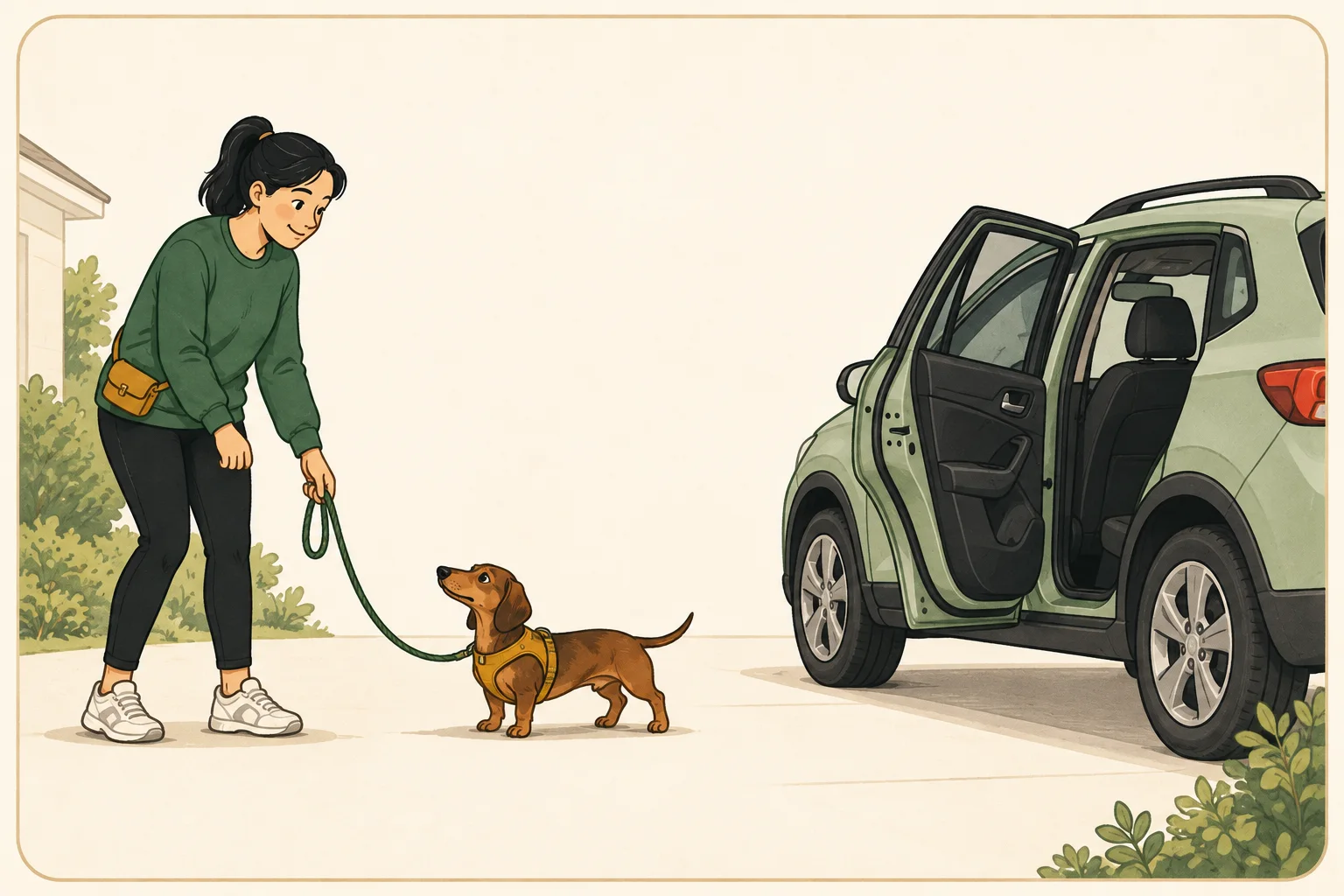
- Identify whether difficulty begins near the car, during entry or after movement.
- Keep practice separate from a journey you must complete on time.
- Use suitable travel restraints and avoid distracting the driver.
Turn this answer into a walk you can actually track.
GetWalkBuddy is a dog walking app for owners who want a simple route tracker, timer, distance view, and daily walk log without turning the walk into a spreadsheet.
When does your dog start to struggle?
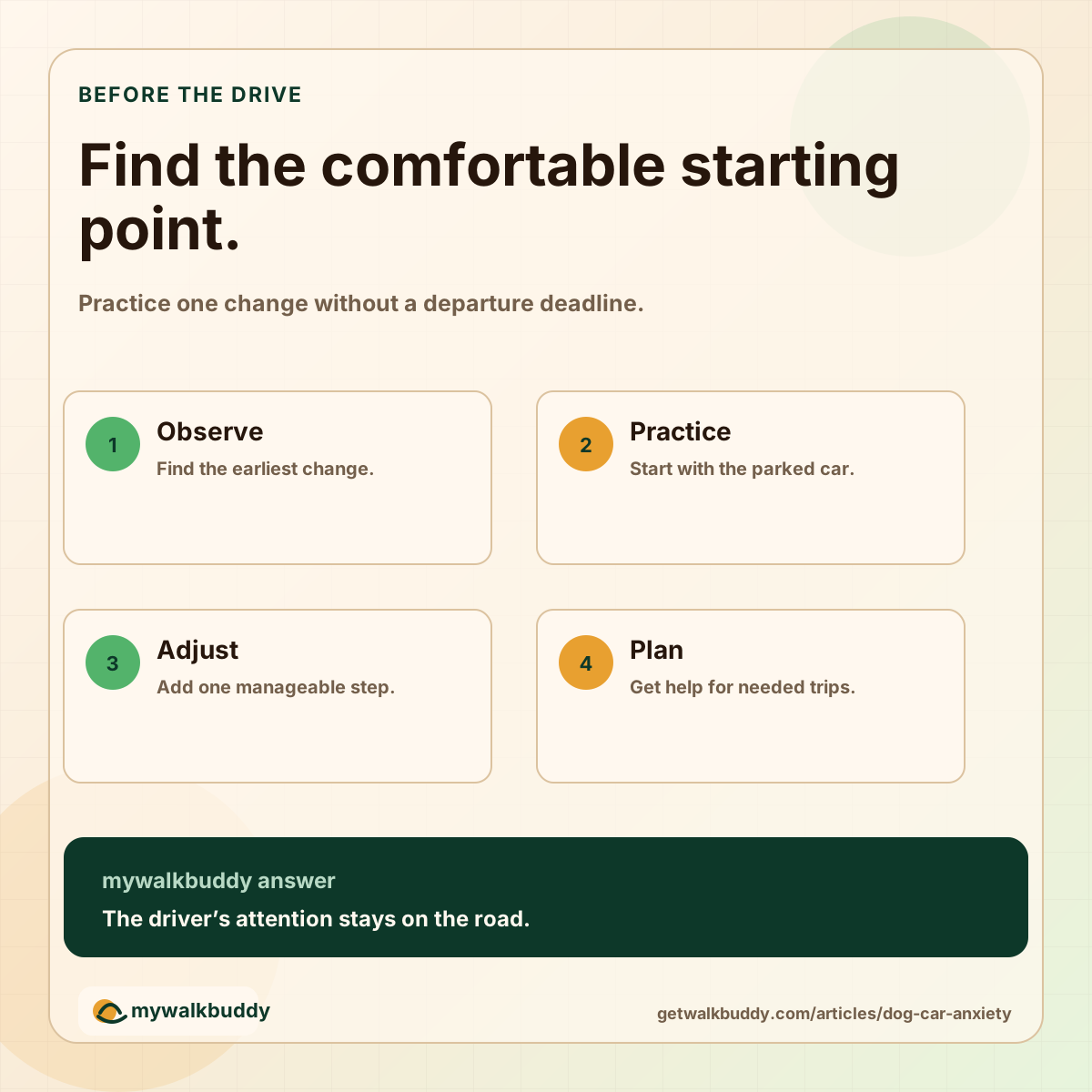
Notice the earliest change, not just the loudest part of the journey. Dogs Trust lists signs such as trembling, tension, avoidance and unsettled movement, and recommends veterinary advice when behavior changes.
Separate the outing into moments: approaching the parked car, seeing the door open, getting in, waiting inside, hearing the engine and moving. You do not need to expose the dog to each stage just to fill in a checklist. Record what you already know.
A useful note is specific: “Turned away when the door opened.” Avoid deciding from that alone that the dog is stubborn or has a particular diagnosis. Give the observation to your veterinarian or behavior professional.
If the dog vomits, seems unwell or shows a sudden change, discuss it with your veterinarian before treating the problem as training alone. Do not select medication or a dose from an online keyword search.
What can you practice without driving anywhere?
Dogs Trust recommends rewarding calm behavior around the car and introducing the experience gradually. Start where the dog is comfortable; getting inside does not have to be the first goal.
Choose a safe parked location and a time without a departure deadline. Keep the dog safely managed on leash and leave room to move away. One adult should be able to focus on the dog rather than also loading shopping or supervising children.
For an illustrative first task, calmly approach the general area and return home. If that is easy, a later task might involve the open door. These are possible planning steps, not a fixed sequence or timetable.
Stop while you can still make an easy choice. If the dog becomes worried, return to an easier situation and seek guidance instead of using a treat to draw them into a place they cannot comfortably leave.
Sources: Dogs Trust: introducing car travel; Dogs Trust: recognizing stress and getting help
How do you build toward an actual journey?
Introduce the sounds and movement gradually, using short, gentle journeys when the dog is ready. Dogs Trust suggests having a familiar adult accompany you so the driver can concentrate on driving.
Name the change before trying it. Is today about entering, resting inside or beginning movement? Increasing the duration and adding a busy destination at the same time makes the response harder to understand.
Prepare the return as carefully as the departure. Decide where you can stop safely and who will manage the dog. Do not reach into the back seat, deliver treats or film while driving.
Use correctly fitted travel equipment according to its instructions, and check the requirements where you travel. A walking harness is not automatically a vehicle restraint. This guide does not rank products or certify crash protection.
Sources: Dogs Trust: introducing car travel
What if you need to travel before training is complete?
Contact your veterinarian or behavior professional in advance to plan necessary transport. Dogs Trust advises avoiding optional car journeys when the dog is frightened and seeking experienced behavior support.
Explain the destination, urgency and what the dog currently finds difficult. Ask how to arrange arrival, unloading and any waiting time. A planned veterinary visit and an optional drive to a new walking spot call for different decisions.
Do not let a training plan delay urgent care. Call the clinic for transport instructions if the dog needs immediate attention. For nonessential outings, use a familiar walk close to home while the travel issue is addressed.
Do not leave the dog unattended in the vehicle. Arrange errands so a responsible adult can remain with the dog outside the car where appropriate, or leave the dog safely at home.
Sources: Dogs Trust: introducing car travel
What belongs in a useful car-practice note?
Record the comfortable starting point, the single change and what to repeat or simplify. The note should help the next person avoid starting too far ahead.
For example: “Comfortable near the closed car; door opening was too much; next time repeat the easier approach.” That is an illustrative note, not a reported training result.
- Before: choose a safe parked setting with no deadline.
- Observe: note the earliest change in comfort.
- Adjust: simplify the next attempt or obtain support.
- Separate: plan necessary travel independently of optional practice.
Questions owners ask when the leash is already in their hand
-
Should I keep driving until my dog gets used to it?
Do not force optional travel through fear or panic. Use a gradual plan with professional guidance.
-
Can training start outside the car?
Yes. Comfortable behavior around a stationary car can be a useful first step.
-
What can I give my dog for car anxiety?
Ask your veterinarian about individual treatment. Do not give human medication or choose a dose from a general article.
-
Is a new reluctance to enter the car always anxiety?
No. A new change may need a veterinary assessment rather than a training-only explanation.
Choose a walk close to home for now.
GetWalkBuddy records walking route, time and distance. Keep car-practice and veterinary notes separately from the walking log.