
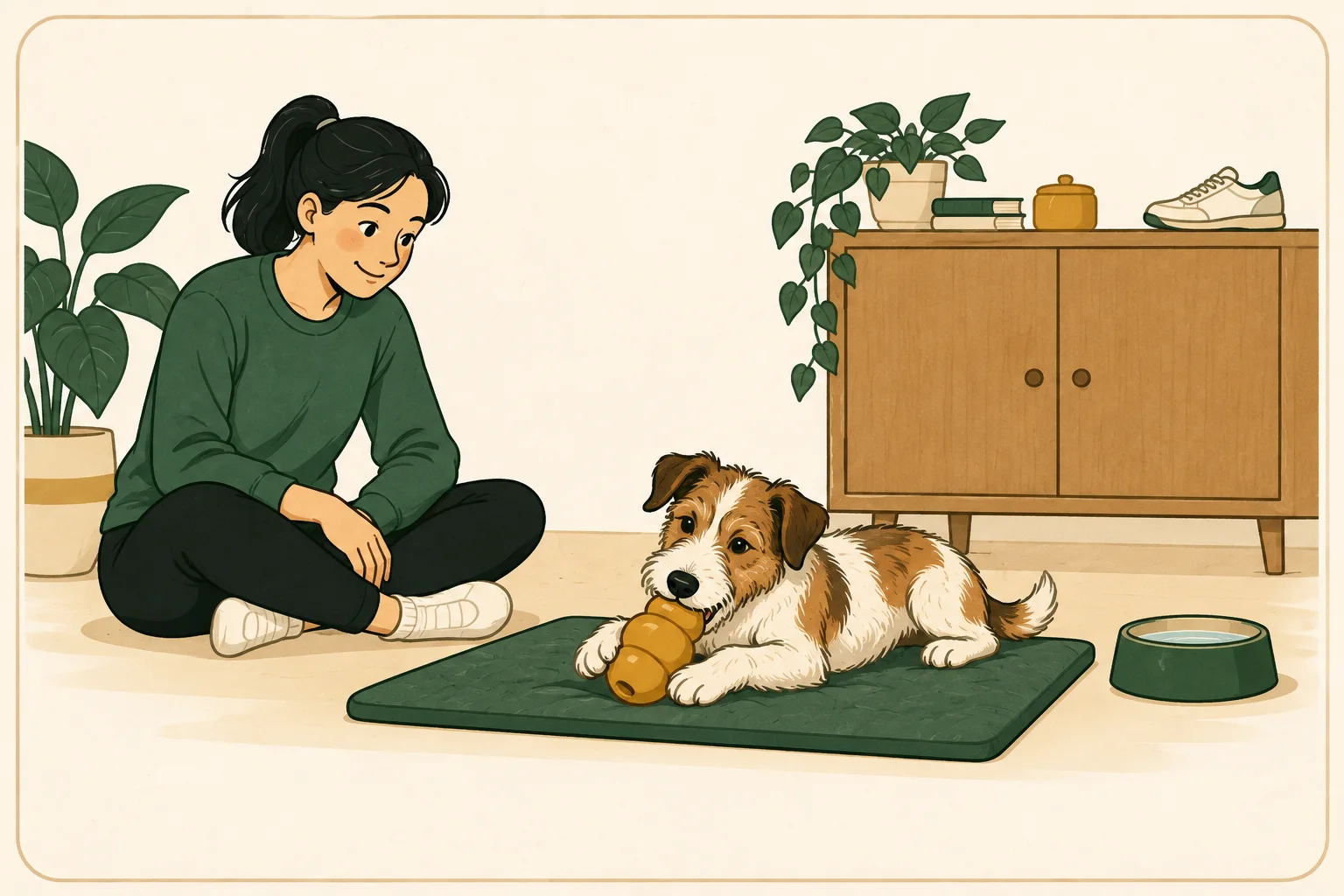
- Protect the environment first; a dog cannot practice chewing a shoe that is behind a closed door.
- Provide an appropriate alternative before the usual chewing window, and supervise it according to the dog's needs.
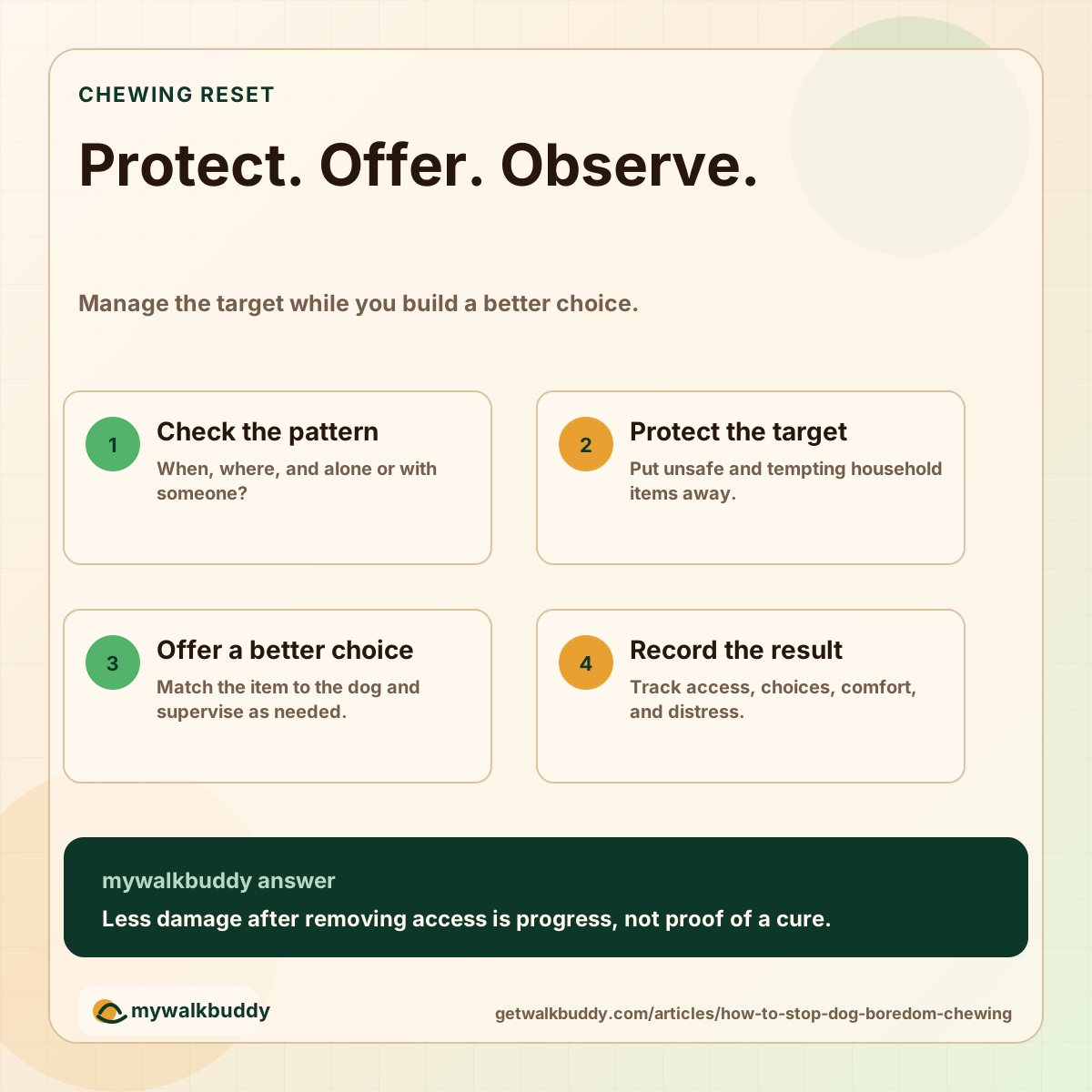
- Track context and opportunities, not only damaged objects. Less access can reduce damage before the habit changes.
Turn this answer into a walk you can actually track.
GetWalkBuddy is a dog walking app for owners who want a simple route tracker, timer, distance view, and daily walk log without turning the walk into a spreadsheet.
How can you tell whether chewing is really caused by boredom?
Start with the pattern: what gets chewed, when it happens, who is present, and what the dog was doing beforehand. Boredom is one possible contributor, but chewing is also normal exploration and may occur with teething, stress, or separation distress. Sudden changes, pain, swallowing objects, or persistent distress deserve veterinary or qualified behavior advice.
The ASPCA's destructive-chewing guidance separates normal chewing from several possible contributors, including insufficient stimulation and stress. A damaged item cannot tell you which explanation fits your dog.
If chewing happens mainly when you leave and comes with pacing, repeated vocalizing, drooling, or escape attempts, use the separation-distress pathway rather than treating it as a shortage of toys. Record what you observe and contact a veterinarian or qualified behavior professional.
Chewing and swallowing are different observations. If an object may have been swallowed, call your veterinarian promptly and describe the material and approximate amount. Do not wait for the behavior plan to work or try to make the dog vomit without professional instructions.
Sources: ASPCA: Destructive Chewing; ASPCA: Separation Anxiety
What should you change in the room today?
Put tempting or dangerous household items out of reach and choose a comfortable area you can supervise. Remove access to cords, laundry, rubbish, and objects the dog might swallow. Management buys time for teaching; it is not punishment. Keep normal opportunities for water, toileting, activity, social contact, and rest in the daily plan.
Walk through the room at the dog's reach level. A laundry basket with an open top may not solve a sock-stealing problem. A closed cupboard can. Move the target rather than relying on repeated reminders once the dog has it.
Use a suitable barrier only if the dog is already comfortable with it. A dog who panics behind a gate or in a crate needs a different care plan; forcing confinement is not a chewing lesson.
Keep the household rule consistent. Do not offer an old shoe as a toy and expect the dog to understand that the new shoe is different. Set aside clearly appropriate dog items and make those easy to choose while you are present.
Sources: ASPCA: Destructive Chewing
How do you offer a better chewing choice?
Choose an item that fits your dog's size, chewing style, health, and the manufacturer's supervision guidance, and introduce it while you can watch. Offer it before the usual problem time and calmly reward appropriate engagement. Remove damaged or unsuitable items. No chew is safe for every dog, and harder materials are not automatically better.
Ask your veterinarian about chew suitability if your dog damages teeth, gulps pieces, has dietary restrictions, or destroys toys. Avoid assuming that a label such as tough or natural guarantees safety.
If the dog already has something they should not chew, avoid turning it into a chase. Use a familiar, calmly trained exchange if it is safe. Do not reach into the mouth or forcibly take an item from a dog who freezes, growls, or guards; get qualified help with that situation.
Cardboard searches, fabric puzzles, and other DIY enrichment belong in actively supervised sessions. The ASPCA specifically calls for supervision of DIY items. If your dog eats the materials, choose a different activity rather than making the puzzle more elaborate.
Sources: ASPCA: Destructive Chewing; ASPCA: Canine DIY Enrichment
What should a simple chewing reset plan include?
Choose one recurring situation, protect the usual target, offer a suitable alternative, and record the outcome. Pair this with a repeatable routine of appropriate walks, sniffing, interaction, and rest. Review what actually changed rather than promising a cure in a fixed number of days. The card below is an observation tool, not a treatment protocol.
Use one line per observation. An example entry might be: after dinner; owner present; shoes put away; familiar chew offered with supervision; dog engaged briefly and rested. That is an illustration of the format, not a result from a tested dog.
An appropriate walk can be part of the routine, but exhausting the dog is not the objective. Include safe sniffing and time to settle. Keep the activity suitable for age, health, weather, and normal recovery.
- Before: time, location, who was present, and the usual target you made inaccessible.
- Alternative: what you offered, whether it was supervised, and whether the dog chose it.
- Outcome: attempted household chewing, appropriate chewing, rest, or signs of frustration or distress.
- Next change: repeat what was manageable, make the task easier, or seek help if the pattern is concerning.
Sources: ASPCA: Canine DIY Enrichment
How do you judge progress without confusing prevention with learning?
Compare similar situations and record both access and behavior. Fewer damaged shoes after closing the cupboard shows that management worked; it does not prove the dog has learned to ignore accessible shoes. Look for appropriate choices during supervised opportunities, comfortable settling, and fewer attempts over time. Persistent distress or escalating destruction needs a professional reassessment.
Keep the comparison honest. If Monday involved a long absence and Tuesday involved company all afternoon, the difference in damage cannot be attributed to one new toy. Likewise, one quiet day is not enough to establish a permanent change.
Track the walking part of the routine in GetWalkBuddy and keep the chewing observations alongside it. This can make household discussions more concrete: which outings happened, when the vulnerable period began, and whether a care break was missed.
Do not punish the dog after discovering damage. ASPCA explains that punishment after the event does not teach the intended connection. Use what you found to improve prevention and the next supervised opportunity. If the pattern is new, intense, or difficult to interrupt safely, ask for help.
Sources: ASPCA: Destructive Chewing
Questions owners ask when the leash is already in their hand
-
Will more walks stop boredom chewing?
Appropriate walks and enrichment may help meet needs, but they are not a guaranteed cure. Manage access, offer suitable alternatives, and check whether chewing is linked to stress, teething, separation, or another issue.
-
Should I punish my dog for chewing furniture?
No. Punishment after discovering damage does not teach the dog what to choose instead. Protect the target, provide appropriate alternatives, and reward those choices during safe supervised opportunities.
-
Can I leave a chew with my dog while I am out?
There is no universally safe unattended chew. Follow the item's instructions and your veterinarian's advice for your dog's chewing style and health. Keep unfamiliar items, edible chews that need supervision, and DIY materials for supervised time.
-
How long does it take to stop destructive chewing?
There is no fixed timetable because the cause and circumstances differ. Management can protect objects immediately, while teaching takes repeated suitable opportunities. Persistent distress, swallowing objects, or worsening behavior calls for professional help rather than waiting for a deadline.
Make the routine easier to compare.
Track the walks in GetWalkBuddy and keep a short chewing note beside them. Use the pattern to plan appropriate activity and discuss concerns with a professional.