
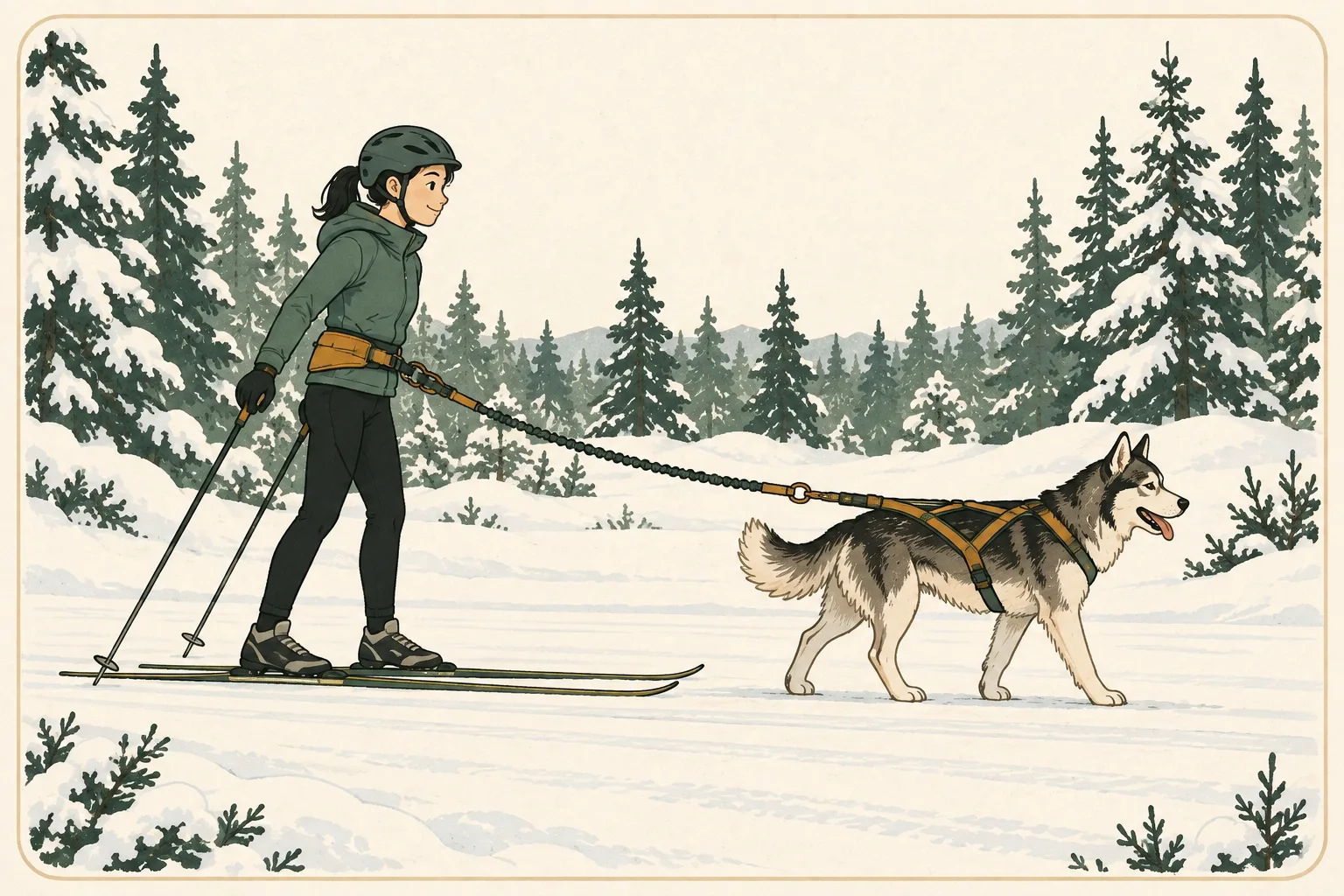
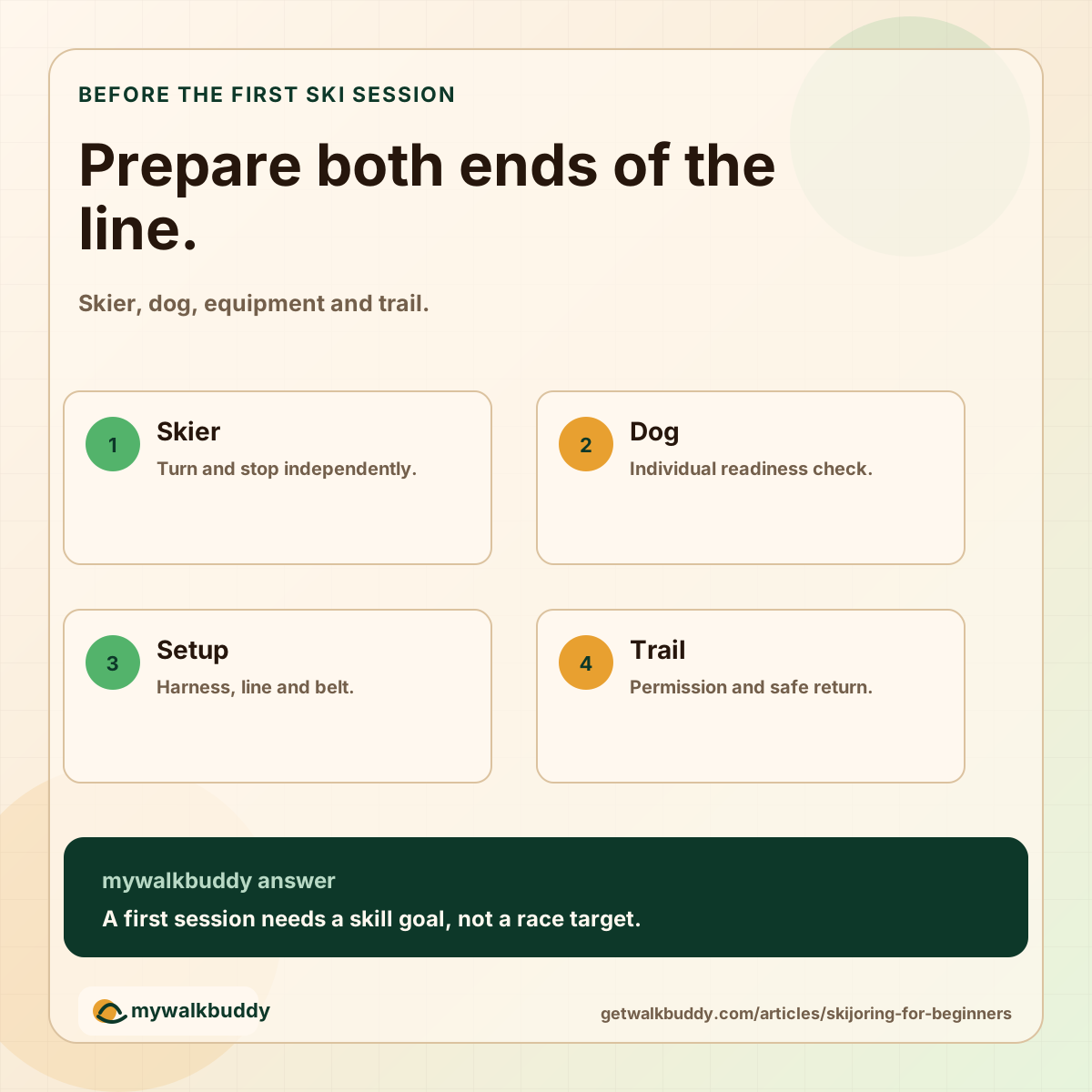
- Practice controlling and stopping your skis without the dog.
- Assess the individual dog and fit appropriate pulling equipment.
- Choose an allowed, manageable trail and learn with experienced help.
Turn this answer into a walk you can actually track.
GetWalkBuddy is a dog walking app for owners who want a simple route tracker, timer, distance view, and daily walk log without turning the walk into a spreadsheet.
What should you learn before attaching the dog?
Non-stop Dogwear recommends learning to maneuver and stop on cross-country skis before skiing with a dog. AKC recommends practice and help from a local skijoring club.
Separate your learning from the dog’s learning. If you are still trying to stay upright, you have less attention available for the line, the dog and other trail users.
Ask an instructor to assess your stopping and turning on the surface you will actually use. Being comfortable on a different kind of ski outing does not settle the handling question.
Choose one first-session purpose, such as an introduction to the setup. Do not make the goal a race distance or a social-media pace.
How do you decide whether your dog is suitable?
Suitability depends on the individual dog’s health, maturity, conditioning and willingness, not breed alone. Discuss the proposed pulling activity with your veterinarian before starting.
Take a concrete description to that discussion: intended surface, pulling setup, current activity and any previous injuries. “More exercise” is less informative than describing the sport.
Non-stop Dogwear advises against skijoring with puppies or young dogs before physical maturity. A birthday alone is not an individualized assessment of readiness.
If the dog dislikes the equipment or cannot cope with nearby dogs, address that separately with qualified help. Speed and attachment to skis make a difficult encounter harder to manage.
What equipment needs checking?
The basic setup uses a pulling harness, an elastic line and a skijoring belt, plus suitable cross-country skis. Have an experienced fitter or instructor check the complete arrangement.
Non-stop Dogwear advises against skis with steel edges or sharp tips around dogs. It also emphasizes a harness that allows movement and breathing.
Our equipment check has three connections: dog to harness, harness to line, line to skier. Inspect each fastening and ask the instructor to demonstrate the intended setup and emergency handling.
Do not assume that an everyday walking harness, leash and belt form an appropriate pulling system. Bring your actual equipment to the lesson so compatibility is assessed together.
Sources: Non-stop Dogwear: Skijoring Guide
How should you choose the first location?
Confirm that the trail allows dogs and the activity. Choose conditions where your instructor can manage a simple introduction with space to stop and turn.
Check the access point, current surface, other users and an easy return. A trail name or an old route record does not tell you whether today’s conditions are suitable.
Agree on passing arrangements before setting off. Avoid making the dog’s first attached session a busy group outing where the next team determines your pace.
Keep cold-weather planning individual. AVMA notes that tolerance varies and advises avoiding frozen lakes and ponds; a snowy surface is not proof that a route is safe.
Sources: Non-stop Dogwear: Skijoring Guide; AVMA: Cold Weather Animal Safety
What should the first-session brief contain?
Write the purpose, location, equipment check, stopping plan and observations to discuss afterward. Progress according to how both participants cope.
Our brief asks: what are we practicing today; who is supervising; where can we stop; what would end the session; what did we learn? These questions work before any distance is chosen.
Have the instructor explain warm-up, cooldown and progression for the dog. Do not copy a competitive team’s workload or treat a generic online schedule as a personal prescription.
Afterward, note handling difficulties and the dog’s movement, comfort and recovery. Pain, unusual fatigue or a change in gait needs veterinary advice rather than another practice run.
- Before: assess skier skill and the dog’s readiness.
- Prepare: have the whole pulling setup checked.
- During: use an allowed trail and a clear stopping plan.
- After: review comfort and handling before progressing.
Questions owners ask when the leash is already in their hand
-
Can a puppy start skijoring?
Do not begin pulling sport with an immature dog. Discuss development and readiness with your veterinarian and an experienced instructor.
-
Can I use a normal walking leash?
Use equipment designed and fitted for the pulling activity, with the complete system checked by someone experienced.
-
Do I need to know how to ski first?
Yes. Practice maneuvering and stopping without the dog before connecting the two activities.
-
Is cold weather a guarantee against overheating or injury?
No. Conditions, effort and the individual dog still matter. Use an appropriate plan and watch the dog throughout.
Keep your ordinary activity record.
GetWalkBuddy records walking routes, time and distance. Use everyday activity notes when discussing a new sport; a walking record does not certify skijoring readiness.