
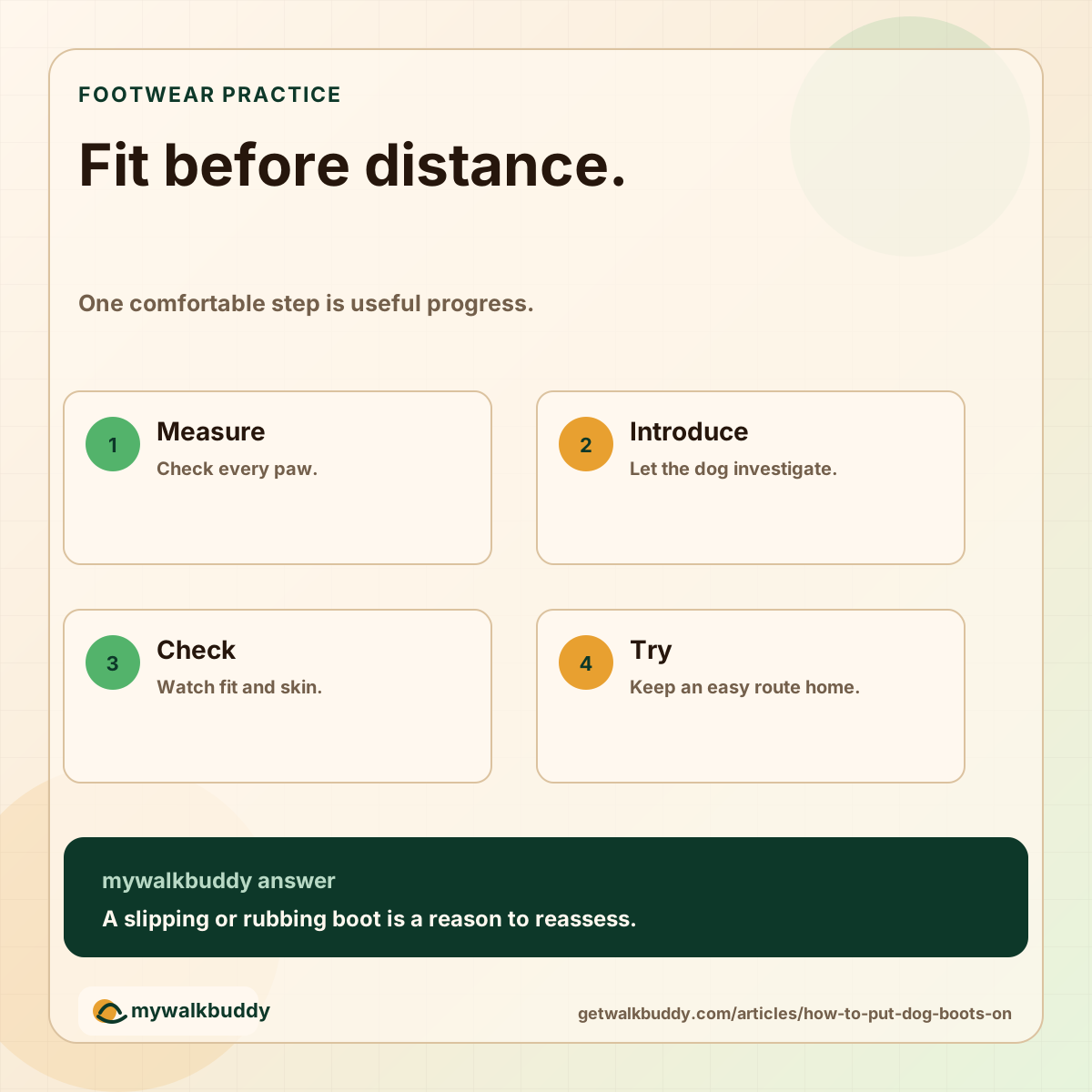
- Measure every paw instead of guessing from breed or weight.
- Separate getting used to handling from taking a walk in boots.
- Keep the first outing close to home so you can stop and change the plan.
Turn this answer into a walk you can actually track.
GetWalkBuddy is a dog walking app for owners who want a simple route tracker, timer, distance view, and daily walk log without turning the walk into a spreadsheet.
How do you choose a size before putting the boots on?
Use the measurement method and size chart for the actual product. Ruffwear notes that front and rear paws can differ in width, so one size may not fit all four feet.
Write down each measurement with its location: front left, front right, rear left and rear right. Keep that note beside the product instructions while you try the boots. If measurements fall between sizes, ask the manufacturer instead of assuming every brand uses the same rule.
Decide what problem the boots need to solve. A dry indoor fitting is an equipment check; it does not prove that the dog can comfortably complete a rocky hike or a long winter walk. If boots are intended to protect an injury, follow your veterinarian’s plan for that injury.
How do you help a dog get used to boots?
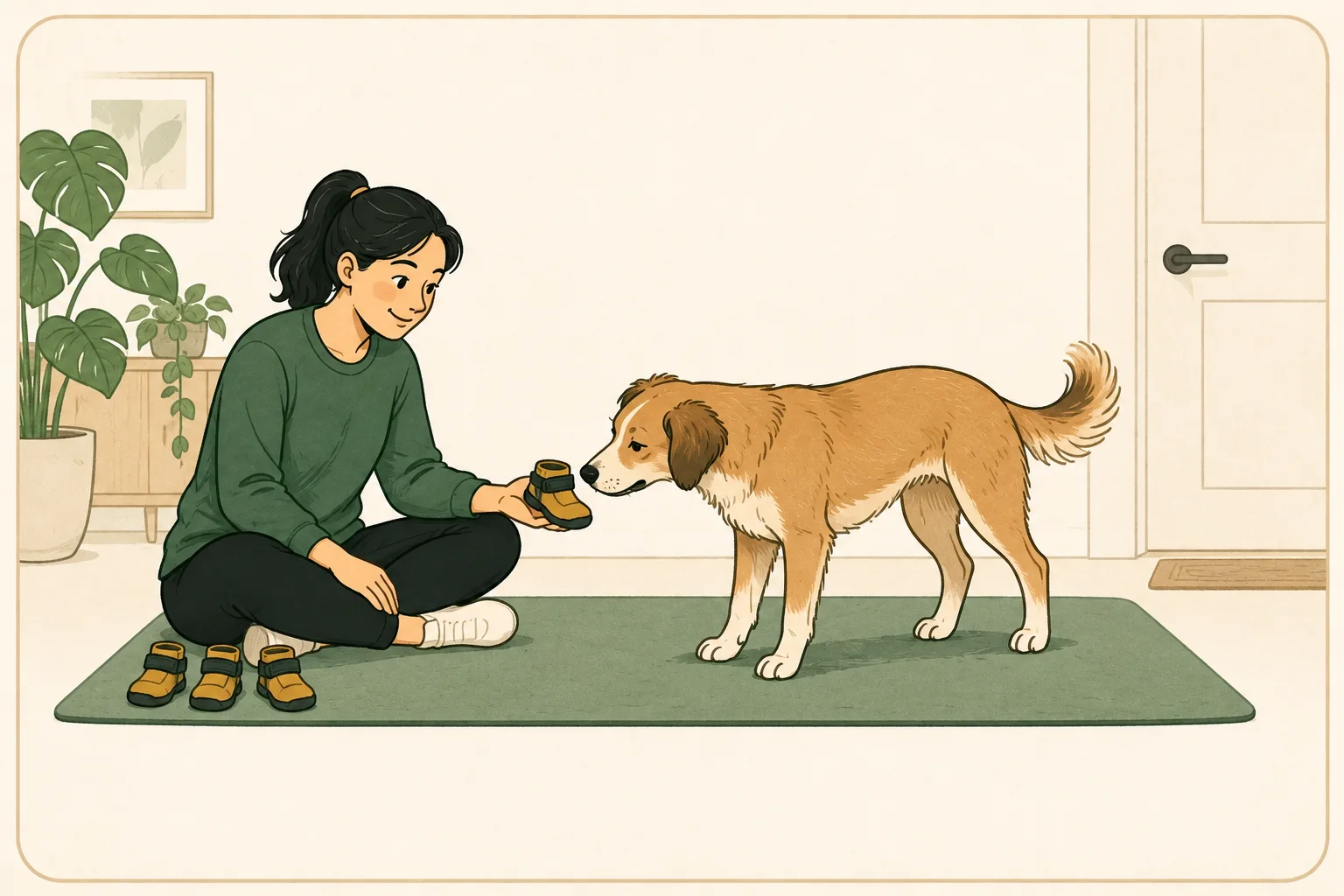
Start in a quiet place where your dog can move away. Let them investigate a boot before you try putting it on. Dogs Trust advises giving worried dogs space and avoiding pressure to face something frightening.
Break the task into observable pieces: seeing the boot, choosing to come near it, accepting familiar paw handling and then a brief fitting attempt. These are separate opportunities to pause, not a checklist to finish in one sitting.
Prepare the space before inviting the dog over. Put the instructions, boots and usual rewards within reach and choose a surface that is not slippery. If another person helps, agree who handles the equipment and who watches the dog; avoid two people reaching for the same paw.
A dog moving away gives you information. Release the handling attempt and reconsider the step rather than following them around with the boot. If ordinary paw handling is already difficult, get individual help before adding footwear.
Sources: Dogs Trust: helping a worried dog
What should you check while fitting each boot?
Follow the maker’s directions for opening, seating and fastening that particular boot. Check the paw is positioned correctly and that the boot remains upright. Avoid treating extra strap tension as a universal fix for poor fit.
Work where you can see what your hands are doing. Keep the other boots out of the dog’s path, and pause between feet rather than rushing because the first one went on easily. If you cannot tell whether the paw is seated correctly, remove the boot and consult the fitting guide.
Ruffwear recommends short initial wear periods and checks for rubbing and fit during the break-in process. Its instructions are a manufacturer’s equipment guidance, not a medical prescription or a guarantee for every product.
Make the result repeatable: record which size belongs on which paws and where you found the fitting instructions. Another household walker should be able to repeat the fit without guessing from memory.
Sources: Ruffwear: breaking in dog boots
How should the first walk in boots work?
Choose a short, easy outing with a convenient way home. Watch the dog and the boots throughout rather than setting a distance target before you know how the equipment behaves.
For example, plan to go to the nearby quiet corner and reassess before deciding whether to continue. This is a route example, not a recommended duration for every dog. Avoid making a first fitting attempt at the start of a trip that cannot easily be shortened.
Use a simple note after the trial: which boots were worn, where you walked, whether any boot rotated or slipped, and what you saw when you removed them. “Rear left boot rotated before the corner” is more useful than “boots were bad.”
If a boot shifts repeatedly, stop the trial and investigate the sizing and fastening instructions. If you notice soreness, injury or persistent abnormal movement, stop using the equipment and ask your veterinarian for advice. Do not keep walking just to make the dog get used to it.
What should be ready before the next attempt?
Resolve the problem you observed before repeating the same route. Keep the next session simple enough that you can tell whether the change helped.
Use this preparation note for yourself or the next walker:
- Before: check paw measurements against the actual product guide.
- Practice: choose one manageable step instead of demanding a complete walk.
- Observe: record the specific paw, boot and point where something changed.
- Adjust: correct fit or seek appropriate help before increasing the outing.
Questions owners ask when the leash is already in their hand
-
Why do dog boots keep falling off?
Sizing, seating or fastening may be wrong for that paw and product. Recheck the instructions and measurements rather than tightening repeatedly without knowing the cause.
-
Can front and rear paws need different sizes?
Yes. Measure all four paws and use the relevant product chart.
-
How long does it take a dog to accept boots?
There is no deadline that fits every dog. Progress should depend on comfort with the current step, not on an upcoming outing.
-
Can boots make any surface safe to walk on?
No. Footwear does not replace choosing suitable conditions and a manageable route. Change or postpone the walk if the environment is unsafe.
Keep the trial route easy to repeat.
GetWalkBuddy records route, time and distance. Keep boot-fit observations in separate notes so you can compare the next outing.