
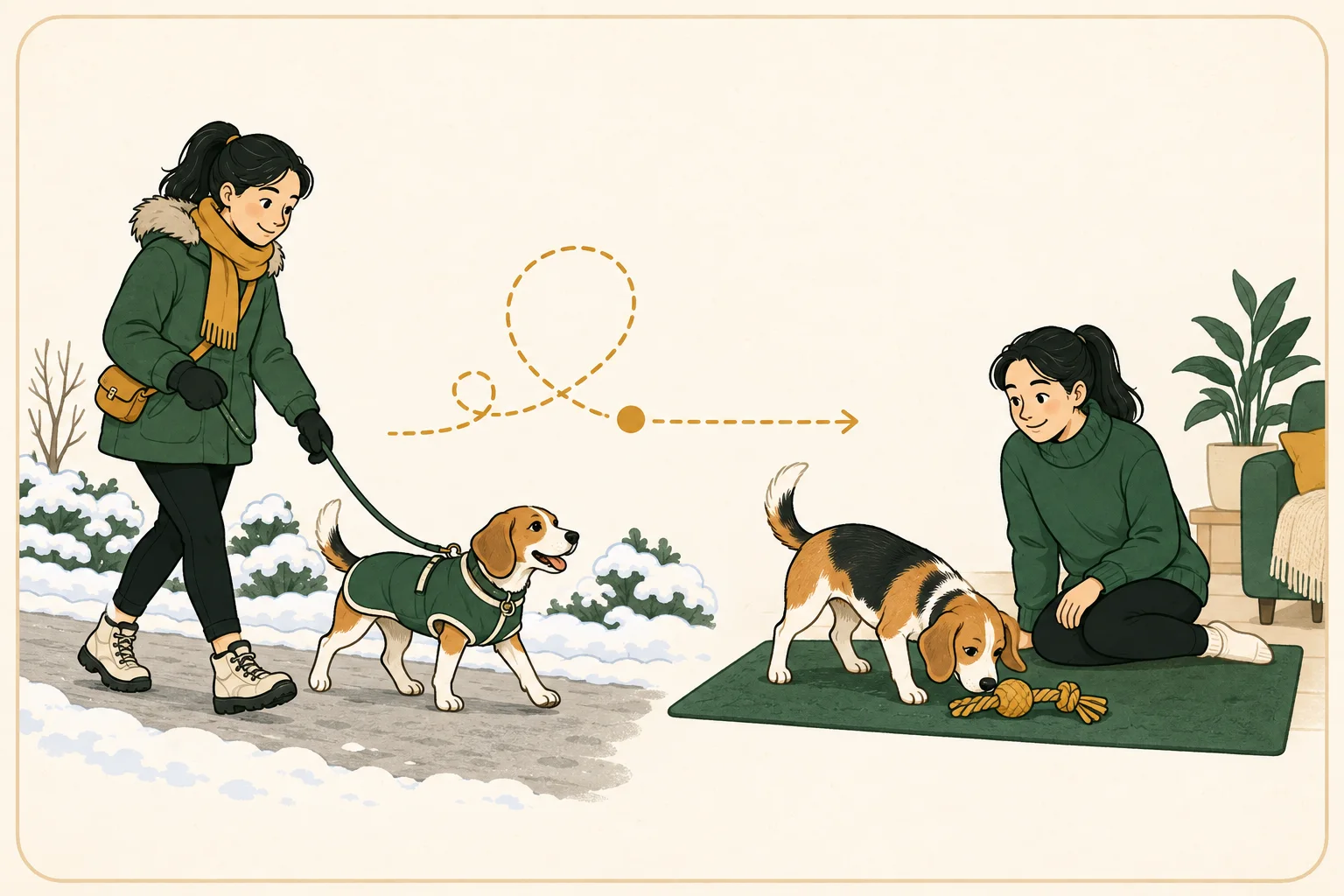
- Choose the route after checking wind, wet conditions, traction, and your dog's comfort.
- Use indoor scent games and easy training to preserve engagement when the outdoor plan shrinks.
- Keep toileting, movement, enrichment, and rest in the day; do not turn mileage into a cold-weather obligation.
Turn this answer into a walk you can actually track.
GetWalkBuddy is a dog walking app for owners who want a simple route tracker, timer, distance view, and daily walk log without turning the walk into a spreadsheet.
How do you decide whether to walk your dog in winter?
Check the conditions at dog level before choosing a route: wind, rain or wet snow, slippery ground, salt, and access to a quick return home. Then consider coat, size, age, health, and willingness. A familiar short loop is easier to abandon than an outward journey that leaves a long return in worsening weather.
AVMA explains that cold tolerance differs between dogs and can change with coat, body condition, age, activity, and health. A temperature shown on your phone cannot measure all of those factors. A thick coat also does not make a dog immune to cold injury.
Look out of the door, then inspect the first part of the route. If you cannot walk steadily on it, choose another surface. Avoid frozen ponds and streams entirely. For a dog with arthritis or a health condition, ask your veterinarian about appropriate winter activity before changing the usual plan.
Make the first decision small: a toilet outing close to home, a comfortable loop, or an indoor activity followed by another brief outdoor opportunity. You can repeat a manageable outing later if conditions and the dog permit.
Sources: AVMA: Cold weather animal safety
What is a practical winter walk checklist?
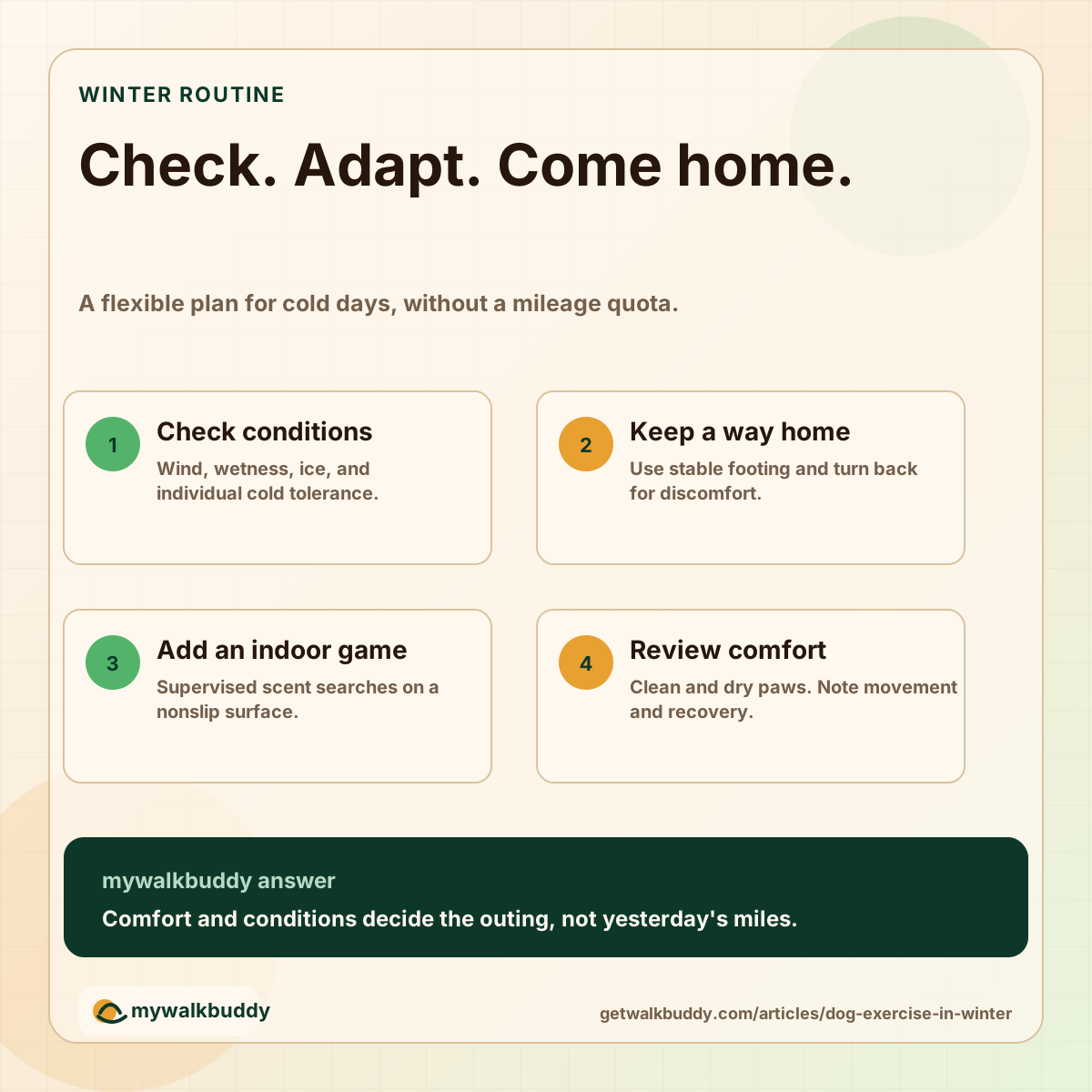
Use a three-part check before, during, and after the outing. Before leaving, choose stable footing and a short way home. During the walk, watch movement and cold discomfort. After returning, inspect and clean paws, dry wet fur or clothing, and note whether your dog settles and moves normally afterward.
This is a planning checklist, not a temperature chart or a veterinary prescription. Keep it by the leash so everyone in the household makes the same checks.
- Before: check wind and wetness, identify an ice-free route, and choose a nearby turnaround point.
- During: turn home for shivering, repeated paw lifting, unusual slowing, or reluctance; do not pull the dog onward.
- After: check paws for injury and ice, wipe away de-icing residue, and dry the dog and any wet coat.
- Next outing: shorten or change the route if the last one caused discomfort; ask a vet about persistent pain or mobility changes.
Sources: AVMA: Cold weather animal safety
How can you exercise a dog when it is too cold outside?
Replace the canceled part of a walk with easy indoor movement, scent searches, and short reward-based training on a nonslip surface. Keep games supervised and allow breaks. Indoor enrichment gives the dog something worthwhile to do, but it does not translate into a fixed number of walking minutes or remove the need for toileting.
Try a simple find-it game: place a familiar toy where the dog can see it, invite them to find it, and reward the search. Once the idea is clear, partly hide the toy nearby. Use a quiet room rather than stairs or a slippery hallway. Make the task easier if the dog becomes frustrated.
Alternatively, use a little of the dog's normal food allowance for a supervised scent search in an accessible area. Account for allergies and the established feeding plan. Remove mats, boxes, or other game materials when you cannot supervise, especially if the dog shreds or swallows them.
The ASPCA's enrichment guidance emphasizes opportunities for normal behaviors, including sniffing, and explicitly calls for active supervision of DIY items. You do not need a new machine or an elaborate obstacle course to offer an interesting indoor break.
Sources: ASPCA: Canine DIY Enrichment
What could a flexible winter exercise day look like?
Build the day around opportunities rather than a distance target: a comfortable morning toilet and sniff outing, an indoor activity when the weather worsens, another outdoor opportunity when conditions improve, and a quiet finish. Adjust each part to your dog's normal needs and health guidance. This structure is a planning aid, not a tested dose.
Morning: inspect the route and take the easier loop if it is comfortable. After returning, clean and dry paws and give the dog time to rest. Midday: reassess the weather instead of assuming the morning decision still applies. Use a supervised search or familiar training game when outdoor movement needs to be brief.
Later: offer the next toilet opportunity and an appropriate walk if the ground and weather allow it. Do not add all the missed distance to one evening outing. End with a familiar settling routine, fresh water, and a comfortable resting place.
Keep a short note: weather and surface; route and duration; any paw lifting or hesitation; movement afterward. GetWalkBuddy can help you see the walk pattern. The observation tells you why a shorter route was the right choice, so a reduced distance does not get mistaken for a failed day.
When should you stop a winter walk and seek help?
Head indoors if your dog shivers, repeatedly lifts paws, slows unusually, seems anxious, or stops wanting to move. Weakness, confusion, collapse, or suspected cold injury needs urgent veterinary advice. Do not keep walking to warm a struggling dog up. Get to a warm, dry place and contact a veterinarian promptly when symptoms are concerning.
AVMA lists behavioral changes and weakness among possible hypothermia warning signs. The checklist is not a way to diagnose the cause at home. Pain, injury, and other illness can also change a dog's willingness to walk.
If something is suddenly different, prioritize care over completing the log. For less urgent but recurring discomfort, share the route, conditions, and observations with your veterinarian before increasing the workload.
Sources: AVMA: Cold weather animal safety
Questions owners ask when the leash is already in their hand
-
How cold is too cold to walk a dog?
There is no single safe cutoff for every dog. Wind, wetness, coat, size, age, health, and exposure time change the risk. Use your veterinarian's guidance and your dog's comfort; cold-discomfort signs mean shorten the outing and go indoors.
-
Does my dog need a coat in winter?
Some short-coated or cold-sensitive dogs may benefit from a properly fitted coat. It should not restrict movement or remain wet. A coat does not make icy surfaces or prolonged cold exposure safe.
-
Can indoor games replace every winter walk?
Indoor games are a useful backup when conditions limit outdoor activity. They do not remove toileting needs or provide an exact equivalent to walking. Reassess outdoor opportunities as conditions improve.
-
Should I make up missed walking miles the next day?
Do not treat missed distance as a debt. Return to a comfortable routine and adjust using your dog's movement and recovery. A sudden extra-long outing is not required to compensate for a cold day.
Keep the winter routine visible.
Track each walk in GetWalkBuddy and add a short note about conditions and comfort. Compare manageable days before changing the route.