
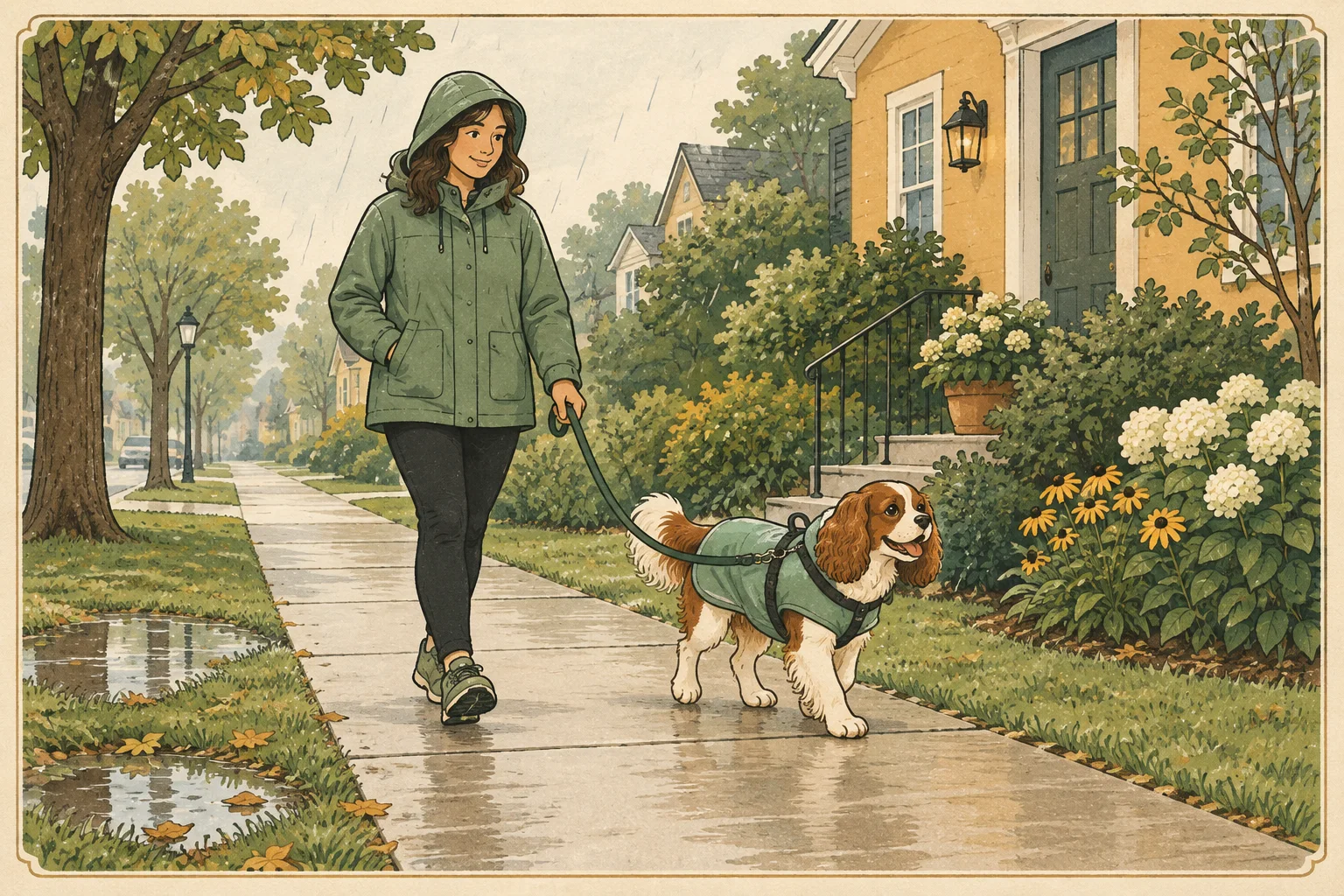
- Check warnings and the route, not just the rain icon.
- Choose a nearby loop and turn home if comfort or conditions worsen.
- A raincoat can help with wetness; it cannot make dangerous weather safe.
Turn this answer into a walk you can actually track.
GetWalkBuddy is a dog walking app for owners who want a simple route tracker, timer, distance view, and daily walk log without turning the walk into a spreadsheet.
Should you walk your dog when it is raining?
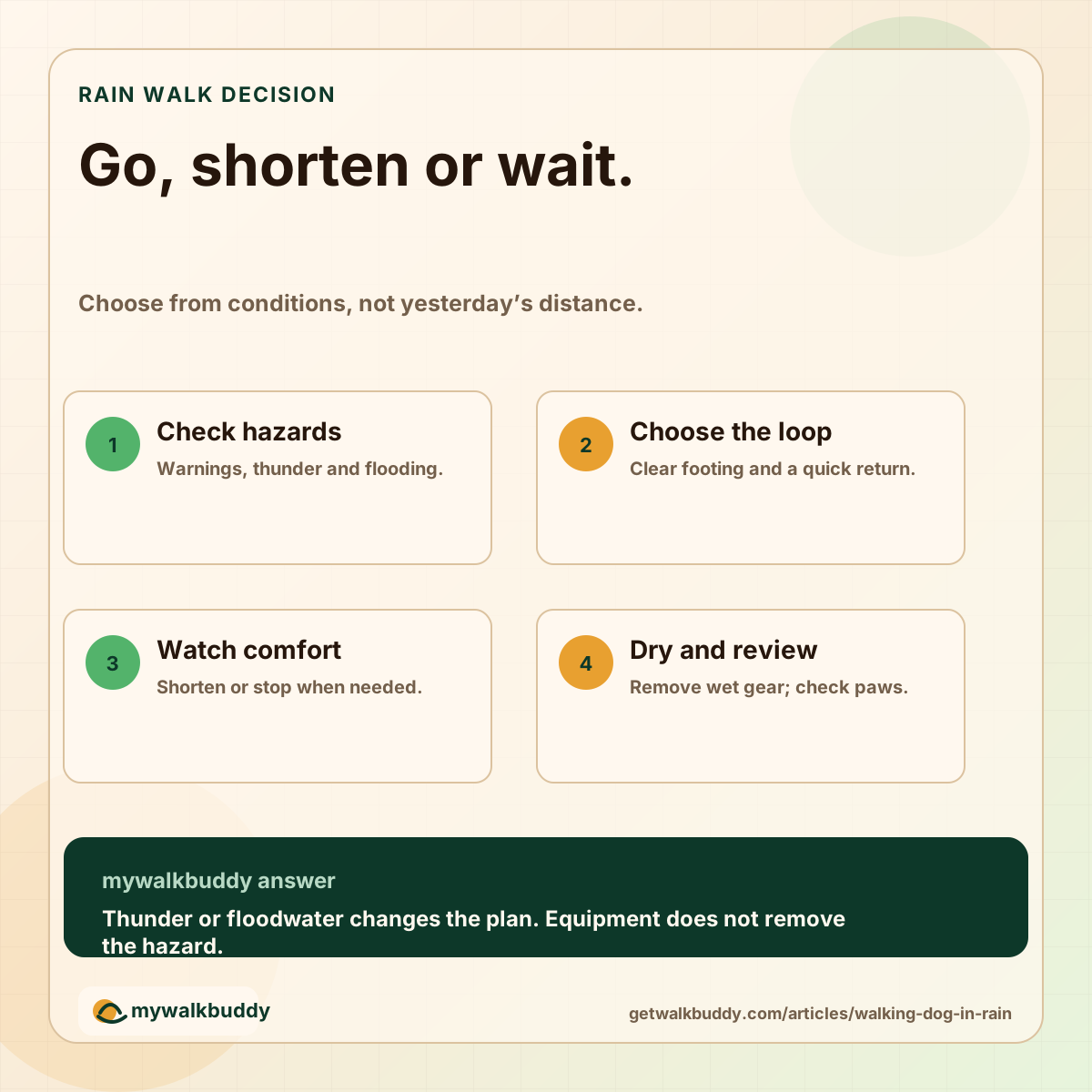
Separate ordinary rain from hazardous weather. If the route is clear and your dog is comfortable, an outing close to home may work. If surfaces, visibility or willingness deteriorate, shorten it. Thunderstorms, flooding and official warnings require a different plan, even when your dog normally enjoys wet weather.
Use three decisions: go on the comfortable local loop, shorten to a nearby toilet opportunity when conditions allow, or wait in a safe place while hazards pass. This is a route-planning aid, not a weather guarantee or a universal exercise prescription.
Check a local forecast and warnings before leaving, then look at the actual street. A familiar park can have fallen branches, hidden edges or a waterlogged access path. If you cannot see where the dog will put their feet, choose a clearer route rather than testing the obstruction.
Account for the return journey. An out-and-back walk can leave you far from home just as rain strengthens. A small loop with an early exit gives you a choice at each corner instead of committing you to a long return.
Sources: National Weather Service: Lightning tips; National Weather Service: During a flood
When does rain mean you should postpone the walk?
Postpone when thunder is nearby, floodwater blocks the route, or local warnings advise staying out of the area. If thunder begins while you are outside, seek proper shelter immediately. A tree or open porch is not a safe lightning shelter. Do not walk through floodwater to complete the route.
The National Weather Service says audible thunder means lightning can strike nearby. Move into a substantial building or an enclosed metal-topped vehicle with windows closed, and remain sheltered for at least 30 minutes after the last thunder. A break in rainfall is not the same as the storm being over.
NWS also warns that floodwater can conceal damaged surfaces and other hazards. Keep the dog with you and turn away before entering it. Do not use a leash or the dog’s swimming ability as a reason to cross.
If conditions prevent normal toileting access, use an established safe alternative if available and resume outdoor opportunities when safe. Seek individual veterinary advice if your dog cannot toilet or appears unwell; an indoor game does not solve that care need.
Sources: National Weather Service: Lightning tips; National Weather Service: During a flood
What should you take for a rainy dog walk?
Use familiar, well-fitting walking equipment, footwear with grip and a route you can manage without juggling belongings. A dog raincoat is optional and should allow normal movement. Check its fit with the harness before going out. Put towels by the door so the return is simple rather than another handling struggle.
Try new clothing indoors first. Check that the dog can walk, turn and toilet without fabric getting in the way. Follow the product’s instructions and avoid using a coat that interferes with the harness attachment. If the dog dislikes it, choose another setup instead of making the first wet outing a fitting session.
Carry waste bags where you can reach them with one hand. If you use an umbrella, check that you can still hold the leash securely and that the dog is comfortable with it. A hooded jacket may be simpler for a household whose dog needs both attention and careful handling.
Plan a clear entry space for removing wet gear and drying the dog. Let towels and spare clothing wait at home; you do not need to carry a full change of equipment around a short neighborhood loop.
What is a useful before-during-after rain checklist?
Before leaving, check hazards, fit and the shortest route home. During the walk, watch both the surface and your dog’s willingness to continue. Afterward, remove wet gear, dry the dog and inspect paws. Use what happened to choose the next outing; do not automatically repeat an uncomfortable route.
Keep this checklist next to the leash, especially when different people cover the day’s walks.
- Before: review weather warnings, choose clear footing, check equipment and identify an early turnaround.
- During: avoid pooled or flowing water, keep the dog near you at road edges, and head home if the outing becomes uncomfortable.
- After: remove wet clothing, gently dry fur and paws, and check for debris or visible irritation.
- Next: try a different route or weather window if needed; ask your veterinarian about ongoing discomfort or a new physical change.
What if your dog refuses to walk in the rain?
Do not drag the dog into a full route. Offer a brief, quiet toilet opportunity near home when conditions are safe, and reward willing steps without trapping the dog farther outside. Reassess weather, noise, footing and gear. If refusal is new or persists in other conditions, get veterinary advice.
A practical comparison can be simple: the usual entrance versus a quieter exit, a clear paved path versus wet grass, or familiar gear versus the new coat. Change only one thing when possible. You are looking for a workable outing, not proving which sensation the dog dislikes.
RSPCA recommends reward-based training and veterinary advice for changes in behavior. Rain refusal is an observation, not a diagnosis of stubbornness. If fear repeatedly prevents ordinary outings, seek qualified behavioral support.
For the canceled recreational part of the walk, offer a familiar supervised indoor search or a quiet activity the dog already enjoys. Recheck outdoor opportunities later. There is no need to add all the missed distance to the next walk.
Record the completed outing accurately in GetWalkBuddy. A brief route with a safe return is useful information; it should not be padded to resemble the walk you intended.
Sources: RSPCA: Understanding dog behaviour
Questions owners ask when the leash is already in their hand
-
How long can you walk a dog in the rain?
There is no universal rain-specific duration. Weather hazards, footing, the dog’s comfort and their individual needs determine the plan. Use a route you can shorten rather than treating a time target as an obligation.
-
Does every dog need a raincoat?
No. It is an optional comfort item whose suitability depends on the dog and conditions. It must fit with walking gear, permit normal movement and be removed when wet or uncomfortable.
-
Can I walk my dog during a thunderstorm?
Postpone. If you hear thunder outdoors, seek proper shelter immediately and follow local weather advice. NWS recommends remaining sheltered for at least 30 minutes after the last thunder.
-
What if rain lasts all day?
Reassess for safe toilet and walking opportunities between hazardous periods. Use familiar indoor activities for some engagement, but keep toileting and other care needs explicit. Follow veterinary advice for individual restrictions.
Record the walk that actually happened.
Keep a clear walking history with GetWalkBuddy and adapt the next outing to conditions and comfort.