
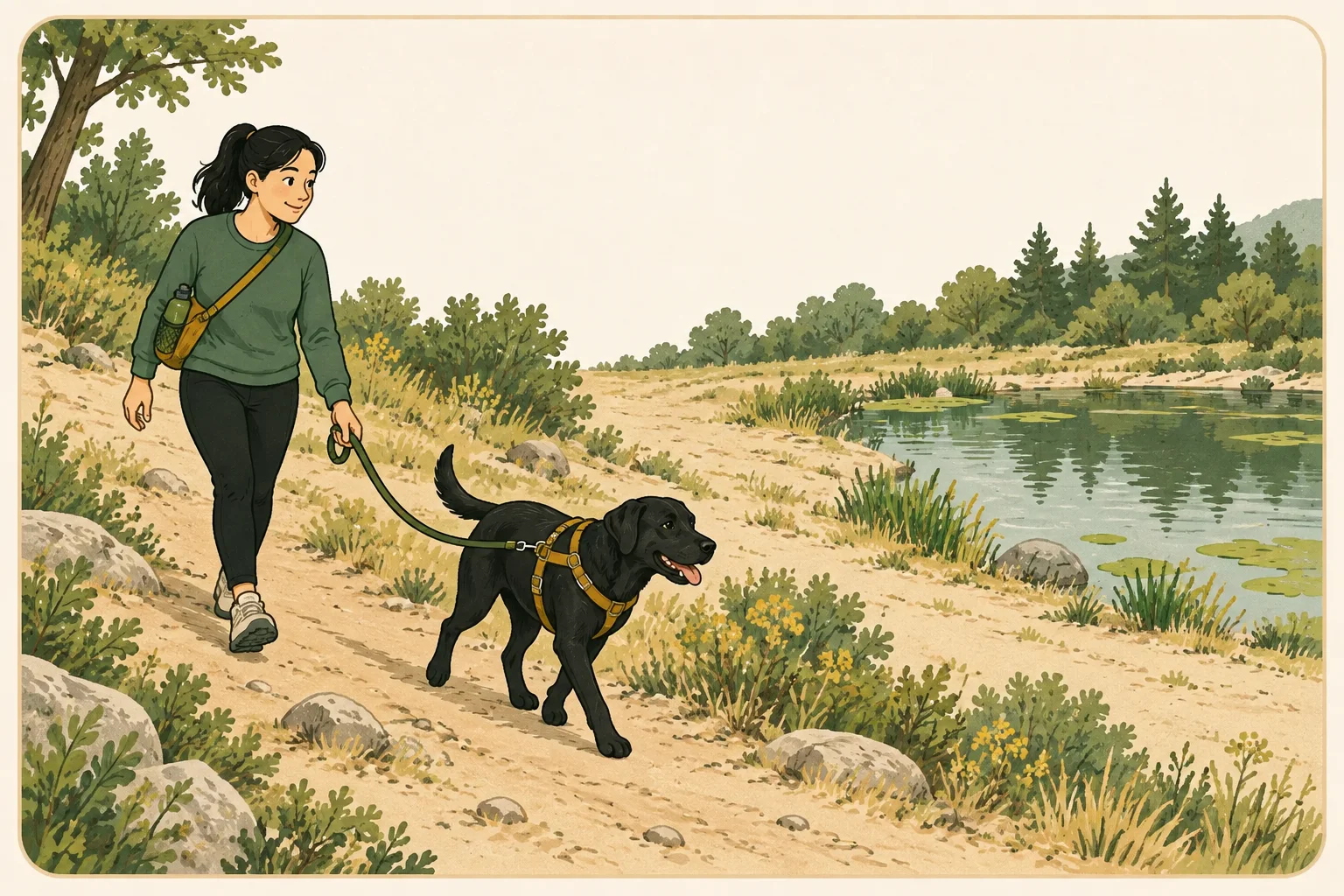
- Check official notices before leaving and signs on arrival.
- Have a dry route that does not require shoreline access.
- Treat possible exposure as a veterinary question, not a home test.
Turn this answer into a walk you can actually track.
GetWalkBuddy is a dog walking app for owners who want a simple route tracker, timer, distance view, and daily walk log without turning the walk into a spreadsheet.
Why are blue-green algae a concern for dogs?
Blue-green algae are cyanobacteria. Some blooms produce toxins that can cause severe illness in animals, including after contaminated water is swallowed or material is licked from the coat.
CDC warns that animals can become very sick or die rapidly after swallowing some bloom toxins. This is a reason to prevent access and seek advice promptly, not a reason to assume every pond contains a toxic bloom.
This guide addresses choosing a waterside route and responding to possible bloom exposure. Ordinary puddle-drinking prevention is a related but separate routine; a lake advisory needs its own decision before the walk begins.
Sources: CDC: Preventing Pet Illnesses from Harmful Algal Blooms
Where should you check before a lake or river walk?
Check the relevant park, local health or environmental authority for current advisories, and follow posted restrictions. CDC notes that harmful blooms are not always visible.
Our pre-walk note contains four entries: exact waterbody and access point; authority checked; date of the notice; alternative route. This prevents an old notice for a similarly named lake from becoming today’s decision.
Read the scope of the advisory. A notice may apply to a particular area or activity; if you cannot determine what it means for dog access, contact the responsible authority or choose the dry option.
Check again on arrival. A saved screenshot from a previous visit is useful history, but it is not current clearance. If online information and a posted warning differ, avoid access while resolving the uncertainty.
What visible signs should make you avoid the water?
CDC lists discoloration, foam, scum, mats, paint-like streaks, bad odor or dead animals near the shore as warning signs. Appearance cannot establish that toxins are absent.
Observe from a safe dry location. Do not send the dog toward the edge to investigate and do not handle suspicious material for an informal test.
Choose your turnaround point before the dog reaches shoreline objects. The walk should not depend on winning a last-second recall away from water or debris.
If the route forces repeated contact with the shore, replace the route. A different stretch of the same waterbody is not automatically a suitable alternative merely because the surface looks clearer.
What if your dog already entered suspicious water?
Prevent licking and rinse the dog promptly with clean water. CDC advises immediate veterinary contact if an animal becomes ill after water contact; an animal poison service can advise on exposure questions.
Arrange safe help without exposing yourself to the suspected water. Use clean water for rinsing, not another bucket from the same lake. Contact your veterinarian or animal poison service for guidance about what happened.
Give the location, timing, whether the dog drank or swam, whether licking occurred, and any signs. In the United States, ASPCA Poison Control is (888) 426-4435; a fee may apply.
CDC lists signs such as vomiting, stumbling, drooling, tremors and seizures. Do not treat a normal appearance immediately afterward as proof that the exposure was harmless, or delay urgent care while searching for a perfect photograph.
Sources: CDC: Preventing Pet Illnesses from Harmful Algal Blooms
What belongs in a practical dry-route backup?
Choose an alternative that meets the dog’s needs without approaching the affected shoreline. Carry drinking water and a bowl so the outing does not depend on access to natural water.
Write the alternative down before leaving home. “Find somewhere else” is less useful than knowing a nearby path with an easy return, suitable footing and no required water crossing.
For a group walk, agree that one person makes the water-access decision and communicates it before dogs are released or equipment is unloaded. Everyone should know the plan changed.
Keep the outing flexible. A short familiar dry walk can be a better choice than trying to preserve a planned swim after new information changes the situation.
What should you record after finding a possible bloom?
Record the location and report concerns to the responsible local authority. CDC recommends reporting suspected blooms or related illness to health or environmental agencies.
Use a location description another person could follow: waterbody, named access point and the part of the shore observed. Include the observation time and describe what you saw without declaring a laboratory diagnosis.
If a photograph can be taken from a safe location, keep it with the note. Do not enter the water or collect a sample merely to improve a report.
If your dog needed care, keep the veterinary record separate from the route note and follow the professional’s advice about returning to normal activity.
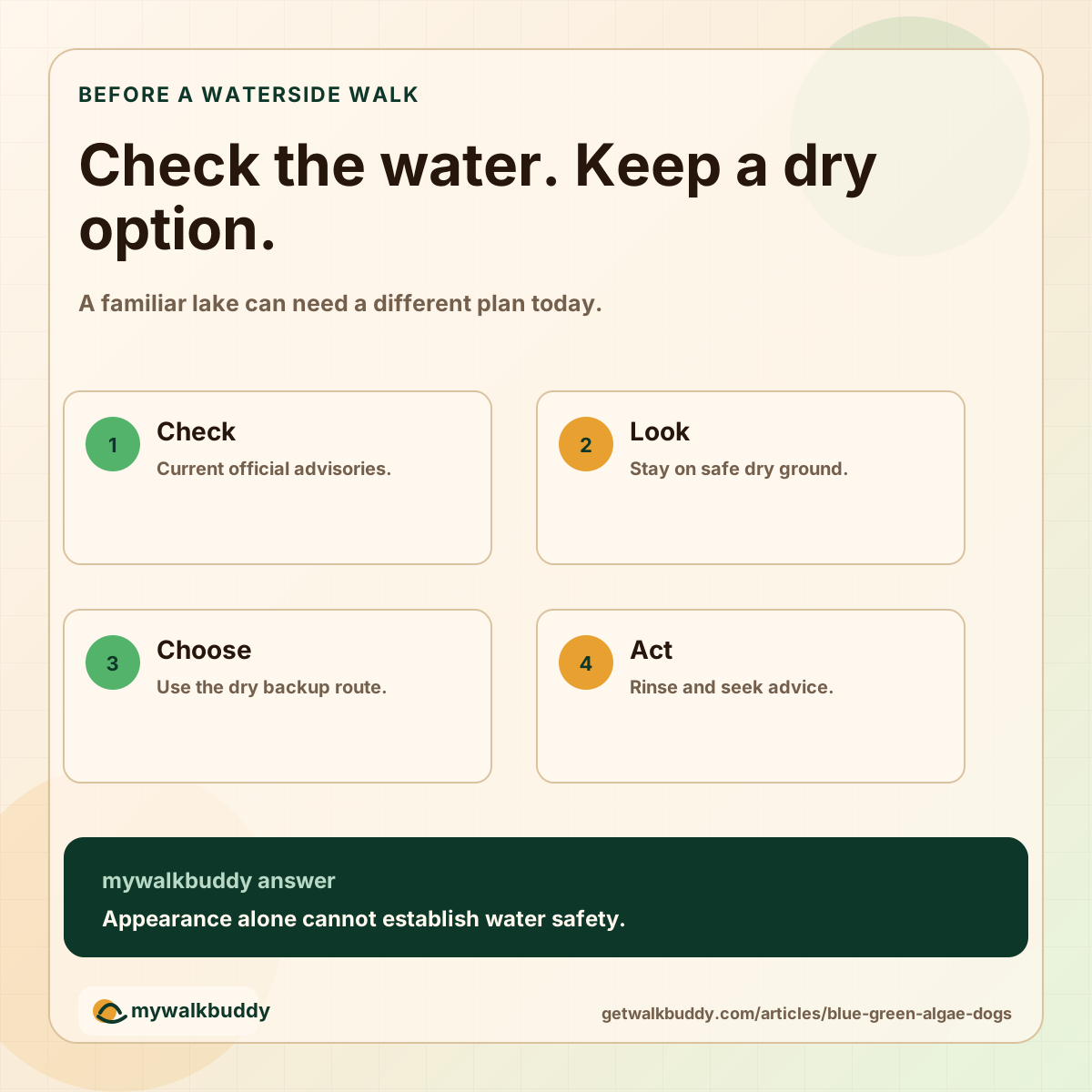
- Before: check current official advisories.
- At arrival: read signs and inspect from dry ground.
- If uncertain: use the dry alternative route.
- After exposure: rinse, prevent licking and obtain veterinary advice.
Questions owners ask when the leash is already in their hand
-
Can clear water still be unsafe?
Yes. CDC says bloom toxins can be present even when visible signs are absent. Follow current advisories rather than appearance alone.
-
Does rinsing replace a veterinary call?
No. Rinsing helps remove material from the coat; it does not establish what the dog swallowed or whether treatment is needed.
-
Should I wait for a specific symptom timeline?
Do not use an online timeline to decide that an exposure is safe. Tell a veterinary professional what happened, and seek immediate help if the dog is ill.
-
Can I let my dog drink if it does not swim?
Avoid both drinking and entering water with a suspected bloom or advisory. Carry a separate drinking-water supply.
Save a dry alternative.
Use GetWalkBuddy to record familiar walking routes, time and distance. Keep an alternative outing available when water conditions change; consult official sources for water advisories.